Why Heart Rate Rises in the Heat — and Why There Is No Fixed BPM Rule
Quick answer: Heat can increase cardiovascular strain and heart rate, and during prolonged exercise cardiovascular drift can push heart rate up even at a steady pace. How much it rises depends on hydration, humidity, sun, airflow, acclimation and individual physiology — there is no universal BPM-per-degree correction. Use heart rate together with RPE, the talk test and symptoms, and let pace or power fall when conditions require it.

A moderate rise in heart rate is a normal part of how your body cools itself in the heat. A sustained, very large jump, chest pain, fainting or confusion is different and may call for medical attention.
TL;DR: Two mechanisms do most of the work: more blood is sent to the skin for cooling, and dehydration gradually reduces plasma volume. Compare sessions done under similar conditions rather than against cool-weather numbers. People with cardiovascular conditions, older adults and those on medications such as diuretics or beta blockers should plan hot-weather exercise with their clinician.
Table of Contents
- Why heat makes your heart work harder
- Ambient temperature is not body temperature
- Cardiovascular drift
- Same pace, higher heart rate
- Humidity and environmental conditions
- Hydration
- Heat acclimation
- What this means for your heart rate zones
- Who faces higher risk
- Warning signs that need attention
- FAQ
- Sources
Why heat makes your heart work harder
When you exercise in the heat, your body has to do two jobs at once: supply working muscles with blood, and move heat away from your core. It does the second job by widening blood vessels near the skin (cutaneous vasodilation) and by sweating. More blood near the surface means less blood returning to the heart per beat, so stroke volume — the amount pumped per beat — can fall, and your heart rate rises to keep overall blood flow steady.
Sweating adds a second layer: as you lose fluid, plasma volume shrinks, and your heart has to beat faster to move the same amount of blood. None of this means something is wrong. It means your cardiovascular system is doing exactly what it is designed to do under thermal stress — but it is also why the same workout can feel noticeably harder on a hot day.
Ambient temperature is not body temperature
One confusion sits behind most "beats per degree" rules of thumb: the air temperature outside is not the same as your core body temperature. Clinical observations about heart rate rising with internal body temperature — for example during a fever — describe a different situation from exercising in hot weather, and they do not justify a fixed heart-rate change per degree of outdoor temperature.
How much hot weather actually raises your core temperature, and therefore your heart rate, depends on humidity, direct sun, wind and airflow, clothing, the surface you train on, how hard you are working, how long you have been exposed, how well hydrated you are, how acclimated you are and your individual physiology. With that many variables in play, outdoor temperature simply does not map to heart rate with a fixed linear rule.
Cardiovascular drift
During prolonged exercise — especially in heat — heart rate often does not rise and then plateau. It tends to creep upward even when your pace and effort stay constant. This phenomenon is called cardiovascular drift. Several things happen at once: stroke volume gradually falls as plasma volume drops from sweating, skin blood flow stays elevated to support cooling, and the heart compensates by beating faster to hold cardiac output steady. Dehydration intensifies the effect, and rest breaks reduce the strain without erasing it entirely.
Drift is one reason a heart rate reading late in a long, hot session is hard to interpret on its own: part of the number reflects the work you are doing, and part reflects the accumulating thermal and fluid strain of the session itself.
Same pace, higher heart rate
The most practical takeaway of this article: at the same running, walking or cycling pace or power, your heart rate may be higher in hot or humid conditions, and your perceived effort usually rises with it. Holding your usual pace in the heat can push you into a higher physiological effort than you intended.
The sensible adjustments are contextual, not mathematical:
- let your pace or power fall when conditions demand it, rather than defending a number
- treat your heart rate zone targets with more context on hot days — they are not temperature correction tables
- use the talk test or RPE alongside heart rate, since they reflect how your body is actually responding
- compare sessions done under similar conditions when tracking progress, rather than comparing a cool morning run with a hot afternoon one
There is no evidence-based fixed pace reduction percentage for a given temperature, so this article does not offer one.

Humidity and environmental conditions
Air temperature alone understates heat strain. Humidity matters because sweat cools you by evaporating — in humid air, evaporation slows and your body has to work harder to shed heat. Direct sun adds radiant heat on top of air temperature. Wind and airflow help evaporation; still air removes that help. Dark or heavy clothing traps heat. Even the surface matters: asphalt radiates more heat than a shaded trail. And the longer the exposure, the more fluid you lose and the more drift accumulates.
All of these alter heat dissipation, and therefore your heart-rate response — which is why no universal heat-index-to-heart-rate formula exists.
Hydration
Dehydration can reduce plasma volume and increase cardiovascular strain, and heart rate tends to rise more during prolonged exercise as fluid losses accumulate. Maintaining adequate hydration before and during prolonged exercise in heat can help limit dehydration-related cardiovascular strain.
Two cautions matter. First, hydration needs vary by person, session length and conditions, so there is no universal litres-per-hour rule that fits everyone. Second, drinking more does not always normalize heart rate: if your heart rate is elevated because of heat, fatigue or illness, fluid alone will not necessarily bring it back down. People with heart failure or kidney conditions should follow their clinician's specific fluid guidance rather than general advice.
Heat acclimation
Repeated heat exposure leads to real adaptations: an improved sweating response, expanded plasma volume and lower cardiovascular strain at a given workload in the heat. This is why the first hot week of summer often feels disproportionately hard, while the same conditions feel more manageable later in the season.
Guidance from sports medicine organizations such as the ACSM describes acclimation as developing gradually over roughly one to two weeks of repeated heat exposure, but the exact timeline varies with the person, the conditions and the training dose — treat any number of days as approximate, not as a promise, and do not expect a fixed BPM reduction.
What this means for your heart rate zones
Your usual pace may no longer correspond to the same physiological effort in the heat, and your heart rate zones are not temperature correction tables. Do not mechanically add or subtract beats from your zone boundaries based on the outdoor temperature — there is no validated correction that works that way.
What works instead:
- use heart rate together with RPE or the talk test
- allow pace or power to fall when conditions demand it
- compare similar sessions under similar conditions when judging progress
If you want to understand what your zones actually represent and how they are estimated, the Zone 2 heart rate training guide covers that in detail. Our heart rate zone calculator gives you a personalized range to work from — a monitoring aid, not a diagnostic tool, and symptoms always take priority over any number on a screen.
Who faces higher risk from heat and heart rate changes
Heat strain is not distributed evenly. Some groups face meaningfully higher cardiovascular risk when temperatures climb:
- people with existing heart disease, heart failure or a history of arrhythmia
- older adults, whose thermoregulatory and cardiac reserve tend to decline with age
- people with chronic kidney or lung disease
- anyone taking diuretics, which can worsen fluid loss during heat exposure
- anyone taking beta blockers, which blunt the heart's ability to raise its rate — meaning your pulse may look deceptively normal even while your body is under real thermal strain
CDC guidance recommends that at-risk patients build a heat plan with their clinician in advance of hot weather, rather than improvising fluid or medication changes once a heat wave arrives.
Warning signs that need attention
Most heat-related heart rate increases resolve with rest, shade and fluids. A smaller set of signs means you should stop exercising and seek medical help:
- chest pain or pressure
- fainting or near-fainting
- severe or unusual shortness of breath
- confusion or disorientation
- unusual weakness
- a very rapid, weak or irregular pulse
- very hot skin, collapse or other signs of severe heat illness — sweating may be present or absent
These can be signs of heat illness, including heat stroke, which is a medical emergency. Move to a cool place and seek emergency care rather than waiting to see whether symptoms pass.
Keep Your Heat Training Grounded in Real Numbers
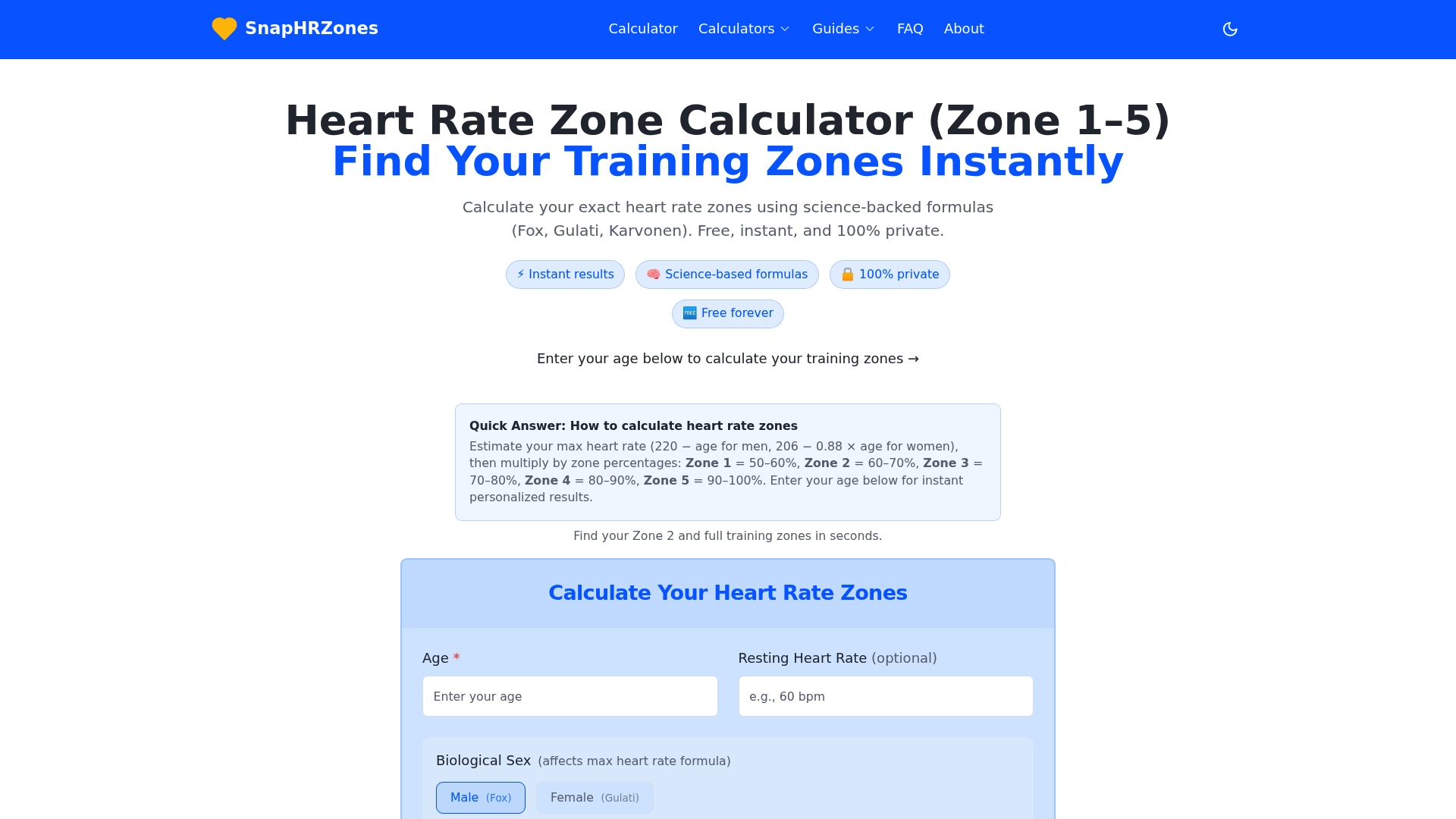
Hot weather makes it harder to tell whether a fast heart rate is expected or a sign to back off, and a generic target zone doesn’t account for how heat shifts your numbers day to day. Our Heart Rate Zone Calculator uses established heart-rate formulas and optional resting heart rate to estimate training zones. It does not know how your heart rate normally responds to heat.
Try the Heart Rate Zone Calculator before your next hot-weather session and use the estimated zones as one reference alongside RPE, the talk test and symptoms.
This article is general information, not a substitute for advice from a qualified doctor. Consult a qualified healthcare professional about your own circumstances before acting on anything here.
FAQ
How much does heart rate rise in the heat?
There is no universal number. The increase depends on humidity, sun exposure, airflow, clothing, exercise intensity, duration, hydration, acclimation and individual physiology. Rules of thumb such as a fixed number of beats per degree of outdoor temperature are not supported — ambient temperature does not map to heart rate with a fixed linear rule.
Why is my heart rate higher at the same pace in hot weather?
Your body is doing two jobs at once: supplying your muscles and moving heat to your skin for cooling. Blood redirected to the skin and fluid lost to sweating reduce stroke volume, so your heart beats faster to maintain output. Over a long session, cardiovascular drift adds a gradual further rise even at constant pace.
Should I adjust my heart rate zones on hot days?
Not by a fixed formula. Heart rate zones are not temperature correction tables, and there is no validated "add X beats in the heat" adjustment. Instead, let your pace or power fall, use the talk test or RPE alongside heart rate, and compare sessions done under similar conditions.
Is a heart rate of 130 in heat normal?
It depends heavily on what you are doing and your baseline fitness. During exercise in heat, a reading like that can be entirely normal. An elevated rate at rest together with symptoms such as dizziness or chest discomfort deserves attention.
What are the warning signs of heat illness?
Stop and seek help if you notice chest pain, fainting, confusion, severe shortness of breath, unusual weakness, a rapid weak or irregular pulse, or very hot skin or collapse — sweating may be present or absent. These signs call for cooling and medical care rather than waiting to see if they pass.
Sources
Find your personal heart rate zones
Enter your age to get all five training zones in seconds.
Open the heart rate zone calculator