Try a 3–6% Incline for Your Zone 2 Treadmill Workout

A Zone 2 treadmill workout means moving at an easy, conversational effort for a sustained stretch of time. Many five-zone models estimate Zone 2 at about 60 to 70 percent of maximum heart rate, but the exact numbers depend on the calculation model you use, and a percentage estimate is not the same as a laboratory-measured threshold. For most people, a brisk walk, an incline walk or a gentle jog at a pace where you can still talk in full sentences is a practical place to start. If you are already comfortable walking on a grade, 3 to 6 percent is one optional starting range; beginners can start flat or at a comfortable lower grade. Check your effort with a heart rate monitor and the CDC talk test before settling into the session.
TL;DR:
- Beginners can start with a brisk walk at 0% or a comfortable low grade; 3% to 6% is an optional starting range once incline walking feels easy. Make small changes, for example 0.1 to 0.3 mph or 0.5% to 1% grade at a time.
- Chest straps generally outperform wrist sensors; when readings look unreliable, use the talk test: speak in full sentences, but do not sing.
- Moderate-intensity sessions, including short ones, count toward the recommended 150 to 300 weekly minutes; the 20 to 60 minute sessions below are adjustable examples, not required durations.
- For routine heart rate drift, lower speed or incline gradually; stop and seek medical advice if chest pain, dizziness, or unusual symptoms occur.
Table of Contents
- Treadmill settings: practical speed and incline starting points for Zone 2
- How to measure Zone 2 on a treadmill
- Sample Zone 2 treadmill workouts and a simple weekly plan
- Monitoring and troubleshooting during the workout
- How SnapHRZones’ calculators translate numbers into treadmill actions
- Try our free Zone 2 calculator before your next treadmill session
- FAQ
- Sources
Treadmill settings: practical speed and incline starting points for Zone 2
Your Zone 2 pace depends on your fitness level, so think in ranges rather than fixed numbers. For example, a brisk walk combined with incline is a common starting point for beginners, while a more conditioned exerciser might land in Zone 2 jogging at a steady, conversational pace. The exact number matters less than whether you can hold a conversation without gasping.
Incline walking is worth building into your routine because it raises cardiovascular demand without the higher impact of running, which makes it a practical option for people who want aerobic work with less pounding. If you are new to treadmill walking, start at 0 percent or a comfortable low grade and add incline gradually. For people who already walk on hills comfortably, 3 to 6 percent on a brisk walk is one optional starting range that may bring heart rate up without adding speed. It is not a requirement, and some people will need less or more.
When you need to nudge your heart rate, make small changes. The numbers below are practical examples, not tested thresholds:
- Adjust speed by 0.1 to 0.3 mph at a time rather than jumping a full mile per hour.
- Change incline by about 0.5 to 1 percent and give it a couple of minutes to register.
- Avoid holding the rails, since gripping support reduces the effort your body actually produces.
- Ease into steep inclines gradually rather than jumping straight to a high grade.
Pro Tip: Make one adjustment at a time and wait a minute or two before checking your heart rate again, since it needs a moment to catch up to the new effort.
How to measure Zone 2 on a treadmill
There is no single definition of Zone 2. Cleveland Clinic describes it as 60 to 70 percent of maximum heart rate on a five-zone scale, which is a common convention, but other models set zones from heart rate reserve or from measured thresholds and give different numbers. Physiological Zone 2 is usually defined around the first lactate or ventilatory threshold, which can only be identified with appropriate testing. The CDC’s moderate-intensity category and talk test describe a broader effort range and are not identical to a laboratory-determined Zone 2. Every age-based maximum heart rate formula is an estimate: SnapHRZones uses Tanaka (208 − 0.7 × age) for men and Gulati (206 − 0.88 × age) for women rather than 220 minus age, and individual values can still differ by 10 bpm or more.
If you know your resting heart rate, the Karvonen method refines this further by factoring in heart rate reserve rather than relying on max heart rate alone, which tends to produce a more personalized range.
A few practical notes on measurement:
- Chest strap monitors are generally more reliable than wrist-based optical sensors during treadmill sessions, especially at higher speeds.
- The talk test, being able to speak in full sentences but not sing, is a dependable backup when heart rate data looks noisy or inconsistent.
- An easy rating of perceived exertion, roughly 3 to 4 out of 10 for many people, is another useful cross-check alongside heart rate.
Moderate-intensity activity, according to the CDC, can be identified through the talk test when heart rate tracking isn’t available or trustworthy, which matters on a treadmill where optical sensors sometimes misread during arm swing. For an estimate based on your age and, optionally, your resting heart rate, SnapHRZones’ Zone 2 calculator converts these formulas into a bpm range you can watch for on the display. Treat it as a starting estimate and check it against the talk test.
Sample Zone 2 treadmill workouts and a simple weekly plan
A structured session takes the guesswork out of each workout and makes it easier to repeat what works. These templates scale from a first attempt to a more established routine; adjust the durations to your fitness, schedule and how you feel.
- Beginner session: Warm up for 5 to 10 minutes at an easy pace, then hold 20 to 30 minutes of flat or gently inclined walking, or light jogging, in your estimated Zone 2 range, finishing with a 5-minute cool down. Start shorter if that feels like too much.
- Standard session: Once the beginner session feels manageable, you might gradually extend to 40 to 60 minutes of steady Zone 2 effort, for example 2 to 3 times per week, with the same warm-up and cool-down bookends.
- Short-session option: Split the work into two or three 10 to 20 minute blocks across the day if a single long session doesn’t fit your schedule.
These sessions add toward the Physical Activity Guidelines for Americans recommendation of 150 to 300 minutes of moderate-intensity activity per week, and shorter blocks count toward that total just as well as one long walk or jog. Longer plans, such as a marathon build, combine sessions like these with harder workouts over many weeks; for Spanish-speaking readers, Dorsal Pro outlines a complete plan de entrenamiento de maratón.
Pro Tip: Try covering the treadmill’s timer display during longer Zone 2 sessions and focus on how you feel. In a Runner’s World feature, one runner describes keeping treadmill easy runs easy by not constantly checking his watch.

Monitoring and troubleshooting during the workout
Heart rate drift is normal over a long session, but a few quick fixes keep you in range without overcorrecting.
- If your heart rate climbs above target, drop speed by 0.1 to 0.3 mph or lower the incline slightly before making any bigger change.
- A short easy walking break, for example 1 to 2 minutes, can bring heart rate down without ending the session if drift is significant.
- If heart rate sits below your target range, raise incline a notch or add a small amount of speed rather than jumping straight into a harder effort that could push you into Zone 3.
- Re-seat a chest strap if readings look erratic, and check that a wrist sensor isn’t loose, since both issues commonly cause spiky or flat-lined numbers.
If you feel chest pain or pressure, faintness, severe shortness of breath or a racing or irregular heartbeat, stop exercising. If symptoms are severe or do not settle quickly with rest, call 911 or your local emergency number. Milder unusual symptoms should be checked by a healthcare professional before you continue training. These troubleshooting steps are meant for routine heart rate drift, not for symptoms that suggest something is wrong.
How SnapHRZones’ calculators translate numbers into treadmill actions
Our Zone 2 calculator returns an estimated bpm range from an age-based maximum heart rate (Tanaka for men, Gulati for women), and factors in resting heart rate through the Karvonen method when you provide it. That personalizes the estimate, but it still cannot locate your physiological thresholds, which require testing. For readers who prefer a walking-based approach, our Zone 2 walking guide covers incline strategy in more depth.
Once you have a bpm range, the process is straightforward: set an initial speed and incline from the ranges above, monitor your heart rate for the first several minutes (for example 5 to 10), then make the small adjustments described earlier until you settle into range. Try a 20-minute session with this approach and note how the effort felt. That record becomes useful the next time you want to calibrate pace without starting from scratch.

Try our free Zone 2 calculator before your next treadmill session
Our Zone 2 heart rate calculator takes your age and, optionally, your resting heart rate, and returns an estimated bpm range in seconds, with no sign-up.
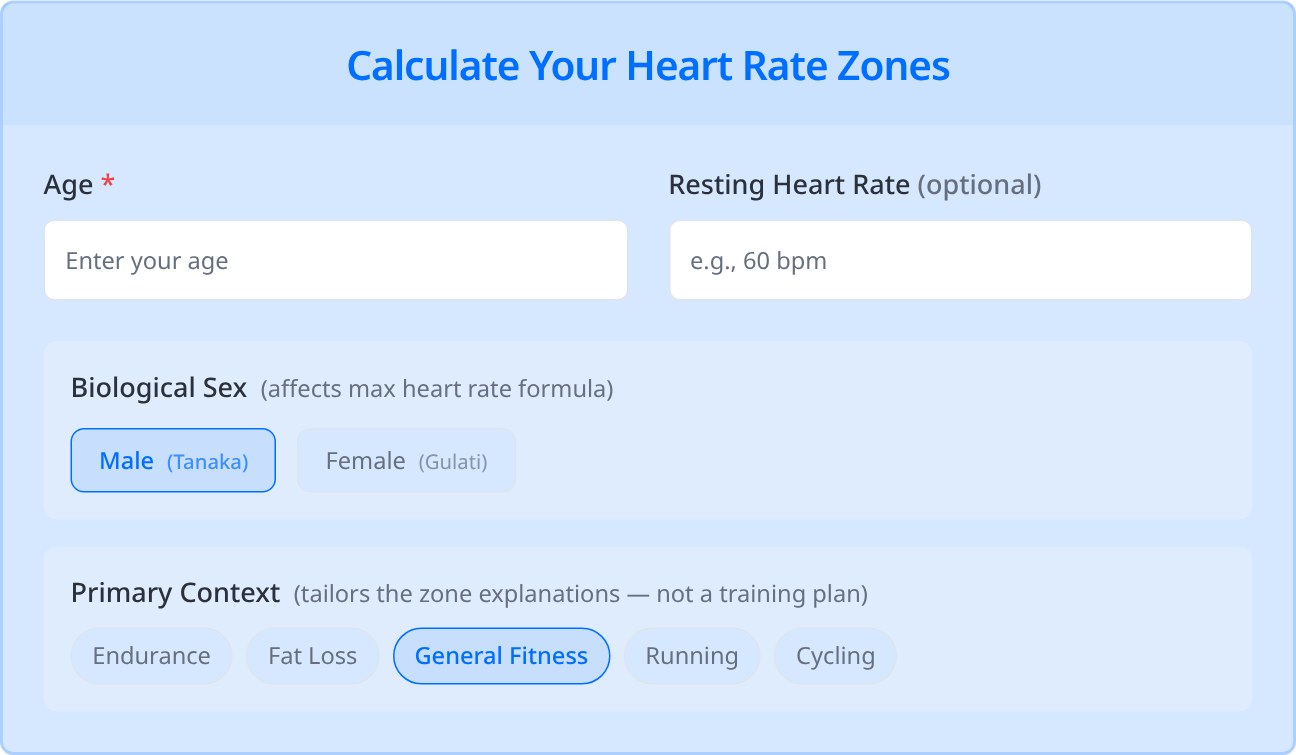
Once you have that number, apply it directly to the treadmill settings covered above: start with an incline walk or easy jog, watch your heart rate for the first several minutes, and adjust speed or incline in small steps until you’re holding steady in range. If you want to see how your number compares at different ages, our Zone 2 heart rate reference for a 23-year-old shows one example range. Head to our Zone 2 calculator to get your personalized range now.
FAQ
What should Zone 2 cardio be?
Zone 2 cardio is easy, steady aerobic work at a pace where you can still hold a conversation. Many five-zone models estimate it at about 60 to 70 percent of maximum heart rate, but the range depends on the model, and percentage zones are estimates rather than measured thresholds. It should feel sustainable, not strained, which is why the talk test works well as a quick check alongside heart rate data.
Is it good to do an incline walk after lifting weights?
An incline walk after lifting is a reasonable way to add low-impact aerobic work without excessive joint stress, since incline walking raises cardiovascular demand while limiting impact. Keep the effort in your Zone 2 range rather than pushing hard right after a strength session.
Does 10,000 steps count as cardio?
Steps taken at a pace brisk enough to count as moderate intensity, a range that overlaps with Zone 2 for many people, do count toward the 150 to 300 weekly minutes of moderate activity recommended for adults. A slow stroll at low effort contributes less toward that aerobic target than a brisk walk would.
Is a treadmill good for blood circulation?
A treadmill supports circulation the same way any aerobic activity does, by raising heart rate and blood flow during moderate-intensity movement like a Zone 2 walk or jog. Its main practical advantage is the ability to control speed and incline precisely, which makes it easier to hold a steady, sustainable effort.
Sources
- How to measure physical activity intensity | Physical Activity Basics | CDC
- What Is Zone 2 Cardio? | Cleveland Clinic
- Treadmill easy runs and Zone 2 tips | Runner’s World
Recommended
Find your personal heart rate zones
Enter your age to get all five training zones in seconds.
Open the heart rate zone calculator