Zone 3 Training: When Runners and Cyclists Should Use It
Quick answer: In a common five-zone heart-rate model, Zone 3 is roughly 70–80% of maximum heart rate and feels moderately hard or “comfortably hard.” It can be useful for steady tempo work and race-specific endurance, but it is not automatically the same as lactate-threshold or LT2 training. Heart-rate zone systems differ, so percentage ranges should be treated as estimates rather than precise physiological boundaries.

Zone 3 is the moderately hard middle of a common five-zone heart-rate chart: harder than easy Zone 2, easier than hard intervals. Used deliberately, it is a practical place for steady tempo work. The catch is that “Zone 3” means different things in different zone systems, and a 70–80% HRmax band is not the same thing as your lactate threshold.
TL;DR:
- In a common five-zone model, Zone 3 is roughly 70–80% of maximum heart rate — an estimate, not a precise physiological boundary.
- Five-zone Zone 3 is not automatically lactate-threshold, LT2 or “threshold interval” work; those depend on individual physiology.
- Zone 3 is useful for steady tempo, pacing practice and fueling practice during longer sustained efforts.
- For many recreational athletes, one planned moderate-to-hard session per week alongside easier training may be enough.
- On long or hot sessions, cardiac drift can raise heart rate at a steady pace or power, so combine heart rate with RPE and pace/power.
Table of Contents
- Five-Zone Charts vs Threshold Models
- What Zone 3 Feels Like and How to Measure It
- What Zone 3 Training Actually Improves
- Why Too Much Zone 3 Can Backfire
- Sample Zone 3 Tempo Workouts for Running and Cycling
- Cardiac Drift on Long and Hot Sessions
- Fitting Zone 3 Into Your Weekly Training
- Who Can Benefit Most From Zone 3
- Calculate Your Zone 3 Range Before Your Next Session
- FAQ
- Sources
Five-Zone Charts vs Threshold Models
This article uses the common five-zone heart-rate convention, where the approximate boundaries are:
- Zone 1: 50–60% of maximum heart rate (HRmax)
- Zone 2: 60–70% HRmax
- Zone 3: 70–80% HRmax
- Zone 4: 80–90% HRmax
- Zone 5: 90–100% HRmax
These are approximate model boundaries, not measured physiological limits, and other five-zone systems draw the lines differently.
Endurance research frequently uses a different, three-zone model built on physiological thresholds: below the first threshold, between the first and second thresholds, and above the second threshold. In that research model, “Zone 2” and “Zone 3” mean something completely different from a consumer five-zone heart-rate chart — research “Zone 3” is above the second threshold. Findings about three-zone “Zone 3” therefore cannot be used as evidence that 70–80% HRmax equals threshold or high-intensity work.
What Zone 3 Feels Like and How to Measure It
Zone 3 in a common five-zone model is a sustained moderate-to-hard intensity at about 70–80% of maximum heart rate, according to a clinical breakdown of heart rate zones. Breathing is clearly elevated and conversation becomes shorter, but the effort should remain controlled. For many athletes it resembles steady tempo work. However, the physiological location of LT1, LT2 and the lactate threshold varies between individuals, so a fixed 70–80% HRmax band cannot identify those thresholds reliably.
You have a few ways to estimate your own Zone 3:
- Age-based formula: simple, but estimated maximum heart rate can be off by several beats or more for an individual.
- Heart rate reserve (Karvonen method): uses maximum minus resting heart rate for a more individually adjusted range. It is still an estimate and does not determine your lactate threshold.
- RPE and the talk test: moderately hard effort with short phrases rather than full conversation is a useful cross-check on the number.
- Field or lab testing: a lactate threshold field test or laboratory testing gives a more individualized picture of your thresholds, which you can then compare with your five-zone Zone 3.
What Zone 3 Training Actually Improves
Because this article defines Zone 3 as roughly 70–80% HRmax, it cannot assume that intensity matches your lactate threshold. Its benefits are better described conservatively. Runner’s World’s Zone 3 breakdown also notes that too much of it can backfire.
Used in the right dose, Zone 3 can offer:
- Sustained aerobic work above easy pace: a higher-intensity aerobic stimulus than easy Zone 2.
- Steady tempo practice: learning to hold an even, controlled effort for longer periods.
- Cardiovascular and endurance stimulus: as part of a balanced mix of easy and harder training.
- Race-specific pacing where appropriate: rehearsing sustained efforts that resemble parts of longer events.
- Fueling practice: higher intensity increases carbohydrate reliance compared with easier efforts, according to the Cleveland Clinic’s explainer, so longer sustained sessions are a good place to test gels, drinks and timing.
- Calibration: learning how pace or power, RPE and heart rate relate to one another.
Zone 3 is not uniquely responsible for these adaptations; easier and harder training contribute too.
For many recreational athletes, one planned moderate-to-hard session per week may be enough alongside easier aerobic training. More experienced athletes may use additional tempo or race-specific work depending on total volume, sport, training phase and recovery.
Why Too Much Zone 3 Can Backfire
Zone 3 is demanding enough to accumulate fatigue, and if most sessions drift into it, it can displace the easier volume that supports aerobic development and recovery.
Endurance training research often finds that successful programs concentrate much of their volume at low intensity — see this review of training intensity distribution in distance running. Be careful with the labels, though: training-intensity-distribution studies frequently use three-zone threshold models, and their zones do not correspond directly to the five-zone percentages used on this page. This research is not proof that five-zone heart-rate Zone 3 should always be avoided; it supports keeping a substantial share of training easy.
Signs you may be leaning on Zone 3 too often:
- Interval quality dropping: your hardest sessions stop feeling sharp.
- Recurring soreness or heaviness: legs that never fully bounce back between sessions.
- Stalled progress: paces plateau despite consistent training.
Doing most sessions at a “medium” effort by default is one possible reason motivated athletes stop improving, but it is not the only one.
Sample Zone 3 Tempo Workouts for Running and Cycling
These are tempo-oriented examples, not lactate-threshold or LT2 prescriptions. Scale duration to your experience and sport:
- Continuous steady tempo: 20–30 minutes at a controlled Zone 3 effort.
- Broken tempo: 2 × 15–20 minutes at Zone 3 with 3–5 minutes easy between.
- Long-session blocks: 2–4 × 10 minutes of Zone 3 within an otherwise easy longer run or ride. On sessions longer than about an hour, this is a good place to practice fueling.
Short, fast threshold repetitions (such as 400 m repeats near lactate threshold) are a different workout from the five-zone Zone 3 focus of this article. Newer athletes can start with shorter blocks and longer recoveries.
Pro Tip: Treat your first few Zone 3 sessions as calibration. Note pace or power, heart rate and RPE together so you can rely on RPE on days your heart rate reads oddly high or low.

Cardiac Drift on Long and Hot Sessions
Age-based formulas like 220 minus age can misjudge true maximum heart rate, and the American College of Sports Medicine’s fitness estimation guidance describes the heart-rate-reserve (Karvonen) approach, which factors in resting heart rate. For a more individualized threshold reference, our LTHR field test guide explains how to run a sustained hard field test — note that the lactate threshold heart rate it estimates is not the same thing as five-zone Zone 3.
During prolonged exercise, heart rate can gradually rise even when pace or power stays constant. Heat, dehydration and duration can increase this drift, so heart rate may become a less direct indicator of external workload late in a session. Drift does not mean your physiological zones have changed. On long tempo efforts, consider RPE, pace or power, environmental conditions and heart rate together rather than chasing a fixed number for the full duration. See also why heart rate rises in the heat.
Fitting Zone 3 Into Your Weekly Training
Most endurance training is generally easier than Zone 3. A sensible structure:
- Easy aerobic sessions form most of the weekly volume.
- One planned Zone 3/tempo session can add moderate-hard specificity.
- Long sessions may sometimes include controlled Zone 3 blocks.
- Harder Zone 4/5 sessions require their own recovery.
- The right distribution depends on training history, event and training phase.
Here is one example week — not a prescription for every athlete:
- Monday: easy Zone 1–2 recovery run or ride.
- Wednesday: Zone 3 tempo session.
- Friday: easy aerobic volume.
- Saturday: long session with optional Zone 3 blocks.
- Sunday: rest or very light movement.
As an event approaches, some tempo work may shift toward race-specific efforts, while base-building phases often favor more easy volume. Adjust the balance by phase rather than adding Zone 3 on top of an already full week.
Generic percentage ranges are a starting point, not a verdict on your physiology. Our heart rate zone calculator can factor in resting heart rate alongside age for a more individually adjusted estimate than a flat age-based formula alone. For the easier intensity below Zone 3, our Zone 2 calculator guide covers it in the same practical terms. For readers also tracking recovery markers like HRV or sleep alongside training load, the Panora Health learning library covers how those biometrics interact with training stress.
Who Can Benefit Most From Zone 3
Zone 3 work can be particularly useful when an athlete wants sustained tempo practice below their hardest interval intensities. Depending on fitness, event duration and the zone model used, portions of long-distance running or cycling may overlap this intensity, but race heart rate varies substantially between athletes and events.
Beginners and athletes early in a base-building phase may want to be more cautious, since added moderate-hard fatigue can crowd out the easy volume that builds their aerobic foundation.
Calculate Your Zone 3 Range Before Your Next Session
A generic percentage chart can be several beats off for an individual. Our heart rate zone calculator uses your age and, optionally, your resting heart rate to estimate your Zone 3 range from common formulas — a starting point to check against RPE and the talk test.
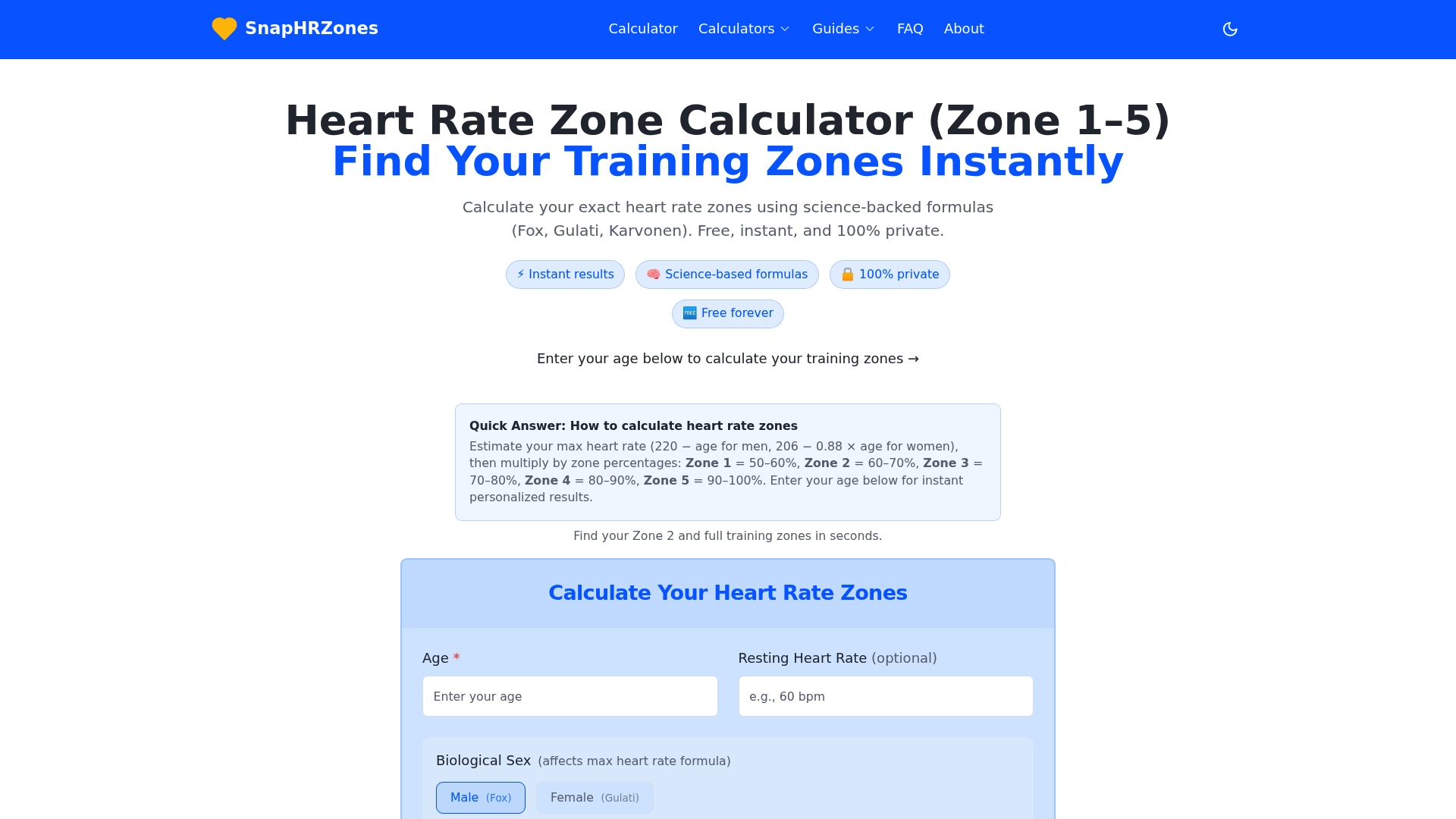
Before your next tempo run or ride:
- Calculate your zones first: get an individually adjusted estimate rather than a flat age-based guess.
- Recheck your inputs periodically: training does not automatically shift an HRmax-based Zone 3, but your resting heart rate, a newly measured maximum heart rate or a new threshold test can change your numbers.
- Pair heart rate with RPE: especially on long or hot sessions where drift distorts the numbers.
Calculate your heart rate zones and use them as one reference for your next tempo session.
FAQ
What is heart rate zone 3 training?
In a common five-zone model, Zone 3 training means working at roughly 70–80% of maximum heart rate, a “comfortably hard” effort often used for steady tempo sessions, according to the Cleveland Clinic’s zone breakdown. Breathing is elevated but controlled. It is not automatically the same as lactate-threshold training.
Is Zone 3 the same as lactate threshold?
Not necessarily. Lactate threshold, LT2 and maximal lactate steady state vary between individuals and are identified by testing, not by a fixed percentage of maximum heart rate. In research using three-zone threshold models, “Zone 3” means above the second threshold — a different scale from a five-zone heart-rate chart.
What is the 5 4 3 2 1 running method?
This refers to a structured interval format where reps or efforts decrease in a pattern, often used to vary pace and intensity across a single session. Specific versions vary by coach, so check how your training plan defines it rather than assuming a single standard.
Is a heart rate of 170 bad while running?
Not necessarily. Whether a specific heart rate is high depends on your personal maximum heart rate and fitness, since the same number can be an easy effort for one runner and near-maximal for another. Use a personalized zone estimate rather than judging a raw number in isolation. Stop and seek medical advice if a high heart rate comes with chest pain, fainting, unusual shortness of breath or palpitations.
How do I calculate my zone 2 heart rate?
Zone 2 sits below Zone 3 in a five-zone model and is typically estimated from maximum heart rate or heart rate reserve (Karvonen method). Our Zone 2 heart rate guide walks through the calculation step by step.
Sources
- What To Know About Exercise and Heart Rate Zones
- Zone 3 training: What it is, benefits, downsides, and more
- Does Lactate-Guided Threshold Interval Training within a High-Volume Low-Intensity Approach Represent the “Next Step” in the Evolution of Distance Running Training?
- ACSM: Estimating Cardiorespiratory Fitness
Recommended
Find your personal heart rate zones
Enter your age to get all five training zones in seconds.
Open the heart rate zone calculator