Fat Burning Strength Workouts: A Practical Guide
Quick answer: Fat-burning strength workouts combine resistance training with exercises that increase energy expenditure while helping preserve lean mass during weight loss. A practical starting point is 2–3 full-body strength sessions per week, built around compound movements such as squats, hinges, presses and rows. Cardio can be added separately or after strength work.
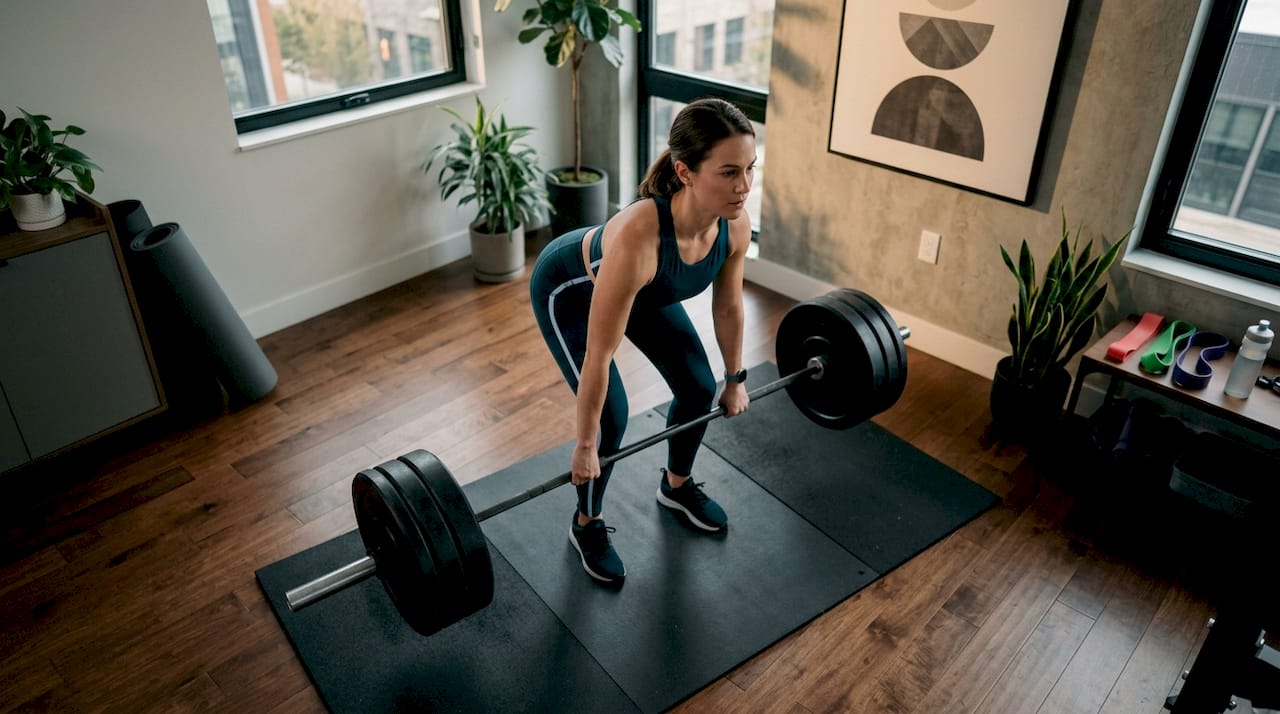
Fat burning strength workouts combine resistance training with a structure designed to support strength, preserve or build lean mass, and contribute to overall energy expenditure during a fat-loss phase. Unlike steady-state cardio, these workouts use compound movements like squats, deadlifts, and rows to engage multiple muscle groups at once. Resistance training helps you maintain or build lean muscle while you are in a calorie deficit. Lean mass contributes modestly to daily energy expenditure, and keeping it helps you stay strong while you lose fat.
What do you need before starting fat burning strength workouts?
Starting without the right foundation leads to wasted effort and injury risk. Get these basics in place first.
Equipment
You do not need a fully equipped gym. The following tools cover every workout in this guide:
- Dumbbells or kettlebells (adjustable sets work well for beginners)
- Resistance bands for mobility warm-ups and accessory work
- A flat surface for bodyweight movements like push-ups and planks
- A pull-up bar or cable machine if training at a gym
Movement foundations
Master four patterns before adding load: the squat, the hip hinge, the push-up, and the row. These four movements form the backbone of every fat loss resistance training program. Rushing into heavy weights without solid form increases injury risk and reduces muscle activation, which defeats the purpose.

Nutrition
Protein intake of 0.7–1.0g per pound of bodyweight is the standard recommendation for preserving muscle during a calorie deficit. Adequate protein intake supports maintenance of lean mass during weight loss and supports recovery from resistance training. Prioritize protein at every meal, especially after training.
Pro Tip: Tracking your protein intake for a week can help you see whether your usual diet provides enough protein to support lean-mass maintenance and recovery during a calorie deficit.
Recovery
Rest days are not optional. Full-body strength routines done 2–3 times weekly require recovery days between sessions to allow muscle repair and growth. Skipping rest makes it harder to recover, train well and stay consistent.
What are the best fat burning exercises and how should you structure them?
Fat-burning strength routines can combine compound lifts with conditioning work to train multiple muscle groups while adding cardiovascular demand. This structure combines resistance work with conditioning in the same workout, while the compound movements train several muscle groups at once.
The core compound movements
- Goblet squat — Holds a dumbbell at chest height, forces an upright torso, and trains quads, glutes, and core simultaneously.
- Romanian deadlift — Targets the posterior chain (hamstrings, glutes, lower back) with a hip hinge pattern that transfers directly to athletic performance.
- Push-up or dumbbell press — Trains chest, shoulders, and triceps. Elevate feet for a harder variation or use an incline for beginners.
- Dumbbell row — Builds upper back strength and corrects the forward posture most people develop from desk work.
- Glute bridge or hip thrust — Trains the glutes through hip extension and can help build lower-body strength.
- Plank variation — Trains core stability under load, which protects the spine during every other lift.
Set, rep, and rest structure
Standard guidelines recommend 3–4 sets of 8–12 reps with 60–90 seconds of rest between sets. Moderate rep ranges and sufficient training volume are commonly used to support muscle growth and strength development. Rest periods depend on the exercise, load and training goal. Heavier compound lifts often benefit from longer rest, while shorter rests can be used for lighter accessory or conditioning-focused work.
| Phase | Sets | Reps | Rest |
|---|---|---|---|
| Strength block | 3–4 | 8–12 | 60–90 sec |
| Conditioning circuit | 3 rounds | 12–15 | 30–45 sec |
| Cool-down mobility | 1 | 5–10 min | N/A |
Conditioning phase
After the strength block, add a 10–15 minute conditioning circuit using kettlebell swings, jump squats, or battle rope intervals. Combining heavy lifts with high-intensity conditioning in one 45–60 minute session is one option; strength and conditioning can also be done on separate days. The best arrangement depends on recovery, schedule and which type of performance is the priority. The conditioning phase keeps heart rate elevated and burns additional calories without adding significant training volume.
Pro Tip: Always perform your heaviest compound lifts first, while your nervous system is fresh. Doing hard conditioning work first can reduce how much you can lift, so when strength is the priority, lift first and do conditioning afterwards.
How do you progress fat burning strength workouts effectively?
Progressive overload is the single most important principle in fat loss resistance training. Without it, strength and muscle adaptations may slow as your body becomes accustomed to the training stimulus.
Here is how to apply it without overreaching:
- Increase weight gradually. Raise resistance by 5–10% when you can complete all sets and reps with clean form. Jumping weight too fast breaks form and increases injury risk.
- Add reps before weight. If you are doing 3 sets of 8, progress to 3 sets of 10 before increasing the load. This builds a strength base that supports heavier work later.
- Adjust tempo. Slowing the lowering phase of a squat or press from 1 second to 3 seconds increases time under tension without adding weight. This is especially useful when equipment is limited.
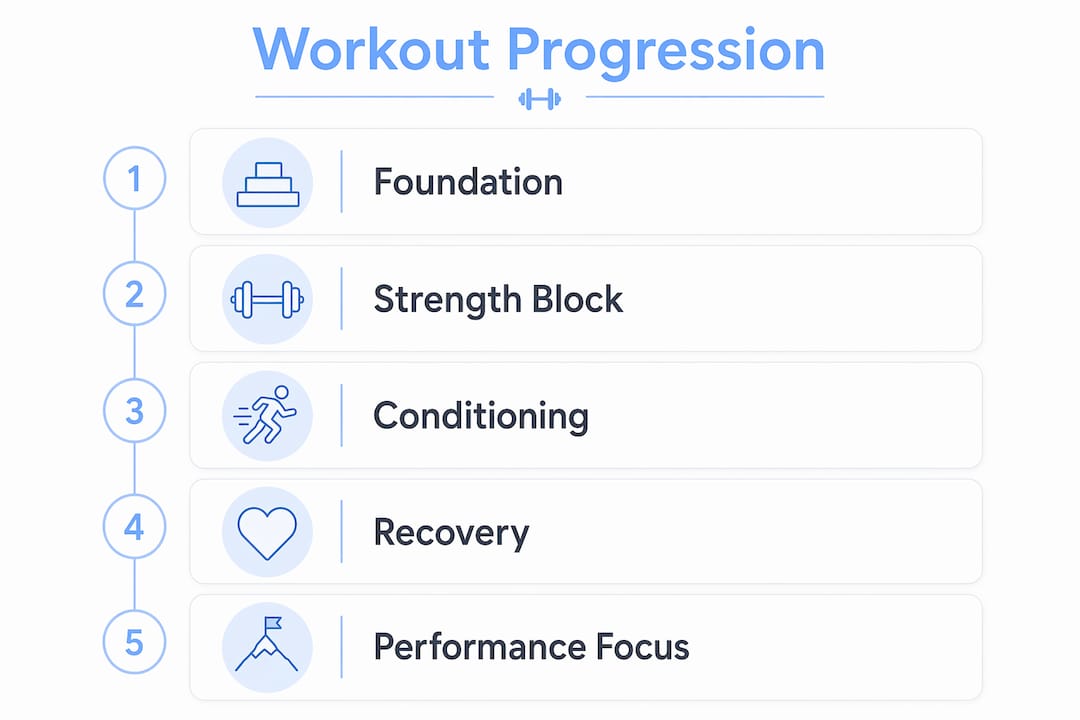
- Follow a 12-week structure. A 12-week full-body program built around compound movements can provide a practical structure for beginners and intermediates. Weeks 1–4 build movement quality, weeks 5–8 add load, and weeks 9–12 push intensity through shorter rest and heavier weight.
- Schedule cardio strategically. Place low-intensity cardio (Zone 2 work) on rest days from strength training. High-intensity cardio on the same day as heavy lifting competes for recovery resources. Understanding your Zone 2 heart rate range helps you keep those sessions in the right intensity band.
- Track sessions. Write down every set, rep, and weight. Progress is invisible without data, and most people overestimate how much they are improving.
What mistakes slow down fat loss progress?
Most people hit a wall not because the program is wrong, but because of fixable errors in execution.
- Trusting the scale too much. Muscle is denser than fat, so body composition can improve significantly while scale weight stays flat. Measure progress with photos, clothing fit, and strength gains, not just pounds.
- Skipping rest days. Training hard every day without enough recovery can leave you fatigued, hurt performance and make the plan harder to stick to. Two rest or active recovery days per week work well for most people.
- Over-relying on cardio. Aerobic exercise contributes to energy expenditure and cardiovascular fitness, while resistance training is particularly useful for maintaining or building lean mass. Resistance training can support body-composition goals by helping preserve or build lean mass, while aerobic exercise adds energy expenditure and cardiovascular benefits. Combining both is a sensible approach.
- Under-eating protein. Dropping calories without maintaining protein intake makes it harder to keep lean mass. Adequate protein supports lean-mass maintenance and recovery from resistance training.
- Ignoring form. Poor form on compound lifts shifts load to joints instead of muscles. This reduces training effectiveness and increases injury risk, both of which derail long-term progress.
A sustainable training plan is one you can recover from and follow consistently over time.
Why progress can feel slow at first
A common pattern is to start very hard, burn out after a few weeks and quit. Usually the workout is not the problem; the expectation is. Resistance training can build lean mass while you lose fat, and those two changes can partly cancel each other out on the scale for weeks.
Tracking performance as well as body weight gives you a clearer picture. Adding 10 pounds to your Romanian deadlift is a measurable win. Going from 8 to 15 push-ups is real progress.
Heart rate monitoring can also help. Knowing whether your conditioning circuit is hitting Zone 4 or Zone 5 intensity versus drifting into a moderate effort zone tells you whether you are training at the intensity you planned. Without that data, you are guessing. With it, every session has a clear target.
Consistency matters more than any single session. Body composition changes build over months, not days.
Train smarter with Snaphrzones
Strength training can help you preserve or build lean mass during fat loss while improving strength and physical function. Heart rate monitoring can help you control conditioning intensity and tell easier aerobic work apart from harder efforts.
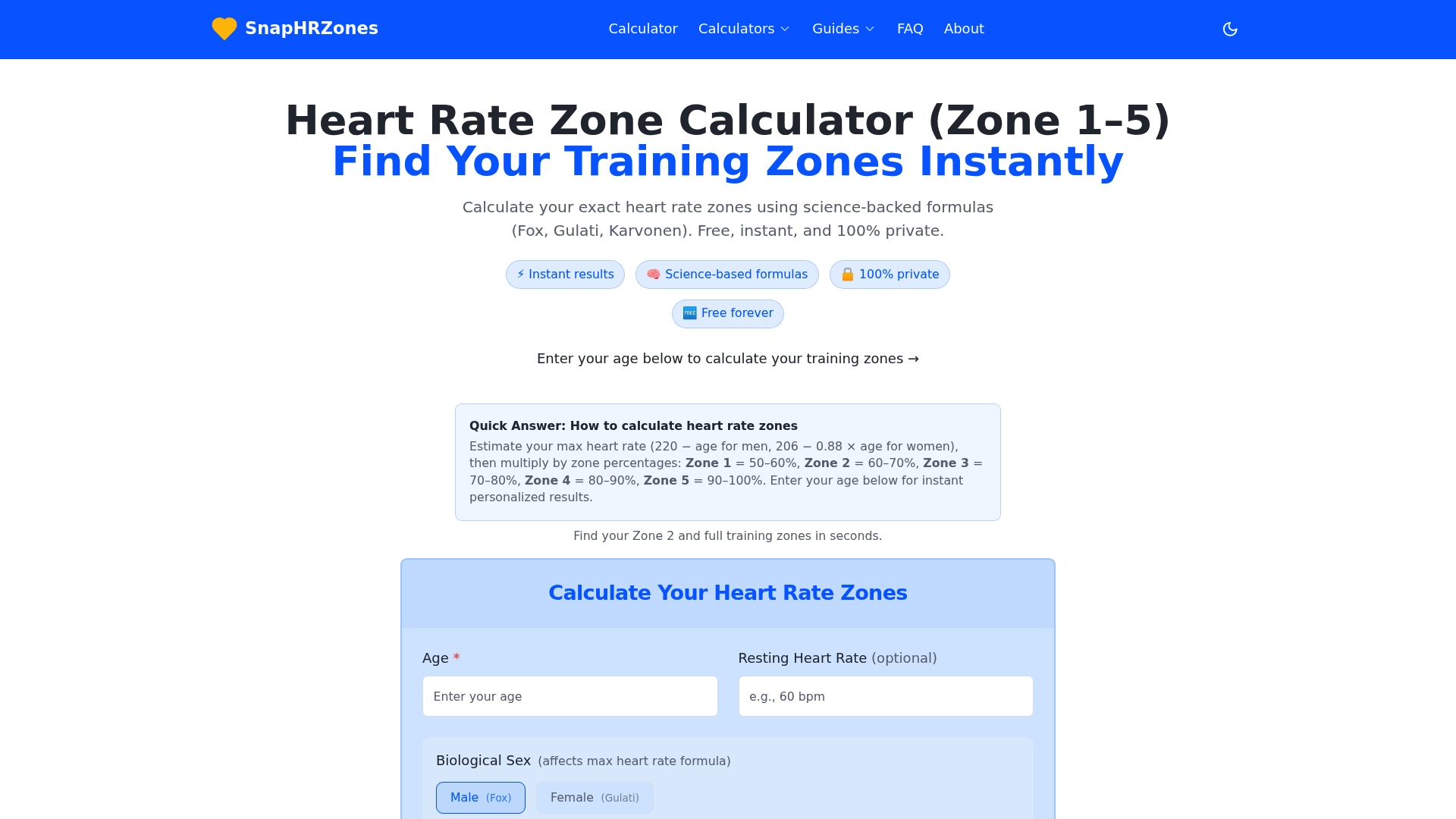
Snaphrzones gives you free, accurate tools to find your fat burning heart rate zone and calculate your full training zones in seconds. Use the Heart Rate Zone Calculator to set precise targets for every phase of your workout, from your strength warm-up to your conditioning finisher. When you know your zones, you stop leaving results on the table. You train with purpose and recover smarter.
Key takeaways
Strength training is valuable during fat loss because it helps you keep or build lean muscle and strength, while cardio adds extra energy expenditure and cardiovascular benefits. Combining both, with a sensible calorie deficit, is a practical approach.
| Point | Details |
|---|---|
| Compound lifts first | Perform squats, deadlifts, and rows before conditioning to maximize strength output and muscle stimulus. |
| 3–4 sets, 8–12 reps | This rep range is commonly used to support muscle growth and strength development. |
| Progressive overload | Increase weight or reps by 5–10% when form is solid so strength and muscle adaptations keep progressing. |
| Protein at 0.7–1.0g per pound | Adequate protein supports maintenance of lean mass during a calorie deficit and recovery from training. |
| Track body composition, not just weight | Scale weight can stay flat while fat loss and muscle gain occur simultaneously. |
FAQ
What are fat burning strength workouts?
Fat burning strength workouts are resistance training routines that combine compound lifts with conditioning circuits to build or preserve lean muscle. Strength training contributes to energy expenditure and can help preserve or build lean mass during a fat-loss phase. Actual fat loss occurs over time when overall energy intake and expenditure produce an energy deficit.
How many days per week should I do strength training for fat loss?
Two to three full-body strength sessions per week is the standard recommendation, with rest or low-intensity cardio on the remaining days to support recovery and sustained fat loss.
Do I need to do cardio with strength training to lose fat?
Cardio is not strictly required, but low-intensity Zone 2 cardio on rest days complements strength training by adding energy expenditure with relatively low recovery cost. Combining strength training and cardio is a practical approach for most people.
Why is my weight not dropping even though I am training?
Muscle is denser than fat, so body composition can improve while scale weight stays flat or even rises slightly. Measure progress through strength gains, clothing fit, and photos rather than weight alone.
How much protein do I need during a fat loss program?
Aim for 0.7–1.0g of protein per pound of bodyweight daily. Adequate protein intake supports maintenance of lean mass during weight loss and supports recovery from resistance training.
Recommended
Find your personal heart rate zones
Enter your age to get all five training zones in seconds.
Open the heart rate zone calculator