Muscle Recovery Supplements: What Actually Works for Runners?
Quick answer: Protein is useful for meeting daily protein needs and supporting muscle repair, while creatine has stronger evidence for certain performance and training adaptations than for directly reducing post-run soreness. Evidence for tart cherry and omega-3s is mixed and outcome-dependent, and magnesium is not a universal recovery supplement. For most recreational athletes, sufficient food, fluids and sleep matter more than any supplement.

For runners and triathletes, the muscle recovery supplements with the most research behind them are omega-3s, tart cherry, creatine, and protein, and food and fluids come first. Most of the evidence is for modest effects, mainly on soreness rather than on how fast you perform again. Below is what the studies show, how timing works, and how to choose a product carefully.
TL;DR
- Food first: carbohydrate, protein, and fluids after hard sessions do the heavy lifting, and supplements sit on top of that.
- A 2025 network meta-analysis found omega-3 gave the largest recovery benefit of three common supplements, creatine helped strength, and protein helped endurance performance.
- Tart cherry and pomegranate show the most consistent results for soreness, and tart cherry appears to work best when started days before a hard effort.
- Magnesium is not recommended routinely unless a deficiency is diagnosed or suspected. Ask your doctor first.
- Supplements are loosely regulated, so check for third-party testing and talk with a professional, especially if you compete under anti-doping rules.
Table of Contents
- What matters more than supplements?
- Which recovery supplements have the best evidence?
- Protein – how much and when?
- Creatine for endurance athletes
- Tart cherry and omega-3 – promising but uncertain
- Magnesium, BCAAs and other products
- Timing: why “precovery” matters
- How to evaluate supplement claims
- Recovery starts with training intensity
- Practical takeaway
- FAQ
- Sources
What matters more than supplements?
The NIH Office of Dietary Supplements says a nutritionally adequate diet and plenty of fluids matter for physical performance. That is the baseline every supplement is measured against. If your meals after long runs or rides are thin on carbohydrate and protein, a capsule will not fix that.
The same fact sheet notes that makers of performance supplements usually don’t run studies in people to learn whether their products work and are safe. Studies that do exist often involve small groups and mixed results. That is the right frame for everything below: promising, but rarely settled.
The hierarchy is worth stating plainly. Adequate energy intake, appropriate protein, carbohydrate replenishment when training demands justify it, hydration, sleep and sensible training load management all come before any supplement. Supplements do not compensate for insufficient recovery or inappropriate training loads.
What to eat and drink after a hard session
A Mayo Clinic piece on endurance recovery says that after extended training or finishing a long race, athletes should aim for 1 to 1.2 grams of carbohydrate per kilogram of body weight and roughly 20 to 25 grams of protein within the first two hours. For a 70 kg (154 lb) runner, that works out to about 70 to 84 grams of carbohydrate plus a standard serving of protein.

Carbohydrate does most of the work for refilling glycogen, your stored muscle fuel. A 2021 meta-analysis (Craven et al.) found that carbohydrate during recovery improved glycogen re-synthesis compared with water. Adding protein did not further speed glycogen re-synthesis in that analysis. Protein still has a job, since it supports muscle repair, but it is not a shortcut for refueling.
A 2019 review of endurance nutrition adds a practical point: if you need to refuel quickly for another event with less than four hours of recovery time, higher carbohydrate intake of 1.2 g/kg per hour in the first few hours is the approach it describes. For most training days with a full day between sessions, normal meals are enough.
Rehydration
A 2025 narrative review notes that, when rehydrating between exercise bouts, athletes are advised to drink fluids equal to 125 to 150% of the body mass lost during exercise. Weighing yourself before and after a hot long run gives you a rough idea of your own losses. Under heat stress, the same review reports daily water losses in active athletes can reach 4 to 10 liters and sodium losses 3.5 to 7.0 grams, so sweat-heavy days call for more than plain water for some people.
Which recovery supplements have the best evidence?
No single pill wins across every outcome. Researchers compare supplements by outcome: soreness, muscle-damage markers, strength, or performance. The picture changes with each.
| Supplement | Potential benefit | Evidence limitations | Practical relevance |
|---|---|---|---|
| Protein | Supports meeting protein needs and muscle repair | Extra supplementation may add little when intake is already sufficient | Most relevant when diet falls short |
| Creatine | Strength and repeated high-intensity performance | Not a general cure for endurance-related soreness | Context-dependent |
| Tart cherry | Possible modest reduction in soreness or selected recovery markers | Small, heterogeneous studies | Optional |
| Omega-3 | Possible effects on inflammation or soreness | Mixed evidence; dose and duration vary | Uncertain |
| Magnesium | Correcting inadequate intake | Limited evidence for extra recovery benefit without deficiency | Deficiency-specific |
The sections below go through the research behind each row.
Omega-3, creatine, and protein compared
A network meta-analysis of 35 trials with 1,211 participants compared three popular options. Omega-3 showed the greatest benefit for recovery outcomes, creatine was best for muscle strength, and protein was most effective for endurance performance. The authors suggest matching the supplement to your main goal instead of recommending one for everyone.
| Supplement | Outcome where it ranked best | Notes for runners and triathletes |
|---|---|---|
| Omega-3 | Recovery outcomes | Effect size was small to moderate (SMD 0.40) |
| Creatine | Muscle strength | Relevant if strength work is part of your plan |
| Protein | Endurance performance | Also supports daily intake targets |
These are pooled results from varied trials, not a guarantee for any one athlete. The effect sizes are modest, and trial designs differ.
Protein – how much and when?
On daily protein, a 2025 review recommends about 1.8 g/kg per day for endurance athletes. Most people can reach that with food. Protein powder is a convenience, not a requirement.
It helps to separate two questions that are often merged: how much protein you eat across the whole day, and whether you need a serving immediately after a workout. Total daily intake and your overall training context matter more than a mythical narrow recovery window. The post-session serving described in the basics section above is a sensible habit after long efforts, especially when the next hard session is close, but it is not a magic deadline.
Creatine for endurance athletes
Creatine is the supplement with the longest track record in sports. The IOC consensus statement lists creatine monohydrate among the few supplements with good evidence of performance benefits, alongside caffeine, nitrate, sodium bicarbonate, and possibly beta-alanine. Those are mostly performance aids rather than recovery aids, which is worth knowing when a label blurs the two.
For endurance athletes it helps to separate four different claims. Creatine has its strongest support for strength adaptations and repeated high-intensity efforts, such as sprints or surges. The evidence for improving general endurance performance is weaker, and it is not a general cure for endurance-related soreness. Creatine can also increase body mass through water retention, which is a normal, expected effect rather than a health concern, but it is worth knowing about if body weight matters in your sport.
Tart cherry and omega-3 – promising but uncertain
Plant-based options get a lot of attention for soreness. A 2026 network meta-analysis of 30 trials with 595 participants found that only pomegranate and tart cherry significantly reduced soreness at 48 hours compared with placebo. No option showed a clear advantage for 48-hour strength or for the blood markers CK and CRP, and certainty was generally low. Its authors describe these supplements as targeted options for how sore you feel, not universal ways to speed objective recovery.
A separate 2026 meta-analysis of 24 trials found polyphenol supplementation was linked to a small improvement in pain or soreness, while effects on muscle-damage biomarkers and performance stayed uncertain, with low to very low certainty.
A 2025 narrative review lists several fruit extracts, plus vitamin E, curcumin, cacao, and vitamin D, as possibly helpful for exercise-induced muscle damage. It places the strongest evidence around tart cherry, beetroot, pomegranate, and vitamin D. It also points out that most studies measured muscle damage or inflammation rather than later performance, and that lower damage markers do not always translate into better performance.

The distinction that matters for you as an athlete: feeling less sore is a subjective outcome, while performing again sooner is an objective one. A change in an inflammatory marker is not proof of meaningful performance improvement, and most of these studies are small and use different doses and products.
Magnesium, BCAAs and other products
Magnesium is one of the most searched recovery supplements, and the evidence is mixed. A Harvard Health article says that unless you have a diagnosed or suspected deficiency, or a condition with clear evidence of benefit, there is no compelling reason to routinely take a magnesium supplement. The author also recommends running any supplement by your doctor first because of possible side effects and interactions.
A 2024 systematic review on magnesium and muscle soreness suggested that people who exercise intensely may need more magnesium than sedentary people. A more recent narrative review concluded that the evidence does not support routine magnesium supplementation as a universal strategy for performance, and that adequate dietary magnesium stays the primary approach.
A 2023 umbrella review of 53 meta-analyses reported significant effects of HMB and L-carnitine on post-exercise creatine kinase, and of BCAAs on delayed onset muscle soreness, all with moderate certainty. Several other compounds, including curcumin, ginseng, and anthocyanins, were linked to reduced soreness. These are signals worth knowing about, not a case for stacking a cabinet of products. Reduced soreness or a lab marker is not the same as running or riding faster next week.
The common thread is the difference between insufficient dietary intake and claims that supplementation benefits everyone. If you get frequent cramps or unusually severe soreness, talk with your doctor or a registered dietitian before trying supplements. Persistent symptoms can have other causes that a pill will not address. Magnesium-rich foods such as leafy greens, nuts, seeds, beans, and whole grains are the usual first step.
Timing: why “precovery” matters
Many athletes reach for a supplement right after the workout. For tart cherry, the evidence points elsewhere. A 2022 review by Malachy McHugh found that drinking tart cherry juice for several days before exercise accelerated recovery of muscle function in the days after, while the evidence did not support starting on the day of exercise or afterward. He suggests the word “precovery” for this, since it takes several days of intake to change markers of antioxidant status or inflammation.
For a runner or triathlete, that has a practical meaning. If you want to try tart cherry, it is more sensible to line it up with a known hard block, such as race week or a big training weekend, than to expect it to rescue a session you already finished. Doses and product forms vary across studies, so follow the label and ask a sports dietitian about what fits you.
Carbohydrate and protein timing is different. Fueling in the first hours after long efforts matters most when your next hard session is close. If you have a full day or more, total daily intake counts for more than the exact minute you eat.
How to evaluate supplement claims
Supplement quality is a real issue for athletes. The IOC consensus statement notes that inadvertent intake of substances prohibited under anti-doping codes is a known risk with some products. If you compete in sanctioned events, check your sport’s anti-doping rules before you buy anything.
The same statement advises a complete nutritional assessment before deciding on supplements. It also recommends trying any performance-oriented product thoroughly in training or simulated competition before race day, with professional guidance strongly advised. When you read a claim about a product, a short checklist helps:
- What population was studied? Results in untrained volunteers or cyclists may not transfer to you.
- What outcome improved? Soreness, a blood marker, strength and race performance are different things.
- Was the difference meaningful? A statistically detectable change can still be too small to notice.
- Was the study controlled? Look for a placebo group and randomization.
- Was the product independently tested? A third-party quality mark on the label is a sensible filter, especially for competitive athletes.
- Is there a medication interaction or other safety concern? Check with your doctor or a sports dietitian, particularly if you take medication, are pregnant, or have a medical condition.
In practice: review your diet first, pick one goal, change one thing at a time, and never debut a product on race day.
Recovery starts with training intensity
Recovery is not only what you take. It is also how hard you train on the days between key sessions. Easy days that drift into moderate effort are a common reason athletes feel flat, and excessive training intensity can undermine recovery no matter what is in your shaker bottle. We built our Heart Rate Zone Calculator so you can see your own ranges and aim easy sessions at the lower zones. Our Zone 2 page shows how to estimate that easy aerobic range.
Heart rate zones are estimates, and individual numbers vary. Treat the output as a starting point and adjust with how you feel. Using zones to pace training does not replace food, sleep, or medical advice, and zones cannot diagnose inadequate recovery. If you want to go further on structuring easy days, our guide to the active recovery workout shows how to keep a recovery session genuinely easy.
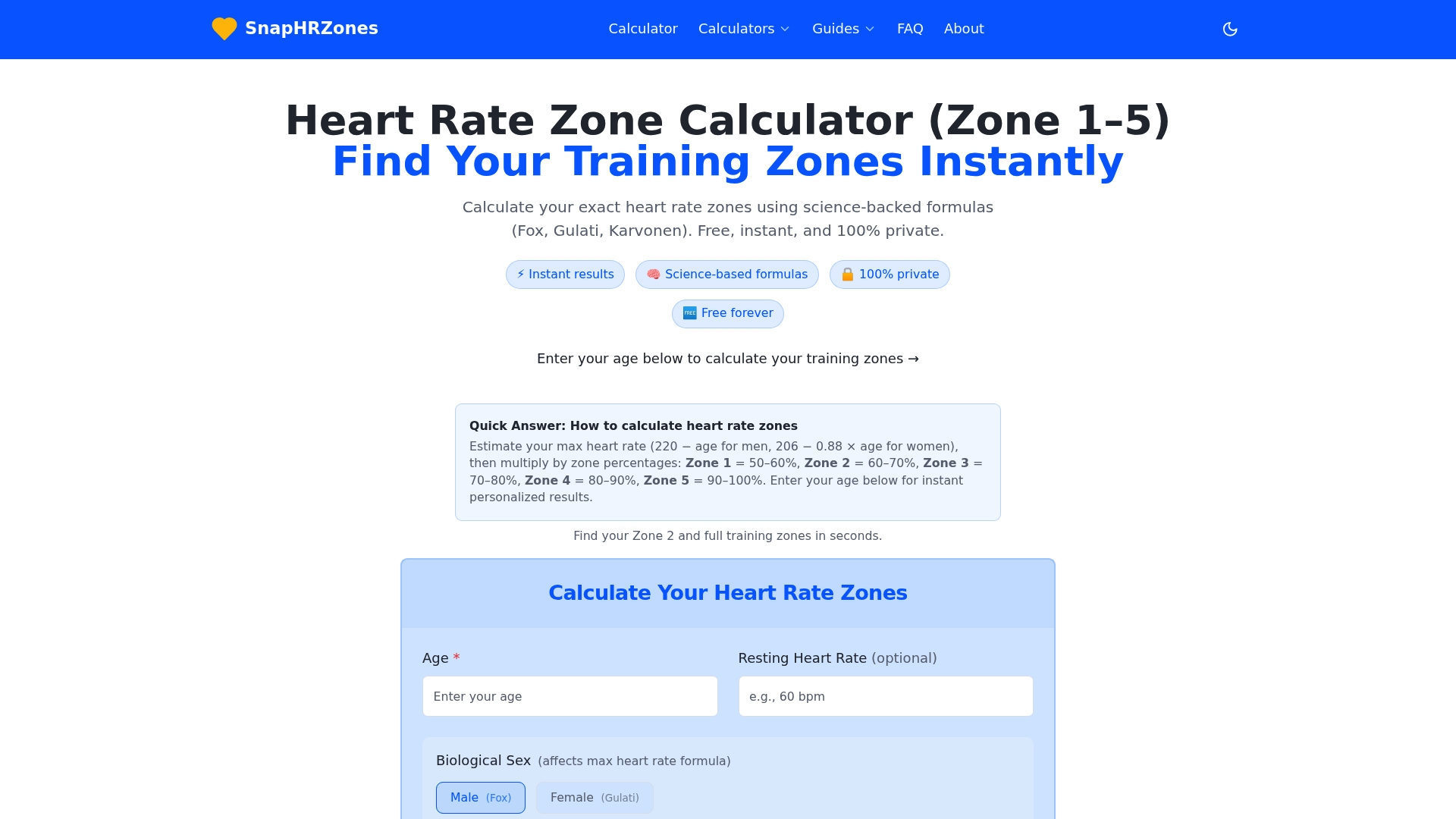
Enter your age and, if you know it, your resting heart rate on the SnapHRZones calculator to get zone ranges you can use to plan easy and hard days.
Practical takeaway
Much of the research is on small groups, uses different doses and products, and rates its own certainty as low. Few studies follow trained endurance athletes through a full season. So the honest summary is that some supplements have a plausible, modest role, mostly for soreness, and that none replaces consistent training, enough food, and sleep.
Who might reasonably consider supplementation? An athlete whose diet is already in order, who has a specific goal such as reducing soreness around a race block, and who chooses one independently tested product at a time. Who should prioritize ordinary nutrition and training adjustments first? Almost everyone else. If you take one thing from this guide, make it this: build recovery from the bottom up. Fuel and hydrate well, pace your easy days by heart rate, and then consider one targeted supplement that matches a clear goal.
FAQ
What is the best supplement for muscle recovery?
No single supplement is best for everyone. In a 2025 network meta-analysis, omega-3 ranked highest for recovery outcomes among protein, creatine, and omega-3. For soreness specifically, tart cherry and pomegranate showed the most consistent results in a 2026 analysis. Evidence certainty for many of these findings is low, so a sports dietitian can help you choose.
Does magnesium help muscle recovery?
The evidence is mixed. Harvard Health says there is no compelling reason to routinely supplement unless you have a diagnosed or suspected deficiency. A recent review also favors getting magnesium from food first. Ask your doctor before starting a supplement, especially if you take medication.
What is a good thing to eat or drink after a workout?
After long or hard endurance sessions, Mayo Clinic’s guidance is about 1 to 1.2 grams of carbohydrate per kilogram of body weight and 20 to 25 grams of protein within two hours. Add fluids to replace sweat losses. A meal such as rice, eggs, and vegetables, or a smoothie with fruit and milk, can cover it.
When should I take tart cherry for recovery?
A 2022 review found benefits when tart cherry juice was consumed for several days before exercise, not when started on the day or after. If you try it, plan it around a hard training block or race, and follow the product label.
Sources
- Dietary Supplements for Exercise and Athletic Performance, NIH Office of Dietary Supplements
- Feeding Recovery for Endurance Athletes, Mayo Clinic News Network
- Nutrition and Supplement Update for the Endurance Athlete, PMC
- Nutritional Strategies to Improve Post-exercise Recovery, PMC
- Comparative Effects of Dietary Protein, Creatine, and Omega-3, PMC
- IOC consensus statement: dietary supplements and the high-performance athlete
- Comparative effects of plant-derived supplements, Frontiers in Nutrition
- Effects of polyphenol-rich interventions, Frontiers in Nutrition
- Nutritional interventions for exercise-induced muscle damage, Nutrition Reviews
- What can magnesium do for you and how much do you need, Harvard Health
- Effects of magnesium supplementation on muscle soreness, Journal of Translational Medicine
- The Effect of Magnesium Supplementation on Exercise, African Journal of Biomedical Research
- “Precovery” versus recovery, PMC
Recommended
Find your personal heart rate zones
Enter your age to get all five training zones in seconds.
Open the heart rate zone calculator