Deep Breathing Exercises for Anxiety: 4 Methods That Work
Quick answer: Slow, comfortable breathing, not deep gulps of air, is the way to calm anxiety: try belly breathing, the VA counted breath, box breathing, or the NHS gentle breath, practiced daily while you are calm. Breathing exercises are a reasonable first step for mild anxiety, but severe chest pain, severe difficulty breathing, or fainting require emergency medical help immediately (call 911 or your local emergency number). New or unusual symptoms need prompt medical assessment rather than being assumed to be anxiety.

Slow, deliberate breathing is one of the simplest skills you can use when anxiety rises, and it takes no equipment. The four methods below are diaphragmatic (belly) breathing, the VA counted breath, box breathing, and a gentle counted breath from the NHS. The American Psychiatric Association lists belly breathing, box breathing, and 4-7-8 breathing among the common techniques. Below you will find how to do each one, how often to practice, and how to use them as a runner or triathlete before a hard session or race day.
TL;DR
- Slow your breath rather than gulping air. Anxiety can cause shallow breathing or breath-holding, and very deep, rapid breaths can make you feel worse.
- Start with belly breathing: about 10 minutes, once or twice a day, learned while you are calm.
- Box breathing (4 counts in, hold, out, hold) is a quick option before a stressful moment.
- Breathing exercises are a reasonable first step for mild anxiety. Moderate or severe anxiety generally calls for professional care alongside them.
- If you get dizzy or more anxious, return to a normal breath and a slow exhale, and stop if symptoms persist.
Table of Contents
- Why “deep” breathing should really mean slow breathing
- Method 1: Diaphragmatic (belly) breathing
- Method 2: The VA counted breath
- Method 3: Box breathing
- Method 4: A gentle, counted calming breath
- Quick comparison
- Using breathing before a run or race
- How often to practice
- Track your recovery with the numbers you already have
- Put your training zones to work
- If breathing makes you dizzy or more anxious
- When to talk with a professional
- FAQ
- Sources
Why “deep” breathing should really mean slow breathing
The phrase “deep breathing” can mislead. The VA’s National Center for PTSD explains that anxiety often produces quick, shallow breathing or breath-holding, and that rapid or very deep breathing can worsen anxious feelings through hyperventilation. Its guidance is to slow the breath and take in less air, not to gulp a huge inhale.
That matters because overbreathing lowers carbon dioxide in the blood. Johns Hopkins Medicine notes this can cause dizziness, lightheadedness, shortness of breath, tingling, palpitations, and chest pain, symptoms that can themselves intensify fear. So the goal is a comfortable, unforced breath with a long, easy exhale.
What the evidence suggests
The evidence is encouraging but preliminary. The National Center for Complementary and Integrative Health (NCCIH) cites a 2019 review of three studies with 880 participants suggesting diaphragmatic breathing may reduce stress, with favorable changes in self-rated mental health and some measures such as cortisol and blood pressure. Treat breathing as a helpful skill, not a cure.
Method 1: Diaphragmatic (belly) breathing
This is the foundation for the other techniques. University of Michigan’s relaxation guide describes it this way:
- Sit comfortably with your feet on the floor, or lie down.
- Fold your hands over your belly.
- Breathe in slowly with a normal breath so your belly rises and your shoulders stay still.
- Breathe out slowly to a count of five, then pause for two to three seconds.
- Continue for about 10 minutes.
If you are new to it, Cleveland Clinic suggests starting lying on your back with knees bent. Put one hand on your upper chest and one just below your rib cage. Inhale slowly through your nose so the lower hand rises while the upper hand stays relatively still. Then tighten your abdominal muscles and exhale through pursed lips so your belly falls.
Method 2: The VA counted breath
The VA’s version adds a calming word. Per the VA exercise:
- Get comfortable and inhale a normal nasal breath, mouth closed, for a count of five, letting your abdomen expand.
- Pause for five seconds.
- Exhale slowly through your nose or mouth to a count of seven, silently saying a soothing word such as “calm.”
The longer exhale is the point. It keeps you from taking in too much air.
Method 3: Box breathing
Box breathing is easy to remember, which makes it handy under pressure. Harvard Health describes it as inhaling gradually through the nose over four counts, holding for four, exhaling slowly through the mouth over four, holding empty for four, then repeating for several cycles.

A U.S. Department of Defense health article gives the same four-part sequence and says it can be used for stress already present or before a situation you expect to be distressing.
If holding your breath feels uncomfortable, shorten the holds or skip them and just make the exhale slow. There is no benefit in forcing it.
Method 4: A gentle, counted calming breath
The UK’s NHS offers a softer approach that works standing, seated with back support, or lying down. Its guidance says to let the breath reach comfortably into your belly without forcing it, inhale through your nose and exhale through your mouth, count gently from one to five on the in-breath and again on the out-breath if that helps, and continue for at least five minutes.
You may also see 4-7-8 breathing recommended. It is on the American Psychiatric Association’s list of common techniques, but the research here gives no step-by-step protocol for it, so use a method above if you want a clear routine.
Quick comparison
| Method | Counts | Best for |
|---|---|---|
| Belly breathing | Normal inhale, exhale to 5, pause 2 to 3 seconds | Daily practice and learning the skill |
| VA counted breath | In 5, pause 5, out 7 | Calming with a cue word |
| Box breathing | 4 in, 4 hold, 4 out, 4 hold | Before a stressful moment |
| NHS gentle breath | In 1 to 5, out 1 to 5 | Five minutes or more of steady calm |
Using breathing before a run or race
Pre-race nerves are normal, and a few slow breaths fit easily into a warm-up routine. Try box breathing in the start corral or belly breathing while you lace up. Practice the same routine in training so it is familiar on race day.

Keep in mind that nerves can also show up in your numbers. If your heart rate runs high at an easy pace, our guide to high heart rate on slow runs walks through checks to make before changing pace, and heart rate spikes when running covers common causes. For the bigger picture of how training load and life stress interact, see stress and exercise.
If pressure before competition is a recurring theme for you, this resource on remaining calm under pressure covers strategies for in-the-moment and longer-term calm.
Using it during a panic attack
Breathing may help you get through a difficult moment without leaving it or making it worse, according to University of Michigan. The same guide warns that using breathing compulsively to make anxiety vanish can reinforce the belief that anxiety is dangerous, which may increase anxiety over time. Use it to ride out the wave, not to fight it.
How often to practice
Think of breathing like training: skill comes from repetition when stakes are low. The VA says to learn the exercise when you are calm, practice several times a day with 10 to 15 breaths each time, and use it in stressful situations once it feels familiar. University of Michigan suggests about 10 minutes twice daily at a regular time. Cleveland Clinic suggests starting with five to 10 minutes, three to four times a day, and building up gradually.
Pick one schedule and keep it simple. A common pairing for athletes is after a morning run and again before bed.
Track your recovery with the numbers you already have
If you already wear a heart rate monitor, our guides on heart rate recovery and HRV versus heart rate explain how to build a baseline and notice how calmer practice shows up in your numbers over time.
Put your training zones to work
Calm breathing pairs naturally with easy aerobic running, where you should be able to hold a relaxed conversation. Our free Heart Rate Zone Calculator gives you personalized zones, and our page on your Zone 2 range helps you find that easy effort.
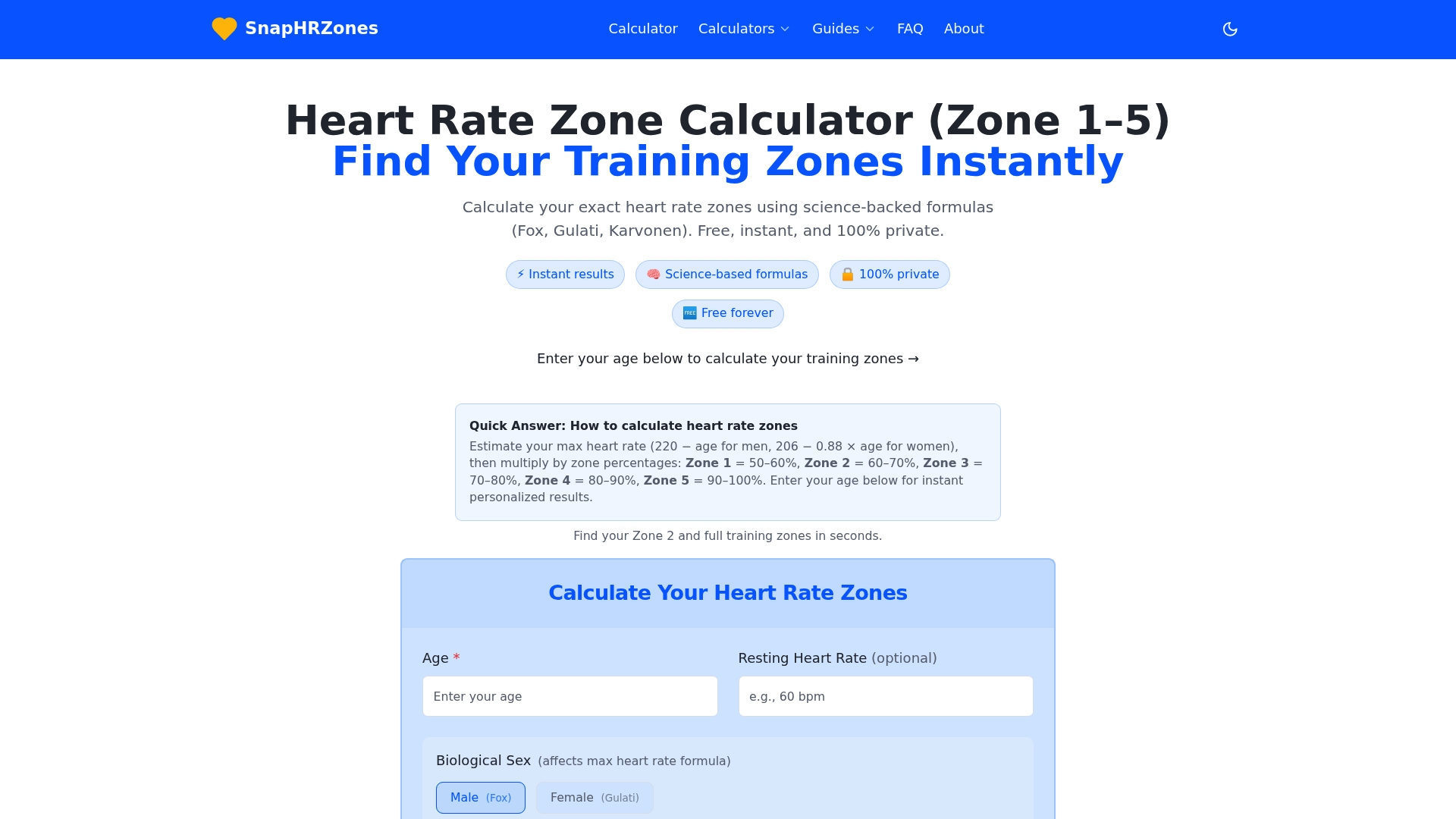
Use it as a starting point and adjust with how you feel.
If breathing makes you dizzy or more anxious
If you feel anxious, the VA advises slowing your breathing and taking in less air: a normal breath, then a slow exhale. Johns Hopkins suggests staying calm, breathing through pursed lips, and learning diaphragmatic breathing, and seeking psychological care if anxiety or panic has been diagnosed.
Relaxation techniques are generally considered safe for healthy people, but NCCIH notes that some people occasionally experience increased anxiety, intrusive thoughts, or fear of losing control. Rare worsening has been reported in people with epilepsy or some psychiatric or trauma histories. If that sounds like you, talk with your clinician before starting. Cleveland Clinic also advises discussing diaphragmatic breathing with a clinician if you have anxiety, asthma, COPD, or another relevant condition.
When to talk with a professional
One caution first: not every alarming sensation is anxiety. If you have severe chest pain, severe difficulty breathing, or fainting, seek emergency medical help immediately by calling 911 or your local emergency number. Do not use breathing exercises to delay urgent care. New or unusual symptoms, including chest pain, significant shortness of breath, or a racing heart that does not settle, also need prompt medical assessment rather than being assumed to be anxiety or hyperventilation.
Breathing is a skill, not a full treatment plan. University of Michigan states that relaxation skills are not typically a cure and work best alongside cognitive behavioral skills such as cognitive restructuring and exposure.
The American Psychiatric Association says deep breathing is often a reasonable first step for mild anxiety, while moderate or severe anxiety generally needs relaxation techniques in addition to therapy and/or medication. It recommends considering professional help when anxiety is persistent or overwhelming, interferes with work, school, relationships, or sleep, causes panic attacks, or leads you to avoid important activities. A primary care doctor or a licensed mental health professional is a good place to start.
FAQ
What is the best breathing exercise for anxiety?
There is no single best one. Belly breathing is the usual foundation, and box breathing is easy to use in the moment. Choose the one that feels comfortable and practice it daily.
How long should I do deep breathing?
Sources vary: the NHS suggests at least five minutes, University of Michigan about 10 minutes twice daily, and Cleveland Clinic five to 10 minutes three to four times a day to start. The VA suggests 10 to 15 breaths several times a day.
Why do I feel dizzy when I breathe deeply?
Breathing too fast or too deeply can lower carbon dioxide in your blood and cause lightheadedness or tingling. Take a normal breath, exhale slowly, and take in less air. If symptoms continue, speak with a clinician.
Can breathing exercises replace therapy?
For mild anxiety they can be a reasonable first step. For moderate or severe anxiety, the American Psychiatric Association says they generally belong alongside therapy and/or medication.
Sources
- VA National Center for PTSD: Breathing Exercise
- NCCIH: Relaxation Techniques: What You Need To Know
- American Psychiatric Association: Relaxation Techniques for Mental Wellness
- American Psychiatric Association: Expert Q&A on Anxiety Disorders
- University of Michigan: Relaxation Skills for Anxiety
- Cleveland Clinic: Diaphragmatic Breathing Exercises & Benefits
- Harvard Health: Take a tactical breather
- DVIDS: Breathing for Relaxation
- NHS: Breathing exercises for stress
- Johns Hopkins Medicine: Hyperventilation
Recommended
Find your personal heart rate zones
Enter your age to get all five training zones in seconds.
Open the heart rate zone calculator