Stress and Exercise: When Training Helps—and When It Adds Stress
Quick answer: Exercise can support stress management, but hard or prolonged workouts also add physical load. When life stress and poor sleep leave you depleted, consider a shorter, conversational session or rest rather than forcing intervals. Use perceived effort, the talk test, and estimated heart rate zones together. Zone 2 is not a treatment for mental illness, and HRV cannot diagnose stress.

Exercise is one of the most widely recommended tools for managing stress. Regular physical activity can improve stress regulation and psychological well-being over time, even though individual workouts—particularly intense sessions—may temporarily increase physiological stress and cortisol levels. Cortisol is a normal part of the exercise response, not inherently harmful. For runners and triathletes there is a catch: hard, prolonged training is also a physical stressor, so the same workout can either relieve pressure or pile onto it, depending on how much else is going on in your life. This guide covers what the evidence says, which kinds of sessions tend to help, and how to use heart rate zones to keep your training on the relieving side.
TL;DR
- Regular activity can support stress management, but it does not necessarily lower cortisol or adrenaline during an individual workout. For an accessible overview of exercise and relaxation, see Harvard Health Publishing.
- Almost any movement you enjoy can help, including walking, cycling, swimming, jogging, yoga or weightlifting, per the Mayo Clinic.
- Intense, prolonged exercise during a period of high emotional stress can add physical demand to an already taxed system, so easier sessions and rest matter.
- Heart rate zones give you an objective way to keep easy days easy. Our heart rate zone calculator shows your ranges in a few seconds.
- If stress, anxiety or low mood is persistent, talk with a healthcare professional. Exercise is a support, not a replacement for care.
Table of Contents
- What stress does to your body
- How exercise relieves stress
- Which types of exercise help
- How much exercise is enough
- When training adds to stress
- Using heart rate zones to keep stress relief on your side
- Building a routine you can keep
- Calculate your zones
- FAQ
- Sources
What stress does to your body
Stress is the body’s response to a demand, whether that demand is a deadline, a family problem, a race or a hard interval session. The response is physical: hormones such as adrenaline and cortisol rise, heart rate climbs and muscles tense. That is useful in short bursts. Over weeks, a body that never fully switches off can feel tired, sleep poorly and struggle to recover from training.
A 2022 review of the neurobiology of exercise and stress reports that a sedentary lifestyle is associated with stress vulnerability, while a physically active lifestyle is linked to greater stress resilience. That is an association, not a guarantee. Plenty of active people are stressed, and the relationship runs in both directions: stress can make it hard to train, and training can make stress easier to carry.
For runners and triathletes, this matters in a specific way. You already have a built-in stress habit. The question is whether your current training is working as an outlet, as another source of load, or some mix of both.
How exercise relieves stress
Researchers describe several overlapping mechanisms. None of them works alone, and science is still sorting out how much each contributes.
Stress hormones and endorphins
Harvard Health Publishing summarizes the longer-term relaxation benefits by saying that aerobic exercise reduces stress hormones. That summary should not be read as an acute response to every workout: strenuous exercise can temporarily increase cortisol, as shown in a study of exercise intensity and cortisol responses. Cortisol supports normal physiological functions; a temporary rise does not establish harm, and measured long-term hormonal responses vary across studies. The Mayo Clinic adds that physical activity pumps up endorphin production, which can increase feelings of well-being.
Harvard also describes the neurochemical effect as working in two directions: exercise can act as both a stimulant and a calming agent. Many runners recognize this. A tired, foggy afternoon becomes clearer after an easy jog, and a wired, restless evening settles after a steady spin on the bike.
Changes in the brain
A 2022 review reports that regular physical activity correlates with increases in neurotrophic factors and markers of synaptic plasticity, along with lower inflammatory factors in the central nervous system. A 2023 scoping review of stress pathways notes that aerobic exercise may increase cerebral vascularization and blood flow, which supports delivery of nutrients and oxygen to the brain.
The linked New York Times article discusses exercise and mental health. However, the specific claim that movement may help soothe the anxious amygdala by up-regulating neuropeptide Y is not established here as a verified finding in humans. Do not use this proposed mechanism to predict the effects of a workout or to choose a training intensity.
Practice for your body
The Mayo Clinic points out that exercise can provide stress relief by imitating the effects of stress, such as the fight-or-flight response, in a controlled setting. It also notes that physical activity can help lower resting heart rate and blood pressure and support the immune system. Over time, your body gets practice working through a raised heart rate and recovering from it.
Focus, mastery and confidence
Not all of the benefit is chemical. The Mayo Clinic describes a meditation-like effect: when you are absorbed in the rhythm of your stride or stroke, daily worries recede. Harvard Health Publishing adds that regular exercise provides a sense of mastery, control and increased self-confidence, which helps with stress management. Finishing a planned session, however modest, is a small win on a day when little else is going to plan.
Which types of exercise help
A practical starting point is an activity you enjoy and can sustain; no single activity or intensity is established here as the optimal treatment for stress. The Mayo Clinic states that almost any form of movement can help, including walking, cycling, swimming, jogging, yoga and weightlifting, and recommends choosing an activity you enjoy.
Running
A scoping review of the relationship between running and mental health found that running generally improves acute mood. It also suggests outdoor running may offer more benefit than treadmill running for reducing anxiety and fatigue. The review covers research published between 1970 and 2019 and cannot say that a treadmill run is a poor choice. If the treadmill is what fits your schedule or weather, it still counts.
Walking and cycling
Walking or easy cycling can be manageable alternatives when a hard run feels like too much. A schedule of 30 minutes three times a week is one possible routine, not a verified anxiety-treatment dose in this guide. Start with a duration you can comfortably manage, and remember that even easy activity adds some physical load.
Swimming and cross-training
Triathletes have an advantage here. Swapping a run for a swim or a bike session changes the stimulus, gives joints a break and can break up a mental rut. The Mayo Clinic notes that cross-training with stationary biking, swimming or circuit training can reduce the pounding on runners’ legs and feet that contributes to stress fractures. That is physical stress, but it ties into the mental side: an injury is one of the most reliable ways for a runner to lose their main stress outlet.

Strength work and yoga
Strength training and yoga sit on the Mayo Clinic’s list of activities that can help. For endurance athletes, strength sessions have a second job: the HHS guidelines state adults should do muscle-strengthening activities involving all major muscle groups on 2 or more days a week. If you are curious how heart rate behaves during lifting, see our guide to heart rate zones for strength training.
How much exercise is enough
There is no single dose that guarantees stress relief, and the research on stress specifically is less precise than the research on general health. The established guidelines are a reasonable anchor.
| Source | Moderate intensity | Vigorous intensity |
|---|---|---|
| Mayo Clinic (2025) | At least 150 minutes per week | At least 75 minutes per week |
| American Society for Preventive Cardiology (2022) | At least 30 minutes on 5 days per week (40% to 59% of VO₂ max) | At least 20 minutes on 3 days per week (60% or more of VO₂ max) |
These targets are aimed at general health, and most runners and triathletes already exceed them. For stress specifically, the more relevant takeaway is consistency over heroics. Short, manageable sessions can be a practical starting point in a busy season, not a clinically established optimal treatment. Serious or persistent mental-health symptoms need appropriate professional care; exercise can complement treatment, not replace it.
If you are new to exercise, have a medical condition or have been inactive for a while, the Mayo Clinic advises starting slowly and consulting a healthcare professional before you begin.
When training adds to stress
Here is the part that matters most for the people reading this page. Exercise is a stressor by design. That is how fitness adapts: you apply load, recover, and come back stronger. A framework known as the F.I.T.T. principle (frequency, intensity, time and type) is used in athletes to manipulate physiological stress for safe, effective adaptation. The word is manipulate for a reason. The dose is adjustable.
Psychological stress and training load are different demands, but both matter when planning recovery. If work pressure, disrupted sleep or other demands leave you depleted, reducing workout intensity or duration is a practical option. Lighter activity still adds physical load; rest may be the better choice when you feel unwell or unusually exhausted.
There is no formula that tells you when you have crossed that line, and we would be wary of anyone who claims one. Some signs that your training may be stacking onto your stress rather than relieving it:
- Easy runs feel hard, or your usual pace feels out of reach for several days in a row.
- You dread sessions you normally enjoy.
- Your sleep is worse, not better, even though you are training more.
- Your resting heart rate is noticeably higher than your usual baseline for several mornings.
- Minor aches keep appearing.
These are common signals that coaches watch, not diagnostic tests. Persistent fatigue, low mood, anxiety or unexplained dizziness warrants medical evaluation rather than simply changing training zones. Stop exercising and call 911 for chest pain, fainting, severe shortness of breath, or serious palpitations with those symptoms. The American Heart Association describes heart-attack warning signs and recommends calling 911 even if you are unsure. For overwhelming stress or thoughts of self-harm, contact a mental health professional or call or text 988, the Suicide and Crisis Lifeline in the United States.
Using heart rate zones to keep stress relief on your side
The practical problem for many endurance athletes is that easy days drift. You start a recovery jog meaning to go gentle and finish it faster than planned. Repeated moderate-intensity sessions may add more load than planned if they displace easy days. Their usefulness depends on your goals, session design and recovery, not on moderate intensity being inherently ineffective.
Heart rate gives you an objective check. Use an estimated range alongside perceived effort and the talk test, not instead of them. Poor sleep, heat, medication and stress can affect the heart rate you see.
Easy aerobic work: Zone 2
In this site’s five-zone percentage model, Zone 2 is 60% to 70% of estimated maximum heart rate, or 60% to 70% of heart rate reserve when resting heart rate is entered. It is commonly useful for lower-intensity aerobic training and often easier to recover from than sustained high-intensity sessions. It still contributes to training load, especially during long sessions or high-volume weeks, and formula zones may not match individual physiological thresholds. Stress relief does not require Zone 2. You can find your range with our Zone 2 calculator, or see a worked example for a particular age, such as the Zone 2 range for a 28-year-old (113 to 132 bpm) or for a 51-year-old (103 to 120 bpm). Both examples assume male, Tanaka’s 208 − (0.7 × age) equation and no resting-heart-rate input: estimated maximum heart rates are rounded to 188 and 172 bpm, then the 60% and 70% endpoints are rounded to whole bpm. For female with Gulati and no resting-heart-rate input, the corresponding ranges are 109 to 127 bpm at 28 and 97 to 113 bpm at 51. Entering resting heart rate changes the method to Karvonen: resting HR + (estimated maximum HR − resting HR) × intensity. These are starting estimates, not universal ranges for everyone of the same age.
If your watch is a Garmin, our guide to setting heart rate zones on Garmin walks through the five-zone setup so your easy days are actually flagged as easy.
Moderate work: Zone 3
In the site’s five-zone model, Zone 3 is 70% to 80% of maximum heart rate, or the same percentage of heart rate reserve with Karvonen. It has legitimate applications in structured endurance training and is not inherently ineffective or undesirable. Its usefulness depends on goals, session design, recovery and total workload; the problem is unplanned load, not the zone itself. Our piece on when runners and cyclists should use Zone 3 explains how to include it on purpose rather than by drift.
Hard work: Zone 5
VO₂max intervals can be demanding; their suitability depends on your training background, goals and recovery. In a calm week they can feel energizing. During a stressful stretch they may be the first thing to trim. If you want to understand what these sessions involve before deciding, read our guide to Zone 5 training.
Choose effort before pace
For an intentionally easy session, aim for comfortable conversation in full sentences and an effort that feels easy to you. Moderate activity commonly allows talking but not singing; an easy recovery session may feel gentler still. A calculated Zone 2 range is a cross-check, not a reason to push harder when breathing or your overall condition says otherwise.
Illustrative example: After several short nights and a demanding workday, a runner replaces planned intervals with a short, easy walk-jog. If conversation becomes difficult or effort feels unusually high, the runner slows down, shortens the session or rests. This is an example of adjusting load, not evidence that a particular workout treats stress.
Recovery measures are context, not diagnoses
HRV and resting heart rate can provide context against a personal baseline, but training, sleep, illness, alcohol, breathing and measurement conditions all influence them. A low HRV reading cannot diagnose psychological stress or identify its cause.
Heart rate recovery depends on preceding effort, recovery activity and measurement protocol. Neither it nor HRV is a stand-alone readiness test. Consider symptoms, sleep and how a familiar easy session feels.
A simple stress-aware week
This is an illustration, not a prescription, and the right balance depends on your experience, your event goals and your health:
- Normal week: a mix of easy aerobic sessions, one or two harder workouts, strength work on two days and at least one full rest day.
- High-stress week: keep the schedule but swap one hard session for easy Zone 2 time, shorten long sessions if sleep is poor and protect the rest day.
- Very high-stress week: consider walking, easy cycling or swimming in place of your usual run, and treat consistency as the goal rather than performance.
This sample week is a planning illustration, not a tested stress-management protocol. If you work with a coach, share changes in sleep, life demands and motivation as well as how your legs feel.
Building a routine you can keep
The Mayo Clinic’s advice for sustaining an exercise habit is straightforward and fits athletes as well as beginners:
- Start slowly and increase gradually, especially after a layoff or illness.
- Schedule it. Put workouts on the calendar the same way you would a meeting.
- Choose activities you enjoy. Enjoyment is what carries you through a hard month.
- Check with a healthcare professional if you have health concerns or are starting from low activity.
For runners and triathletes, add a few habits of your own:
- Keep one session each week that is purely for unwinding, with no pace target. Run by heart rate, or leave the watch at home entirely.
- Train outdoors when you can. The running review above suggests outdoor sessions may help mood and fatigue more than the treadmill, though any running improves acute mood.
- Rotate in cross-training when you are tired or sore, to protect your legs while keeping your outlet.
- Treat rest days as part of the plan. Recovery is where adaptation happens, and it is where the load of a stressful week gets to settle.
Calculate your zones
If you do not know your ranges yet, a few minutes now makes every later session easier to judge. The SnapHRZones Heart Rate Zone Calculator is free. It uses gender-specific formulas and lets you add your resting heart rate for a more personalized result. Enter your details, check the Zone 2 range, and use it to keep your easy days easy.
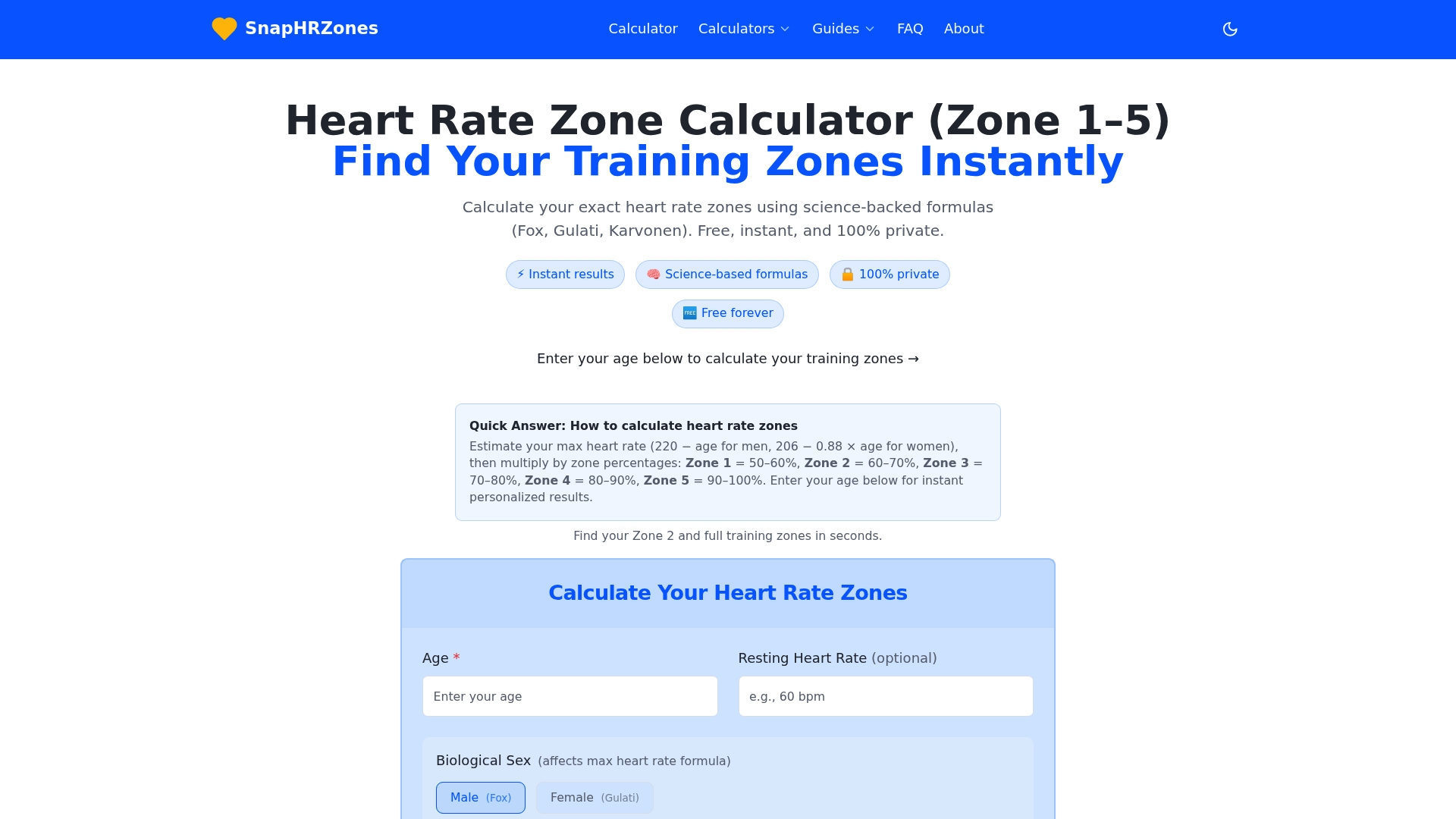
Calculated zones are estimates. Individual heart rates vary with fitness, medication, heat, sleep and many other factors, so use the numbers as a guide alongside how you feel, and ask your doctor before starting a new program if you have a heart condition or other health concerns.
FAQ
Does exercise really reduce stress?
The evidence says it often helps psychological well-being. Regular activity may support stress regulation over time, while individual strenuous workouts can temporarily raise cortisol. Effective exercise does not need to lower cortisol during every session. The size of the effect varies from person to person, and exercise is not a substitute for professional care when stress or anxiety is persistent.
What is the best exercise for stress relief?
There is no single winner. Walking, cycling, swimming, jogging, yoga and weightlifting can all help, and the Mayo Clinic recommends choosing something you enjoy. For runners, outdoor sessions may offer slightly more mood and fatigue benefit than treadmill runs, but any form of running generally lifts mood in the short term.
Can too much exercise make stress worse?
Yes, it can. Intense, prolonged training during a period of high emotional stress adds physical demand to a system that is already taxed. Swapping a hard session for an easy one and protecting rest days are common ways to keep training supportive. If fatigue, poor sleep or low mood lingers, see a healthcare professional.
How many minutes a week do I need?
General health guidelines summarized by the Mayo Clinic suggest at least 150 minutes of moderate or 75 minutes of vigorous aerobic activity per week for most healthy adults. These are general health recommendations, not a prescribed dose for stress relief. Many endurance athletes already meet them; adding more training is not automatically the right response to feeling stressed.
Should I use heart rate zones when I am stressed?
They can be useful. Zones help you hold easy days at an easy effort when your perception of effort is skewed by poor sleep or a hard week. Treat calculated ranges as estimates, and let how you feel overrule the number on days when the two disagree.
Sources
- Exercise and stress: Get moving to manage stress, Mayo Clinic
- Exercising to Relax, Harvard Health Publishing
- Running from Stress: Neurobiological Mechanisms of Exercise-Induced Stress Resilience, PMC
- Changes in stress pathways as a possible mechanism of aerobic exercise, PMC
- Can Moving the Body Heal the Mind?, The New York Times
- A Scoping Review of the Relationship between Running and Mental Health, PMC
- Physical activity, cardiorespiratory fitness, and cardiovascular health, PMC
- Physical Activity Guidelines for Americans, 2nd edition, HHS and CDC
- Customizing intense interval exercise training prescription, PMC
Recommended
Find your personal heart rate zones
Enter your age to get all five training zones in seconds.
Open the heart rate zone calculator