Belly Breathing Exercise: How to Do It, Step by Step

A belly breathing exercise (also called diaphragmatic breathing) encourages awareness of your diaphragm and a relaxed breathing pattern: lie down or sit supported, put one hand on your belly and one on your chest, breathe in gently through your nose so the belly hand rises, then breathe out slowly with lips gently pursed or together. Start with a few comfortable breaths and build toward 5 to 10 minutes if it feels easy. This guide covers the steps, technique checks, common mistakes, and ways runners and triathletes can experiment with the practice.
TL;DR
- Lie on your back or sit in a supported chair, one hand on your belly and one on your chest. Breathe in through your nose so the belly hand moves more than the chest hand.
- Breathe out slowly, aiming for an exhale about two to three times as long as the inhale, according to the American Lung Association.
- Practice for 5 to 10 minutes, a few times a day at first. Learn it when your breathing is calm, not when you are already short of breath.
- Runners can experiment with this awareness while walking or running easily, using a rhythm such as 3 steps in, 2 steps out only if comfortable. No rhythm is optimal for everyone.
- If you have asthma, COPD or anxiety, or feel dizzy, talk to a healthcare provider before making it a routine.
Table of Contents
- What belly breathing actually is
- How to do a belly breathing exercise
- How to tell whether you are belly breathing
- What the evidence says belly breathing can do
- Common mistakes and how to fix them
- Belly breathing for runners and triathletes
- Fit it into a training week
- When to check with a health professional
- Put your zones to work
- FAQ
- Sources
What belly breathing actually is
The diaphragm is a dome-shaped muscle under your lungs. When it contracts on the inhale, it moves downward and gives the lungs room to fill. Your belly expands slightly because the organs below are nudged out of the way. That is why the technique is called belly breathing, even though the air goes into your lungs, not your stomach.
The diaphragm participates in ordinary breathing, including breaths with visible chest movement. Mayo Clinic Press describes the diaphragm as an important muscle for breathing. A Mayo Clinic physician uses the analogy chest breathing is like crawling, belly breathing like walking to encourage the exercise. That analogy does not mean these are separate mechanisms or that adults have stopped using their diaphragm. The exercise emphasizes relaxed abdominal and lower-rib movement; some chest movement is normal.
Practice develops awareness of this pattern, rather than teaching a forgotten physiological mechanism.

How to do a belly breathing exercise
These steps blend the instructions published by the American Lung Association and Northwestern Medicine. Both agree on the core pattern.
- Get comfortable. Lie on your back, ideally with a pillow under your head and knees, or sit in a supported chair. Let your neck and shoulders relax.
- Place your hands. Rest one hand on your upper chest and the other on your belly, just below the ribs.
- Breathe in gently through your nose. Let your abdomen move outward without pushing it out. A slow count of 2 is an optional starting cue, not a requirement. Some chest and rib movement is normal; do not try to immobilize your chest.
- Breathe out gently. Exhale through softly pursed lips or with your lips together and let your abdomen move inward. A count of about 4 is an optional cue. The American Lung Association describes a longer exhale, about two to three times the inhale, but comfort matters more than achieving a ratio. Do not force the air out.
- Build toward 5 to 10 comfortable minutes. The American Lung Association gives this practice range. Cleveland Clinic suggests three to four times a day at first for beginners. This is general practice guidance, not a proven minimum dose or an athlete-specific training prescription; start shorter if needed.
The pace should feel easy. If you feel strained, stop and return to normal breathing. Shorten future sessions or reduce the counts; you do not need to take maximal breaths or achieve a particular timing ratio.
A simple five-minute starter session
Try this the first week:
- Minutes 0 to 1: Lie down, hands in place, and simply watch which hand moves as you breathe normally.
- Minutes 1 to 4: Breathe in through your nose for about 2 counts, out through pursed lips for about 4. Keep the chest hand as still as is comfortable.
- Minute 4 to 5: Let go of counting and breathe naturally, noticing whether your belly still moves.
One short session at a time is a reasonable place to start. Neither this example nor the suggested frequency is a proven optimal schedule for runners.
How to tell whether you are belly breathing
The hand check helps you notice where movement is most visible: place one hand on your chest and the other on your belly, then breathe gently. Belly and lower-rib movement may become more noticeable during the exercise, but chest movement does not mean your diaphragm is inactive. Mayo Clinic mentions Frequent sighing and yawning; those signs are nonspecific and do not diagnose a breathing pattern or medical condition.
Don’t worry if your chest hand moves a little. The aim is for the belly to lead and the chest to follow, not for the chest to be perfectly still.
What the evidence says belly breathing can do
The sources below are medical institutions describing potential benefits. Individual results vary, and belly breathing is a complement to medical care, not a replacement.
- Respiratory health. Cleveland Clinic and Northwestern Medicine describe diaphragmatic breathing in respiratory-care guidance, including for people with breathing difficulties. This does not show that the exercise increases oxygen delivery, reliably reduces breathing effort during exercise, or improves performance in otherwise healthy runners.
- Stress and calm. Mayo Clinic describes the exercise as a practice that promotes calm relaxation. Mayo Clinic Press discusses studies reporting lower cortisol levels, but those reports do not establish a predictable cortisol reduction for healthy runners. Relaxation responses vary; ordinary chest movement does not itself trigger a fight-or-flight response.
- Heart rate and blood pressure. Mayo Clinic Health System describes potential effects and says the practice can slow your heartbeat and lower or stabilize blood pressure. These are possible effects, not guaranteed outcomes or targets for healthy athletes. Blood-pressure findings in people with elevated blood pressure should not be generalized to everyone or used to replace treatment.
- Clinical conditions. Breathing exercises may be used alongside care for conditions such as COPD or asthma. Findings from clinical populations do not establish the same benefits in healthy athletes. The sources listed here do not justify recommending this exercise as a treatment for GERD or sleep apnea; ask your clinician about condition-specific care.
Cleveland Clinic is clear that the technique can help with certain conditions but should not be the only treatment. That is the right way to think about it: a useful practice alongside, not instead of, professional care.
Common mistakes and how to fix them
Common mistakes include forcing a large breath, pushing the abdomen outward, trying to keep the chest completely motionless, and treating the counts as a test. PulmTools discusses going too long too soon in its guidance on a different slow-breathing pattern; the general caution against overdoing a session is useful here too.
| Mistake | What it looks like | Easy fix |
|---|---|---|
| Forcing the breath | Big, effortful inhales; tense jaw or shoulders | Make the breath smaller and slower; relax neck and shoulders |
| Chest-first inhale | Chest hand lifts before the belly hand | Lie down, rest your hand on your belly, and send the breath there |
| Counting too rigidly | Stress about hitting exact seconds | Use a loose count; comfort beats precision |
| Doing too much, too soon | Light-headedness after a long session | Start at a few minutes and build gradually |
| Practicing only when breathless | Frustration when it feels unnatural | Learn it in calm moments first |
The American Lung Association advises learning the exercise when breathing feels normal. If you become lightheaded or uncomfortable, stop and breathe normally. Do not use a breathing drill to push through unexplained or severe breathlessness.
Belly breathing for runners and triathletes
The American Lung Association offers breathing advice for runners, including the phrase an immediate way to get more oxygen in while running. That educational wording is not evidence that these exercises increase oxygen delivery or athletic performance in healthy runners. Treat practice as an optional awareness or relaxation tool, not an oxygen-boosting technique.
Build it in stages
Running coach Budd Coates, quoted by Outside Online, describes a progression you can borrow. First, confirm you can belly breathe lying down. Then work through these steps:
- Lie down and breathe in for three counts and out for two.
- Tap your feet alternately (left, right, left, right) in time with the 3-in, 2-out pattern.
- March in place.
- Walk.
- Add it to running.
REI’s expert advice also suggests starting with as little as 30 seconds to a minute of lying-down practice and extending the inhale and exhale by a few seconds over time.
Rhythmic breathing on the run
One optional rhythm is to inhale for three steps and exhale for two. This alternates the foot on which exhalation starts. The American Lung Association describes this pattern, but its advice does not establish that it prevents injury or improves performance. Try it only if it feels natural.

Some runners may find this pattern comfortable during easy, steady running; others will prefer a different rhythm. Let breathing respond to effort rather than forcing the count or nasal-only breathing.
Don’t force it in a race
There is no single breathing rhythm every triathlete should use, according to the triathlon training site Brick to Brick. It says breathing should respond to effort. At an easy pace, breathing may feel relaxed enough for conversation. As pace, hills, heat or fatigue increase, it is normal for breathing to become quicker and deeper. The same source adds that runners do not need to force the abdomen outward or hold a rigid technique during a race. A relaxed upper body is a more useful cue than counting air.
Use the exercise to practice awareness and a relaxed pattern at rest or during easy movement if helpful, then let effort decide your breathing rhythm. This is experimentation, not a performance prescription.
Pair breathing with heart rate
Breathing comfort and heart rate both offer clues about effort, but deliberately slowing your breath does not prove that exercise intensity has fallen. Our heart rate zones for running guide explains how zones map to effort, and the long run heart rate guide shows how drift and effort interact over time. If your pulse seems high at a slow pace, the four checks in this article on slow-run heart rate are a good place to start. Do not assume a high reading is caused by chest breathing.
A useful habit is the conversation check: at a truly easy effort you should be able to speak in short sentences while breathing through a relaxed upper body. If you cannot, your effort may be higher than you intended.
Fit it into a training week
There is no research-backed single schedule for runners, so treat this as a flexible template, not a prescription.
- Daily, 5 to 10 minutes: Lying-down practice, ideally in a quiet moment such as before bed or after a run. The American Lung Association suggests practicing about 5 to 10 minutes every day.
- Before an easy run: One or two minutes of belly breathing while standing or walking to settle your shoulders.
- During warm-up: Ease into a 3-in, 2-out rhythm, then let it change as the effort builds.
- After hard sessions: Let your breathing settle naturally first. If comfortable afterward, a few gentle breaths may be part of winding down; this has not been established as a way to accelerate recovery.
Track how it feels. If your easy runs feel smoother over a few weeks, keep going. If nothing changes, that is useful information too. Adjust the length or the rhythm instead of forcing it.
When to check with a health professional
For most healthy people, a few minutes of gentle breathing practice is low risk. Some situations call for more care:
- Asthma, COPD or anxiety. Cleveland Clinic advises talking to your provider about diaphragmatic breathing to see whether it is right for you. The American Lung Association’s Chief Medical Officer, Dr. Albert Rizzo, says to speak with your healthcare provider before beginning any exercise routine such as running, particularly with a chronic condition like asthma or COPD.
- Dizziness, tingling or air hunger. If breathing drills feel difficult, or these symptoms appear during ordinary activity, Brick to Brick advises consulting a clinician instead of pushing through.
- Labored breathing on a run. REI advises stopping immediately and consulting a medical practitioner if breathing is uneven and labored and you suspect exercise-induced asthma, a respiratory infection or another condition.
- Significant heart or lung disease. PulmTools suggests starting cautiously and speaking with a clinician, and stopping if you feel light-headed or uncomfortable.
A provider can advise on appropriate practice if these issues apply. Seek emergency help for severe shortness of breath, chest pain, fainting, or other severe symptoms rather than assuming they can be resolved with a breathing exercise.
Put your zones to work
Breathing is one way to keep easy sessions easy. Heart rate is another. Our free Heart Rate Zone Calculator estimates your zones, with gender-specific formulas and an optional resting heart rate input for more personalization. If you want an easy-day target, see what your Zone 2 heart rate may be.
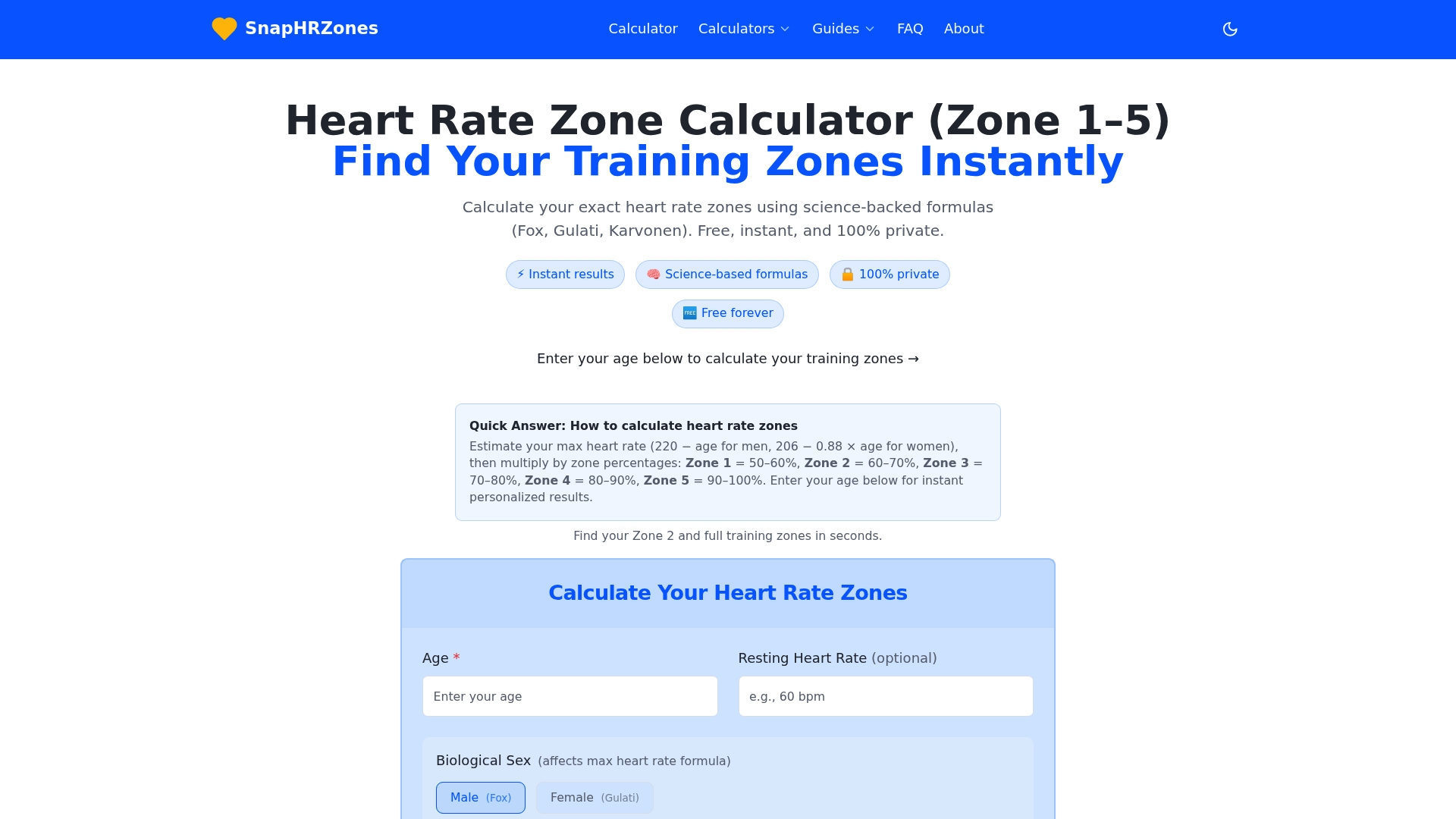
Use the numbers as a starting guide, then combine them with how your breathing and effort feel.
FAQ
How often should I do a belly breathing exercise?
Cleveland Clinic suggests five to 10 minutes about three to four times per day at first, and the American Lung Association suggests about 5 to 10 minutes daily. These are practice suggestions, not a universal minimum or an optimal schedule for runners. Start with a few comfortable breaths and build gradually.
Is belly breathing the same as diaphragmatic breathing?
Yes, the terms refer to the same exercise, emphasizing relaxed abdominal movement as you inhale. Your diaphragm also works during ordinary breathing, even when chest movement is more visible. The exercise changes awareness and pattern, not whether you use your diaphragm.
Can belly breathing help with stress?
It may help some people relax, but results vary. Mayo Clinic describes relaxation benefits; its discussion of cortisol studies is not proof of a reliable cortisol reduction in healthy runners. Use it as an optional tool alongside appropriate care, not as a guaranteed treatment for anxiety.
Should I belly breathe while running?
You can experiment during easy movement after practicing at rest, but you do not need to force a particular pattern. A 3-in, 2-out step rhythm is optional. During harder efforts, let breathing respond naturally to demand; this exercise has not been established to improve race performance.
Why does my chest move more than my belly?
Visible movement varies with posture, effort and your breathing pattern. Your diaphragm still participates even if your chest moves more. Practice gently with your hands as feedback if useful; do not force your chest to stay still. Stop if dizzy and seek clinical advice for persistent discomfort.
Sources
- Breathing Exercises for Better Lung Health, American Lung Association
- Breathing Basics for Runners, American Lung Association
- Diaphragmatic Breathing Exercises & Benefits, Cleveland Clinic
- Breathing Retraining: Diaphragmatic Breathing, Northwestern Medicine
- Mayo Clinic Q and A: How belly breathing benefits your body and mind
- Belly breathing mind-body benefits, Mayo Clinic Health System
- Belly breathing: Breathing more deeply can bring significant health benefits, Mayo Clinic Press
- The Right Way to Breathe While Running, Outside Online
- How to Breathe While Running, REI Expert Advice
- How to Breathe While Running in a Triathlon, Brick to Brick
- Coherence Breathing, PulmTools
Recommended
Find your personal heart rate zones
Enter your age to get all five training zones in seconds.
Open the heart rate zone calculator