Sore Muscles After a Workout? What Helps – and What Doesn’t
Quick answer: Delayed-onset muscle soreness commonly develops after unfamiliar or demanding exercise and usually improves over a few days. Gentle activity may improve comfort, but there is no single proven method that immediately repairs sore muscles. Rest, sleep, adequate food and fluids, and appropriate training adjustments remain the foundation, and certain warning signs call for medical assessment.

The things most likely to help sore muscles after a workout are simple: rest, easy movement that doesn’t increase your pain, enough food and fluids, and sleep. Massage and foam rolling may take the edge off, and cold or heat may feel good. Most other recovery products have less behind them than their marketing suggests. Soreness that follows a hard or unfamiliar session usually fades on its own within a few days.
This guide is written for runners and triathletes, who often have to decide whether to train on tired legs. It covers what causes the soreness, how well each common remedy holds up, how to adjust your next sessions, and which symptoms mean you should stop self-managing and get checked.
TL;DR
- Soreness one to three days after a tough or unfamiliar session is usually delayed onset muscle soreness (DOMS). It typically fades within a few days.
- Rest, gentle movement, food, fluids and sleep form the base of recovery. Massage and foam rolling may help with the discomfort.
- Stretching has small effects on soreness, and cold-water immersion may blunt some training adaptations after strength work.
- Ibuprofen taken before exercise did not reduce soreness in a 2024 trial. Frequent use of pain relievers is a reason to talk to a doctor.
- Dark urine, sharp constant pain, severe swelling or pain lasting a week or more need medical attention.
Table of Contents
- Why are your muscles sore after exercise?
- What actually helps sore muscles?
- Should you run with sore legs?
- When gentle movement makes sense
- How heart rate can help you avoid turning recovery into another hard workout
- What about supplements?
- When muscle soreness may be something more serious
- How to reduce excessive soreness next time
- What should you do today?
- Plan your easy days with your own numbers
- FAQ
- Sources
Why are your muscles sore after exercise?
The soreness that shows up the day after a hard run has a name: delayed onset muscle soreness. Cleveland Clinic describes it as common after unfamiliar or intense exercise, especially movements that load a muscle as it lengthens, and links it to tiny tears in muscle fibers as they repair. It usually starts one to three days after the session and fades over a few days. It rarely lasts more than five.
For runners, the classic trigger is downhill running. University of Washington Medicine notes that these eccentric movements, such as running downhill or lowering a weight, are particularly associated with DOMS. Your quads work hard to brake your body on every stride. That is why a hilly race or a first trail run can leave you walking down stairs backward.
One common belief is worth dropping. Healthline separates DOMS from the burning you feel during hard effort and states that DOMS is not caused by a buildup of lactic acid. Ordinary next-day soreness is not residual lactic acid either.
The American College of Sports Medicine information sheet on DOMS also makes a useful practical point: soreness is not proof of a productive workout. Feeling wrecked is not the goal, and no soreness does not mean the session was wasted.

What actually helps sore muscles?
No single remedy erases soreness. The research is mixed, and many studies measure how sore people feel rather than how fast muscles actually heal. Here is what the evidence says about each common option, from the best-supported to the least.
| Option | What it may help with | Evidence limitations | When it might be useful |
|---|---|---|---|
| Rest and sleep | Cornerstone of recovery per Cleveland Clinic | Unspectacular, but every source agrees on it | Always; schedule it, don’t wait for it |
| Gentle movement | May ease stiffness | Limited proof of faster healing | When pain is mild, about 2 to 3 out of 10 |
| Food and fluids | Supports normal repair | Nothing exotic required | Protein plus carbs, regular fluids |
| Massage | Most effective method in a 2018 meta-analysis for DOMS and fatigue | Single-session data only | After very hard sessions or races |
| Foam rolling | Appears to reduce pain | Extra benefits not confirmed | A cheap self-massage option |
| Cold-water immersion | May reduce perceived soreness | May blunt muscle-growth signals after strength work | After runs rather than lifting sessions |
| Stretching | Very small effect on soreness | No strength-recovery advantage over rest in one review | Fine if it feels good |
| Pain medication | No soreness benefit from pre-exercise ibuprofen in a 2024 trial | Frequent use is a reason to talk to a doctor | Not as a routine plan; ask a professional |
The sections below go through each option. Throughout, keep one distinction in mind: relieving the symptom is not the same as accelerating the underlying physiological recovery.
Rest and sleep
Cleveland Clinic calls rest the cornerstone of managing sore muscles. That is not exciting advice, but it is the one thing every source agrees on. Muscle repair happens between sessions, not during them.
For endurance athletes, the same logic applies to the whole week. A Triathlete coaching column recommends prioritizing food, fluids and recovery alongside training, and building in complete rest days as needed.
Gentle movement
It sounds backward, but light activity can ease stiffness. Cleveland Clinic says that when pain is around a two or three out of 10, lighter exercise may help keep muscles fluid as they recover, while gentle movement can preserve range of motion when soreness is mild. It also says to pause if sudden, sharp pain makes it hard to continue.
A review of recovery methods for triathletes by Hotfiel and colleagues states that 15 minutes of low-intensity cycling right after exercise may help recovery. The authors add that evidence for better performance or objective muscle healing is limited. So treat easy movement as a comfort tool, not a repair guarantee.
Food and fluids
Cleveland Clinic recommends hydration and a well-rounded diet with both protein and carbohydrates. Nothing exotic is required. Eating a normal meal with protein and carbs after a hard session and drinking fluids through the day supports the repair process your body is already doing.
Massage and foam rolling
Massage has the strongest showing in the research. The 2018 meta-analysis by Dupuy and colleagues pooled 99 studies. It found small-to-large reductions in DOMS from active recovery, massage, compression garments, water immersion, contrast-water therapy and cryotherapy, while other methods showed no change. Massage came out as the most effective method for reducing DOMS and perceived fatigue. One caveat: the review looked at a single recovery session, not repeated use over a training block.
Foam rolling is a cheap way to get a similar feel. The triathlete review by Hotfiel and colleagues says it appears effective for reducing pain, though additional benefits have not been conclusively established. If rolling feels good, keep doing it. If it hurts sharply, ease off.

Cold and heat
Cold feels great on trashed legs, and the research partly backs the feeling. National Geographic reports that cold-water immersion may reduce perceived soreness. It also reports that immediately after strength training it can suppress pathways involved in muscle growth, and that the long-term effect of occasional or delayed cold exposure is unclear.
That matters if you lift to support your running. If building muscle is a goal, consider keeping ice baths away from the hours right after a strength session.
Heat is the other option. Cleveland Clinic says ice or heat may help, and you can read more about heat therapy for muscle pain if a warm compress or bath appeals to you. Pick whichever feels better, and keep sessions moderate.
Stretching
Stretching is the most overrated item on the list. National Geographic reports that one review found only a 1-to-4-point reduction in soreness on a 100-point scale, and another found no strength-recovery advantage over rest. If a few easy stretches feel good, there is no harm. Just don’t expect them to prevent tomorrow’s stiffness.
Pain relievers
This is where runners often reach for ibuprofen on autopilot. A 2024 randomized, double-blind crossover study found that single pre-exercise doses of ibuprofen and flurbiprofen did not reduce post-exercise soreness or prevent performance drops compared with placebo. In that study, taking it ahead of time as a recovery strategy did not pay off.
The broader picture is less settled. The South African Sports Medicine Association reports that the evidence on anti-inflammatory drugs for DOMS depends on dose and timing. Occasional short-term use has not been shown to impair muscle growth, and the effects of chronic use need more study.
Cleveland Clinic cautions against using anti-inflammatory medication for too long. It says frequent medication, or frequent icing, may signal soreness that should be assessed by a physician. If you take any medication regularly, or have a stomach, kidney, heart or blood-pressure condition, ask your doctor or pharmacist what is safe for you before using it for soreness.
Should you run with sore legs?
The answer depends on how sore you are, and on what “sore” means for your next session. There is no universal yes or no.
If the pain is mild, around two or three out of 10, light exercise can be reasonable. If you are very sore, the ACSM sheet suggests refraining until severe symptoms subside. The Triathlete column recommends easy swimming, easy riding or spinning, mobility work, low resistance and zero impact for active recovery. When the goal is recovering from significant leg soreness, it advises avoiding running and strength work.
For most runners and triathletes that translates into a simple decision framework:
- Mild, familiar muscle soreness that loosens up within a few minutes: an easy run or spin is usually fine.
- Soreness that alters your movement, or heavy, painful legs on every step: swap in swimming, easy cycling or a walk.
- Sharp or localized pain, or a change in your gait: stop and see the section on warning signs below.
- Significant weakness or swelling: skip the workout and consider a medical check.
- Symptoms of illness, such as fever or unusual exhaustion: rest, and get assessed if they persist.
The same coaching column suggests at least one active-recovery day per week and one to three complete rest days within a periodized plan, as needed. It also recommends tracking your own training volume and intensity rather than copying a professional athlete’s routine.
When gentle movement makes sense
If you land on “move, but gently,” the next question is how to choose the activity. Pick something low-demand: flat walking, easy spinning, relaxed swimming or mobility work, kept short enough that you finish feeling better than you started. Our companion guide to the active recovery workout walks through five concrete options, with effort checks and example durations for runners and triathletes.
How heart rate can help you avoid turning recovery into another hard workout
The hardest part of an active recovery day is keeping it easy. Tired legs and a good podcast make it tempting to drift faster. Heart rate gives you a ceiling that doesn’t depend on how you feel that day. Our Heart Rate Zone Calculator estimates your zones from age, gender and optional resting heart rate, and our Zone 2 page shows the easy aerobic range most runners use for low-stress sessions.
If you use a treadmill, keep the effort in your easy range rather than chasing pace. On sore legs, the Zone 2 treadmill workout guide shows how incline can be used to hold an easy heart rate. Heart rate is only a guide, and it doesn’t measure muscle damage or tell you whether an injury has healed. Pain trumps any number on your watch.
You can also watch how quickly your heart rate drops after a session. Our heart rate recovery guide explains how to compare readings at the one-minute mark. Treat it as one more piece of context about how you are handling training, not a diagnosis.
What about supplements?
In short: the evidence varies, and no supplement replaces rest, food and sleep. Some options, such as tart cherry and omega-3, have modest and mixed support mainly for soreness rather than for faster performance. Our separate evidence review of muscle recovery supplements for runners and triathletes goes through the research supplement by supplement, including what was actually measured and where the claims outrun the data.
When muscle soreness may be something more serious
Ordinary DOMS builds over several hours, affects the muscles you worked, and usually fades within a few days. Cleveland Clinic lists these reasons to seek medical advice: severe pain, sharp and constant pain, severe swelling, dark or bloody urine, difficulty moving or using part of the body, or pain lasting more than a week. Soreness that lasts a week or more may indicate an injury such as a muscle strain, and soreness that is severe or follows most workouts also deserves a medical review.
Two more sets of signals are worth knowing:
- Rhabdomyolysis. University of Washington Medicine warns that dark urine, muscle cramps, fatigue, or pain severe enough to prevent ordinary activities may indicate this condition and need prompt medical attention. If you see dark urine after a hard effort, contact a doctor or urgent care promptly rather than waiting it out.
- Injury versus soreness. Houston Methodist says localized sharp pain, altered gait, reduced range of motion or significant weakness points more toward injury. Near-normal strength and range of motion with tenderness and tightness is more consistent with DOMS.
Mass General Brigham adds sudden sharp pain during exercise, pain that limits movement, swelling, bruising, deformity, spreading numbness or tingling, and pain that limits function for more than three days as reasons to consider seeing a doctor. This article cannot diagnose you. If any of these fit, a primary care physician or sports medicine doctor is the right person to see, and potentially serious symptoms call for prompt assessment rather than self-management.
How to reduce excessive soreness next time
Soreness can’t always be avoided, but the ACSM information sheet says gradual progression reduces how severe DOMS gets. It also recommends allowing recovery before repeating exercise that produces soreness.
A few habits follow from that:
- Build a base first. The Triathlete column advises establishing low-intensity training before adding high-intensity intervals. Our interval training heart rate guide covers work and recovery targets for those harder days.
- Cap the hard days. The same column suggests limiting very intense sessions to three or four per seven-to-10-day cycle, depending on the athlete and season.
- Increase gradually. A sports-medicine physician quoted by University of Washington Medicine suggests raising volume or distance in roughly 10% increments, alongside ample rest. Treat that as a rule of thumb, not a guarantee.
- Introduce unfamiliar eccentric exercise carefully. First downhill run of the season, new strength routine, or return after a break: keep the first session shorter than you think you need.
- Protect recovery between demanding sessions. Sufficient sleep and energy intake do more for tomorrow’s legs than any product. Our fat burning strength workouts guide is a practical place to start if you are adding lifting to support running, and the first sessions should leave you with room to spare.
No method prevents all soreness, and anyone who promises that is selling something.
What should you do today?
Work down this short checklist in order:
- Rate the soreness. Mild stiffness that eases as you move is different from pain that changes how you walk.
- Check for warning signs. Sharp or localized pain, marked swelling, significant weakness, dark urine or feeling ill means stop and, where needed, get medical advice.
- Pick today’s mode. Mild soreness: gentle movement. Heavy legs: a non-impact option or full rest.
- Fuel and hydrate. A normal meal with protein and carbohydrates, plus fluids through the day.
- Choose at most one comfort tool. Massage, foam rolling, a warm bath or a cool soak after a run.
- Sleep. Protect your usual sleep window tonight.
- Plan tomorrow by how you feel. Adjust the next session rather than forcing the plan.
Notice what is missing: no supplements, gadgets or stacks of products. The evidence for the basics is stronger than for most of what gets sold.
Plan your easy days with your own numbers
Recovery works best when easy days are truly easy and hard days are truly hard. SnapHRZones is a free tool that helps you set that up: enter your age and gender, add your resting heart rate if you know it, and get personalized zone ranges for your training.
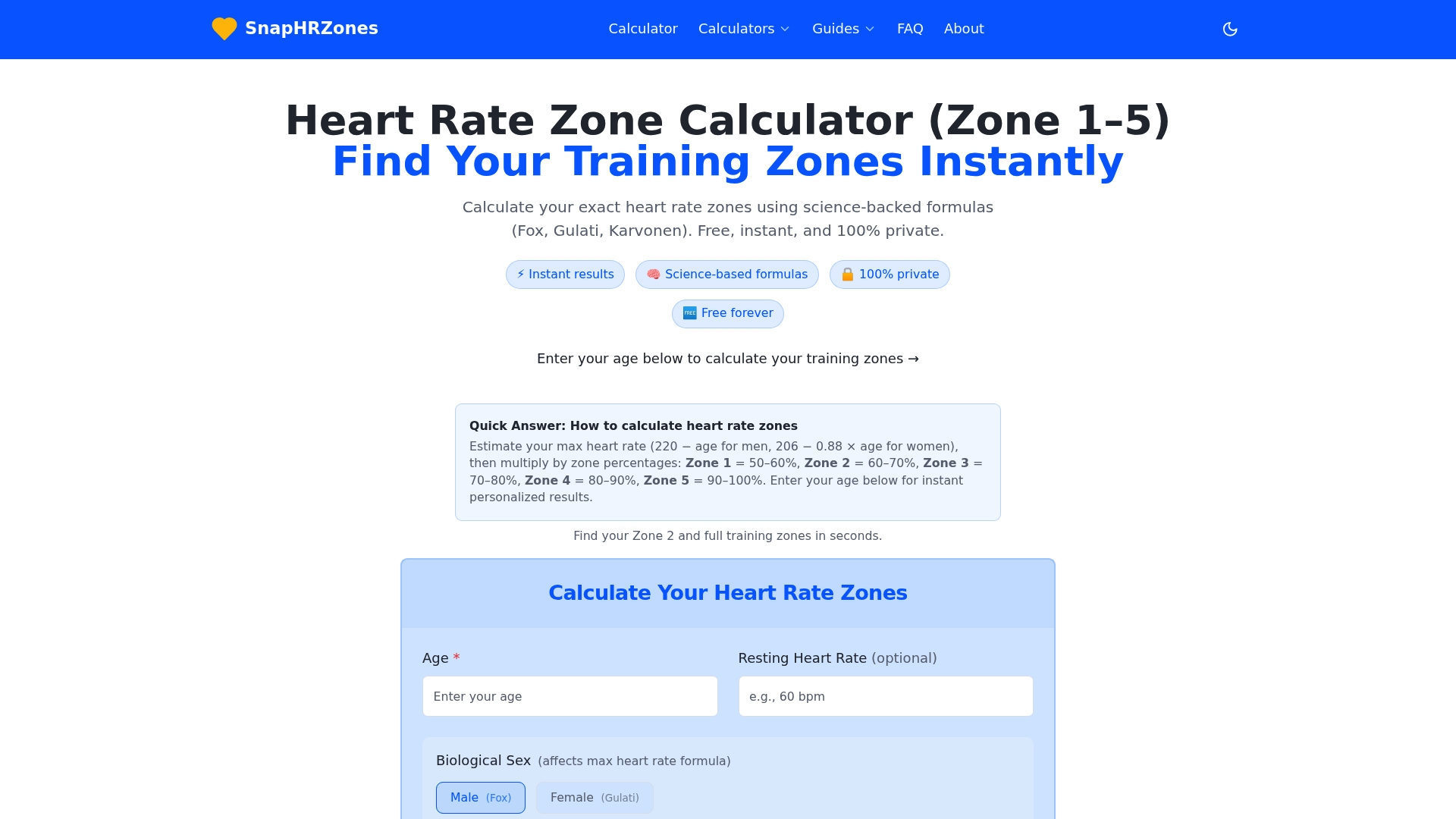
Try the Heart Rate Zone Calculator to find the easy range for your recovery runs and spins. It is built around gender-specific formulas and optional resting heart rate input for more personalization.
FAQ
How long should sore muscles last after a workout?
DOMS usually begins one to three days after exercise and fades over a few days. According to Cleveland Clinic, it rarely lasts more than five days. If soreness lasts a week or more or is severe, have it assessed, since it may be an injury such as a strain.
Is it okay to work out when my muscles are sore?
Often yes, if it’s gentle. Cleveland Clinic says lighter exercise may suit pain rated two or three out of 10, but you should pause if sudden, sharp pain makes it hard to continue. If your legs are very sore, swimming, easy cycling or walking is a lower-impact choice than running or lifting.
Does stretching help sore muscles?
It has only a small effect. National Geographic reports one review that found a 1-to-4-point reduction in soreness on a 100-point scale, and another that found no strength-recovery advantage over rest. Stretching is fine if it feels good, but it is not a main recovery tool.
Should I take ibuprofen for muscle soreness?
A 2024 trial found that a single pre-exercise dose did not reduce soreness compared with placebo. Cleveland Clinic cautions against using anti-inflammatory medicine for too long and says frequent use may signal soreness that needs a physician’s assessment. Ask your doctor or pharmacist what is appropriate for you, especially if you have other health conditions or take other medicines.
Is being sore a sign of a good workout?
Not necessarily. The ACSM information sheet notes that soreness is not proof of a productive workout. Progress comes from consistent training you can recover from, not from how sore you feel the next day.
Sources
- Delayed Onset Muscle Soreness (DOMS): What It Is & Treatment, Cleveland Clinic
- What Helps Sore Muscles After a Workout?, Cleveland Clinic
- Why Are My Muscles Sore Days After Working Out?, University of Washington Medicine
- Is It Possible to Exercise Too Much?, University of Washington Medicine
- What to Know About Delayed Onset Muscle Soreness (DOMS), Healthline
- Delayed Onset Muscle Soreness (DOMS), American College of Sports Medicine information sheet
- An Evidence-Based Approach for Choosing Post-exercise Recovery Techniques, Dupuy et al. 2018
- Accelerating Recovery from Exercise-Induced Muscle Injuries in Triathletes, Hotfiel et al. 2019
- Most Post-Workout Recovery Hacks Don’t Work, National Geographic
- How Should I Plan My Recovery Days During Triathlon Training?, Triathlete
- NSAIDs do not prevent exercise-induced performance deficits, 2024 study
- Delayed Onset Muscle Soreness: what the GP needs to know, South African Sports Medicine Association
- Is Your Pain Just Muscle Soreness or a Serious Injury?, Houston Methodist
- When to Seek Treatment for Workout Pain, Mass General Brigham
Recommended
Find your personal heart rate zones
Enter your age to get all five training zones in seconds.
Open the heart rate zone calculator