12 Overtraining Symptoms: A Practical Checklist for Athletes
Quick answer: Symptoms worth monitoring include declining performance, unusually high effort, slow recovery, persistent fatigue, sore muscles, recurring injuries or illness, weight or appetite changes, digestive or menstrual changes, poor sleep and altered mood or motivation. This 12-item checklist organizes observations, not a diagnostic score. Resting heart rate, HRV and training data are supporting context; a clinician should investigate persistent symptoms and other causes.

Overtraining shows up as a pattern, not a single bad workout: fatigue that does not lift, pace that slips at the same effort, poor sleep, a shifting mood, and often a resting heart rate that creeps up. If several of these last for days or weeks while your training stays hard, your body may not be recovering from the load. Cutting back and talking to a healthcare provider are the sensible next steps. Use the 12-item reference below to understand what each symptom may look like, what to record and why none proves overtraining by itself.
TL;DR
- Common overtraining symptoms include lingering fatigue, declining performance, heavy or sore muscles, poor sleep, irritability or low mood, lost motivation, more frequent colds and overuse injuries.
- A resting heart rate that stays higher than your normal is one of the more trackable signals, but it is not a diagnosis on its own.
- Sore legs the day after a hard session are normal. Overtraining syndrome is a different, longer-lasting state, and no single test confirms it.
- Recovery starts with rest and enough food and sleep. How long depends on severity, so involve a doctor if symptoms persist.
- Tracking your morning heart rate and how workouts feel gives you a baseline to notice change early.
Table of Contents
- What overtraining actually is
- Overtraining symptoms: the full list
- Quick reference: symptom, what it can look like, what to track
- Heart rate clues for runners and triathletes
- Stages of overtraining syndrome
- Is it overtraining or something else?
- What to do if you think you are overtraining
- Prevention: how to train hard without breaking down
- When to see a healthcare provider
- Track your zones with SnapHRZones
- FAQ
- Sources
What overtraining actually is
Overtraining happens when training stress outpaces recovery for long enough that the body stops adapting and starts to struggle. HealthLink BC describes it as usually occurring when the body does not have enough time to recover from the stress of intense training.
It helps to separate it from ordinary tiredness. The Cleveland Clinic notes that overtraining syndrome is different from feeling sore the day after a big workout. It describes it as a medical condition with physical, mental and emotional symptoms, and says recovery can take anywhere from a few weeks to months.
For runners and triathletes, the risk is easy to see. You are stacking swims, rides and runs, often with a race on the calendar, and each session feels justified by itself. The trouble is the total, plus everything outside training: work stress, short sleep, under-eating, travel and illness all draw from the same recovery budget.
Overtraining symptoms: the full list
No single symptom proves overtraining. Sources agree on a cluster, and it is the cluster, lasting and unexplained, that matters. Here is how the commonly listed symptoms group together.
Performance signs
These are often the first thing athletes notice, because they show up in your data and your watch.
- 1. Declining or stalled performance. MedlinePlus lists being unable to perform at the same level and needing longer periods of rest. HSS adds performance plateaus or declines and an inability to train or compete at a level that was previously manageable.
- 2. Sluggish effort. Sports medicine physician Dr. Jordan Metzl, writing in Runner’s World, lists a normal training pace that feels sluggish, difficulty getting motivated to run, and feeling tired at the end of runs.
- 3. Workouts that feel harder than they should. The University of Maryland Medical System includes workouts requiring more effort than normal or than they used to for easy sessions.
- 4. Delayed recovery. HSS lists slower recovery between sessions and heavy legs.
Physical signs
- 5. Persistent fatigue. Feeling tired or listless all the time, not only after hard days, appears on lists from HealthLink BC, MedlinePlus and the University of Maryland Medical System.
- 6. Heavy, sore or stiff muscles. MedlinePlus mentions heavy or sore limbs, and HSS lists persistent, unusual muscle soreness. The Cleveland Clinic includes muscle pain and stiffness in its description of early-stage overtraining syndrome.
- 7. Overuse injuries and persistent aches. MedlinePlus lists overuse injuries, and Dr. Metzl names persistent aches, pains and injuries.
- 8. Getting sick more often. More frequent colds and minor infections show up across the Cleveland Clinic, MedlinePlus and Runner’s World lists.
- 9. Unexpected weight change. The Cleveland Clinic lists unexpected weight loss or gain, while HealthLink BC and HSS mention sudden weight loss or appetite loss.
- 10. Digestive or menstrual changes. HSS lists constipation or diarrhea and irregular menstrual cycles or missed periods among health-related signs. Missed periods deserve a conversation with a doctor rather than a training tweak alone.
11. Poor or unrefreshing sleep
Poor sleep is both a symptom and a driver. The Cleveland Clinic lists poor sleep and waking up feeling tired, and the University of Maryland Medical System lists trouble falling or staying asleep. HSS adds poor-quality sleep and an inability to relax. A common pattern is being physically exhausted but wired at bedtime.
12. Mood, concentration, or motivation changes
Mood changes are a major part of the picture. A practical review in PubMed Central by Kreher and Schwartz states that overtraining syndrome nearly always includes disrupted mood, sleep and behavior. The review’s symptom summary includes depression, loss of motivation, irritability, agitation, restlessness and lack of mental concentration.
HSS also describes not feeling joy from activities you used to enjoy, along with increased tension, anger or confusion. HealthLink BC similarly mentions lost enthusiasm and feeling grouchy, angry or depressed.
If low mood is more than a training blip, such as persistent sadness, hopelessness or anxiety that interferes with daily life, talk to a healthcare provider. The Cleveland Clinic advises doing so if your mood or mental health is noticeably different.
Mental fatigue often travels with the physical kind, and sleep, nutrition and downtime all matter for it. For ideas on easing the mental side, see this guide to recovering from mental exhaustion.
The general wellness resource above is not evidence for diagnosing or treating OTS. Persistent mood changes or difficulty functioning deserve professional support.
Quick reference: symptom, what it can look like, what to track
| Symptom | Possible observation | What to track | Other possible explanations |
|---|---|---|---|
| 1. Declining performance | Usual pace or power is harder to sustain | Comparable sessions and perceived effort | Heat, illness and inadequate fueling |
| 2. Sluggish sessions | Repeated flat or slow runs | Session notes and recent load | A hard block or poor sleep |
| 3. Higher perceived effort | An easy workload feels unusually demanding | Effort at similar pace or power | Stress, weather and illness |
| 4. Delayed recovery | Less recovered before the next session | Recovery and load changes | New exercises or insufficient recovery time |
| 5. Persistent fatigue | Tiredness extends into daily life | Energy and normal daily functioning | Iron deficiency, infection and other conditions |
| 6. Sore or heavy muscles | Recurring unusual soreness or heaviness | Location, severity and exercise relationship | Unfamiliar exercise without OTS |
| 7. Recurring injuries or aches | Pain interrupts training or persists | Location, triggers and progression | A specific injury requiring assessment |
| 8. Frequent illness | Repeated infections interrupt training | Illness episodes, exposure and recovery | Exposure and other medical conditions |
| 9. Unexpected weight change | Unintentional change or appetite loss | Appetite and unintentional trends if appropriate | Nutrition, fluids, medication and illness |
| 10. Digestive or menstrual changes | Persistent bowel symptoms or missed periods | Symptoms and menstrual history where relevant | Low energy availability or other medical causes |
| 11. Poor sleep | Difficulty sleeping or waking unrefreshed | Schedule, awakenings and daytime sleepiness | Stress, sleep disorders and other factors |
| 12. Mood or motivation changes | Irritability, low mood or reduced enjoyment | Daily functioning and interest in training | Mental health concerns independent of training |
This is an educational reference, not a validated screening score. Do not count symptoms to diagnose OTS. Resting heart rate, HRV, exercise heart rate, sleep estimates and performance records provide context, not diagnostic tests.
Heart rate clues for runners and triathletes
Heart rate is where this topic meets what we do at SnapHRZones. Several health sources name a raised resting heart rate as a sign worth watching. No fixed increase in resting heart rate establishes overtraining; interpret changes against your baseline and wider symptom pattern. Dr. Metzl lists a resting pulse that stays higher than normal for more than a few days, and HSS includes increased blood pressure and at-rest heart rate.
Treat those as prompts to look closer, not as a diagnosis. A resting heart rate can rise for many reasons: a poor night’s sleep, caffeine, dehydration, an oncoming cold, stress, or hot weather. That is why a personal baseline beats a generic number.
How to build a baseline
- Measure your heart rate at the same time each morning, before getting out of bed or having coffee.
- Record it for two to four weeks of normal training to learn your usual range.
- Add a short note on sleep, mood and how the last workout felt.
- Look for a sustained shift away from your range alongside other symptoms, not a single odd morning.
If you are deciding between heart rate and heart rate variability as your daily signal, our guide on HRV versus heart rate walks through how to pick one and build a baseline.
Heart rate during workouts
What happens inside sessions can also be informative, but context matters. If easy runs suddenly sit at a higher heart rate for the same pace, run through a checklist before concluding anything. Our piece on a high heart rate on slow runs covers four common checks, and our explainer on why heart rate rises in the heat shows how temperature alone can move your numbers. If you track heart rate drift on long steady efforts, a change in your own pattern across several weeks is more meaningful than any single run.
A persistently unusual resting rate, especially with symptoms, deserves clinical assessment. It cannot assign an overtraining stage. Seek urgent care for chest pain, fainting or severe breathlessness, particularly with a racing or irregular heartbeat.
Stages of overtraining syndrome
Some consumer resources group symptoms into numbered stages or sympathetic and parasympathetic patterns. These are not a validated self-staging system, and a heart rate reading cannot assign a stage. The ECSS/ACSM consensus distinguishes functional overreaching, nonfunctional overreaching and OTS using the clinical picture, outcome and exclusion of other explanations.
In practice, the useful distinction for you is time and trend. A tough training block that leaves you flat for a few days, then lifts with rest, is a different situation from symptoms that persist or worsen despite easier training. If you are unsure which side you are on, that uncertainty is itself a good reason to ask a provider.
Is it overtraining or something else?
Many symptoms attributed to overtraining overlap with physical and mental health conditions. A clinician may use blood or other tests to investigate alternatives, but those tests do not confirm OTS.
Other explanations include insufficient energy intake, iron deficiency with or without anemia, infection, thyroid disease, sleep deprivation or a sleep disorder, depression and medication effects. Low energy availability can affect athletes of any sex. Menstrual changes, recurrent bone injuries or unexplained weight loss deserve assessment, not treatment as routine training fatigue.
The University of Maryland Medical System also encourages tracking, because notes on sleep, mood, training load and symptoms make conversations with providers more productive. Bring your log to the appointment.

What to do if you think you are overtraining
Step 1: Cut back or rest
MedlinePlus advises that if you have these symptoms after exercising a lot, you should cut back or rest, then reassess. It suggests cutting back or resting completely for 1 or 2 weeks, and seeing a healthcare provider if you are still tired afterward.
The Cleveland Clinic says the best treatment is rest and time to recover, and that how long you stop training or competing depends on symptom severity. Its guidance is that your provider will suggest a rest period matched to how much the condition affects your body and performance.
These consumer time frames are not an instruction to wait before assessment or a promise of recovery. Seek advice sooner for significant, unusual or worsening symptoms.
Step 2: Fuel and sleep
HSS recommends that recovery include adequate calories, protein, vitamins and minerals, plus mental health support when needed. MedlinePlus suggests eating enough calories for your level of exercise and getting at least 8 hours of sleep each night. Endurance athletes sometimes under-fuel without noticing, so compare what you eat with what you burn.
Step 3: Return gradually
Return below the load that provoked symptoms and progress according to tolerance, symptoms and clinical advice. No fixed weekly percentage is a validated rehabilitation prescription for OTS.
If OTS is suspected or diagnosed, follow an individualized plan from a qualified healthcare professional. A coach can help implement it but cannot replace medical assessment.
Step 4: Use heart rate zones to keep returning sessions honest
When you restart, the temptation is to prove you are back. Keeping early sessions in easy, conversational zones removes the guesswork. Our heart rate zone calculator gives you personalized ranges, and the Zone 2 calculator page helps you find an easy aerobic range. If you are using intervals later in the process, interval training heart rate targets cover work and recovery effort. Formulas give estimates, so adjust to how you feel and to your provider’s advice.
Prevention: how to train hard without breaking down
MedlinePlus lists several ways to avoid overtraining:
- Listen to your body and get enough rest.
- Eat enough calories for your level of exercise.
- Decrease workouts before a competition.
- Get at least 8 hours of sleep a night.
- Avoid exercising in extreme heat or cold.
- Cut back or stop when you feel unwell or are under a lot of stress.
- Rest at least 6 hours between exercise sessions and take a full day off every week.
The review by Kreher and Schwartz adds screening and education, tapering for competition, adjusting training volume and intensity based on performance and mood, adequate carbohydrate during exercise and hydration, promoting mental resilience, and pausing training after infection, heat stroke or high stress. It also describes using the Profile of Mood States questionnaire to guide changes in training load.
A simple weekly check-in
Once a week, rate these on a 1 to 5 scale: energy, sleep, mood, motivation, leg heaviness. Add your average morning heart rate. If several scores worsen alongside symptoms, reduce load and reassess; do not wait two weeks to act on significant or concerning symptoms. This is a personal habit, not a validated clinical tool, but it helps you notice drift early.

The illustration’s two-week review is an example monitoring habit, not a validated threshold or a reason to delay help. Reduce load or seek assessment sooner for significant, unusual or worsening symptoms.
Easy days that stay easy
Unintentionally making easy days harder can add recovery demands, but it is only one possible contributor to underperformance. Heart rate zones are a practical guardrail. If you are an older athlete, recovery can take longer, and our guide to older runners and heart rate explains what changes. Cyclists and triathletes can compare how zones differ by sport in running versus cycling heart rate zones.
When to see a healthcare provider
The Cleveland Clinic advises visiting a healthcare provider as soon as you notice symptoms of overtraining syndrome. Make an appointment sooner rather than later if you notice any of the following:
- Fatigue or poor sleep that continues after 1 to 2 weeks of reduced training.
- A resting heart rate that stays elevated or goes above 100 beats per minute at rest.
- High blood pressure readings.
- Missed or irregular periods.
- Noticeable changes in mood, persistent low mood or anxiety.
- Unintentional weight loss, or repeated illnesses and injuries.
Chest pain, fainting or an irregular heartbeat are not signs to wait out. Seek urgent medical care for those.
Track your zones with SnapHRZones
Knowing your zones makes it easier to keep easy days easy and hard days purposeful. Our free calculator takes your age and sex, with optional resting heart rate, and returns personalized heart rate zones. Its ranges are estimates to compare with effort and training context, not measured sport-specific thresholds.
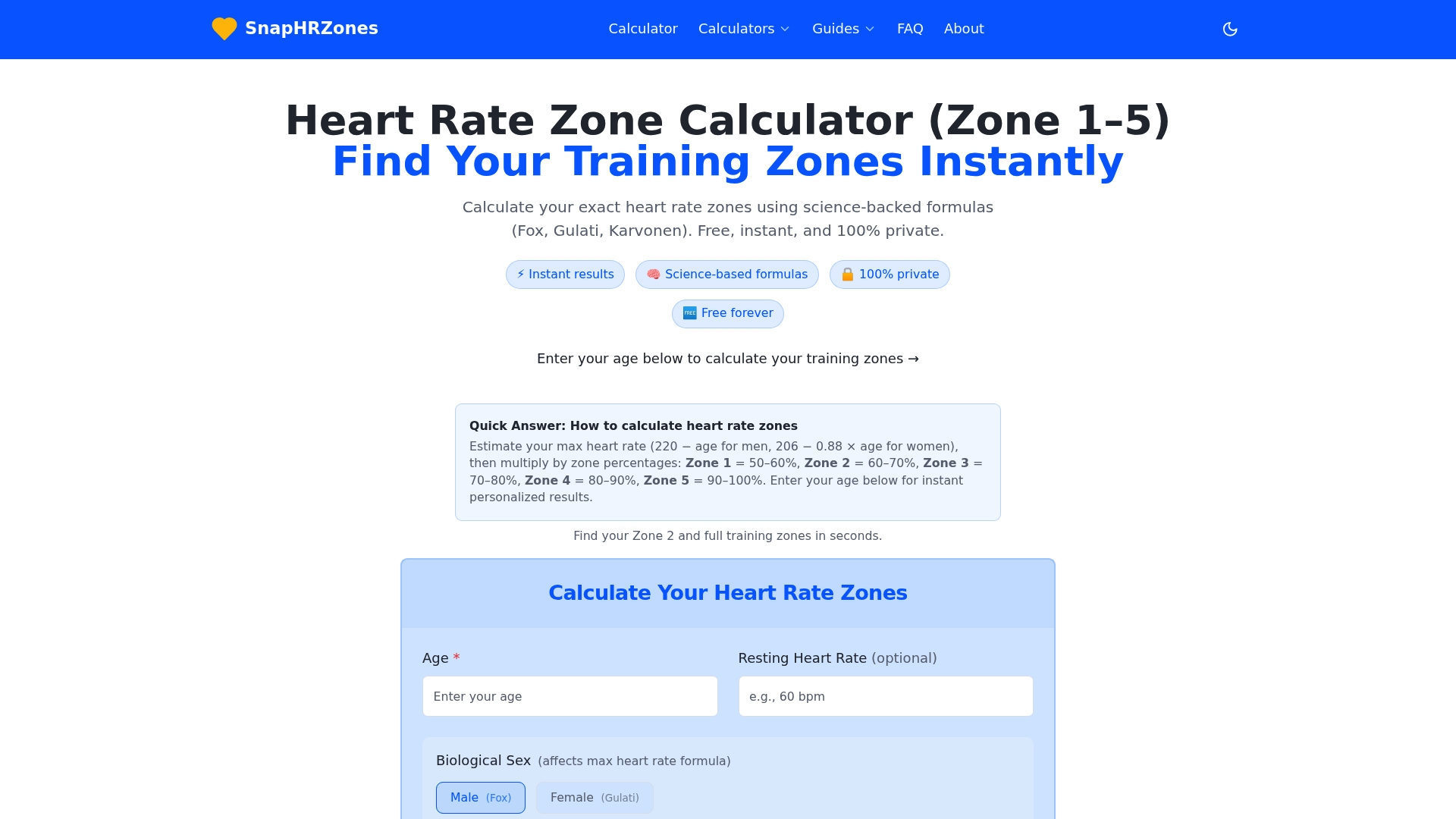
Try the Heart Rate Zone Calculator, then pair it with your morning resting heart rate log to build a clearer picture of how you respond to training. Age-specific references are available too, such as heart rate zones for a 30-year-old.
FAQ
How do I know if I’m overtraining?
Look for a cluster of symptoms that lasts: fatigue, declining performance, poor sleep, mood changes, heavy or sore muscles and more frequent illness. MedlinePlus advises that if you notice these after a lot of exercise, you should cut back or rest and reassess. A provider can help rule out other causes.
How long should you rest for overtraining?
MedlinePlus suggests cutting back or resting completely for 1 or 2 weeks and seeing a provider if you are still tired. The Cleveland Clinic says the length of time away from training depends on symptom severity and that recovery from overtraining syndrome can take weeks to months. Your provider can suggest a rest period that fits your situation.
What is stage 2 overtraining syndrome?
Some consumer resources use this label for a sympathetic symptom pattern. It is not a validated stage identifiable from insomnia, irritability, blood pressure or resting heart rate. A clinician evaluates the overall picture and other causes.
How do you heal from overtraining?
Management may include rest or reduced activity, adequate nutrition, attention to sleep and mental health, and treatment of other identified problems. Return is individualized; a fixed weekly increase is not a validated OTS recovery protocol.
Sources
- Are you getting too much exercise? (MedlinePlus)
- Overtraining (HealthLink BC)
- Overtraining Syndrome: Symptoms, Causes & Treatment Options (Cleveland Clinic)
- Overtraining: What It Is, Symptoms, and Recovery (HSS)
- Overtraining Syndrome: A Practical Guide (PubMed Central)
- Overtraining Syndrome (Runner’s World)
- Overtraining Syndrome: Signs It’s Time to Back Off Your Workouts (University of Maryland Medical System)
- ECSS/ACSM joint consensus: Prevention, diagnosis, and treatment of the overtraining syndrome
- 2023 IOC consensus on Relative Energy Deficiency in Sport
For the related questions, see our early-warning action guide, 12-symptom reference and clinical OTS explanation. Each addresses a different question; none replaces medical assessment.
Recommended
Find your personal heart rate zones
Enter your age to get all five training zones in seconds.
Open the heart rate zone calculator