Signs of Overtraining in Runners: Early Warning Signals
Quick answer: Early warning signs are a repeated mismatch between your usual workload and your response: slower performance or higher effort, unusual heart rate changes, persistent fatigue, poor sleep and altered mood. Compare similar sessions and your own resting heart rate and HRV baseline, then reduce load or rest when several signs appear together. These clues do not diagnose overtraining syndrome; persistent or concerning symptoms need medical assessment.

Early warning signs are changes from your usual response to training: a familiar easy pace feels harder, performance slips, fatigue carries into daily life, or sleep and mood deteriorate together. One difficult run is not enough to identify a problem, but you do not need to wait weeks before adjusting training. This guide helps runners and triathletes compare like with like, recognize a developing pattern and decide what to do next. It does not diagnose overtraining syndrome.
TL;DR
- Overtraining shows up as a cluster: persistent fatigue, declining performance, poor sleep, mood changes, frequent illness and nagging pain.
- One heavy-legged day or a single odd heart rate or HRV reading is not a diagnosis. Trends over weeks matter more.
- First steps usually mean cutting intensity and volume or resting, then seeing a healthcare provider if fatigue persists.
- Other conditions, such as iron deficiency or thyroid disease, can look the same, so persistent symptoms need a medical check.
- Prevention rests on rest days, hard-easy alternation, gradual increases, fueling and sleep.
Table of Contents
- What overtraining actually is
- Performance signs
- Physical and health signs
- Mood, sleep and motivation signs
- Overtraining or normal fatigue?
- Why it happens
- What to do if you suspect overtraining
- When to see a healthcare professional
- How to lower your risk
- Keep easy days easy with your own zones
- FAQ
- Sources
What overtraining actually is
Overtraining syndrome occurs when an athlete does not recover adequately after repeated intense training. HSS describes it as a state that can include fatigue, declining performance and potential injury.
It helps to think of a spectrum. Ordinary training fatigue often settles with adequate recovery; its duration and the response to training vary. Functional overreaching is a deliberate or accidental push that causes a temporary performance dip, which, according to a practical guide in the medical literature, can recover in days to weeks and improve after rest. Overtraining syndrome involves prolonged maladaptation and sustained underperformance assessed in a clinical context. It cannot be identified from a fixed duration or symptom count alone, and other explanations must be investigated.
Feeling run down does not tell you where you fall within these categories, or whether training is the main cause. Recognizing a change early is the point of this guide.

Performance signs
These are often the first things you notice, because they show up in your training log.
- A plateau or decline. Paces that used to feel controlled now feel hard, or you cannot hit workouts you nailed a month ago. HSS lists a performance plateau or decline among its training-related warning signs.
- Heavy legs at low intensity. Easy runs or Zone 2 rides feel labored. HSS also names this one.
- Higher effort for the same workload. The American College of Sports Medicine (ACSM) describes overtraining as persistent fatigue, greater effort for the same work, poor sleep or mood, and stalled or falling performance over weeks or longer that does not resolve when training is reduced.
- Delayed recovery. Soreness that lingers far longer than usual, or never fully clears between sessions.
- Wanting to skip or shorten workouts. A steady drop in drive, not just one off morning.
In a Journal of Applied Physiology study of 24 trained triathletes, 11 were classified as overreached after three weeks of overload training. That group showed reduced running performance and much higher perceived fatigue at rest. It is a small study of one training block, so treat it as an illustration, not a rule for everyone.
Physical and health signs
The body tends to send signals beyond the watch data. Cleveland Clinic lists muscle pain and stiffness, unexpected weight loss or gain, more frequent minor illnesses, extreme fatigue, high blood pressure and changes in resting heart rate among the possible signs. HSS adds appetite loss, constipation, diarrhea, and irregular or absent menstrual cycles.
Frequent colds and infections
If you catch every bug going around, take note. ACSM notes that intense, prolonged endurance exercise can depress immune function, and that poor sleep, anxiety, physical stress and dehydration can erode it further. That does not mean every cold is overtraining, but a run of them during a heavy block is worth a closer look.
Resting heart rate changes
Cleveland Clinic’s list includes a resting heart rate above 100 beats per minute (tachycardia) and below 60 (bradycardia). Many well-trained endurance athletes run below 60 without any problem, so the number alone means little. What matters is a change from your own baseline that comes with other symptoms. If you want to track this, our guide on HRV versus resting heart rate explains how to pick one measure and build a baseline over two to four weeks.
ACSM experts caution that a single HRV change is not diagnostic. Persistent changes, together with performance decline and symptoms across several body systems, are more concerning.
Pain that does not settle
Runners feel overuse first in the feet and legs. Mayo Clinic notes that blistering, broken toenails, plantar foot pain, tendinitis and shin pain are common early signals. Pain that persists or worsens despite rest may indicate a stress reaction or stress fracture, and Mayo says runners should consult their healthcare team.

Slow runs with a high heart rate
If easy pace suddenly pushes your heart rate up, overtraining is one possible explanation among several, including heat, dehydration, illness and caffeine. Run through the four checks for a high heart rate on slow runs before changing your plan.
Example: a familiar easy route
Consider a hypothetical runner whose heart rate is higher than usual on a familiar easy route. First check heat, pace, hills, sleep, illness and sensor reliability. Slow down or stop if you feel unwell. If the mismatch recurs under comparable conditions alongside fatigue, poor sleep or declining performance, reduce training stress instead of forcing your usual pace. Within-run drift and changes across several runs are different observations; neither diagnoses OTS.
Mood, sleep and motivation signs
Overtraining is not only physical. HSS lists prolonged fatigue, poor-quality sleep, low energy, reduced motivation, moodiness, tension, depression, anger, confusion, inability to relax and loss of enjoyment as lifestyle and psychological warning signs. Cleveland Clinic similarly names anxiety, irritability, insomnia and waking up tired.
Two patterns are worth noticing:
- Tired but wired. You are exhausted, yet you cannot fall asleep or stay asleep.
- Training you used to love feels like a chore. Loss of enjoyment that lasts more than a rough week is a meaningful signal.
Cleveland Clinic advises seeing a healthcare provider promptly when you or people close to you notice mood or mental-health changes.
Overtraining or normal fatigue?
Some tiredness is the goal of training. HSS sports-medicine physician Marci Goolsby says fatigue after a hard session is expected. Concern rises when you do not recover between sessions, feel tired overall, or cannot push normally in workouts.
| Normal training fatigue | Possible overtraining | |
|---|---|---|
| Duration | Hours to a couple of days | Weeks, not clearing with rest |
| Response to rest | Performance rebounds | Little or no rebound |
| Mood and sleep | Mostly stable | Irritability, poor sleep, low motivation |
| Illness and pain | Occasional | Frequent colds, persistent aches |
| Effort at easy pace | Feels easy again after a day or two | Stays heavy and labored |
The practical guide cited earlier says overtraining syndrome is mainly suspected when underperformance persists despite weeks to months of recovery, mood is disturbed, and other causes have not been identified. In other words, the diagnosis is partly one of exclusion, which is why a medical check matters.
Why it happens
The usual ingredients are too much load, too little recovery, or both, often with outside stress added on top. Common contributors include rapid jumps in volume or intensity, no easy days, inadequate food, short sleep, travel, illness and work or life stress.
There is also a trap. Goolsby explains that athletes often make overreaching worse by reading weakness or poor performance as a reason to train harder. When a workout feels flat for the third week in a row, the answer is rarely another hard session.
Moderate-intensity training can be productive, but repeatedly turning planned easy sessions into harder work can increase total recovery demand. Learning when Zone 3 training fits, and keeping easy days truly easy, helps avoid it.
What to do if you suspect overtraining
Use this early response, not a diagnostic checklist:
- Reduce immediate demand. Skip hard work; rest or choose shorter, easier activity only if you feel well enough. Do not train through illness, worsening pain or concerning symptoms.
- Check context. Note load changes, heat, hydration, fueling, sleep, illness, medications and outside stress.
- Compare comparable sessions. Record pace or power, effort, conditions and symptoms. Measure resting heart rate and HRV consistently.
- Reassess before adding load. Improvement does not prove training was the only cause. Persistent, worsening or unexplained symptoms deserve medical assessment.
Step 1: Back off
MedlinePlus advises athletes with symptoms of excessive exercise to cut back or rest completely for one to two weeks. If fatigue remains after that, contact a healthcare provider, since you may need a month or longer of reduced training.
Cleveland Clinic says treatment is individualized but commonly involves stopping high-intensity work and reducing intensity and frequency, often by 50% to 70%, or resting completely. Those are general ranges, not a personal prescription.
The time frames and percentage reductions above summarize consumer guidance, not a required waiting period or an OTS prescription. Seek advice sooner for significant, unusual or worsening symptoms.
Step 2: Fix the basics
Eat enough, drink enough and protect sleep. MedlinePlus prevention guidance includes sufficient calories and fluids, at least eight hours of sleep a night and reducing or stopping exercise when you are ill or highly stressed. Sleep is one part of recovery alongside nutrition and overall training load. This overview of sleep and muscle recovery research is a good place to see why.
Step 3: Track the trend
ACSM experts recommend judging trends over time with both objective measures, such as performance, heart rate, HRV and training load, and subjective ones, such as fatigue, mood, sleep and perceived effort. A simple daily note covering sleep, mood, soreness and resting heart rate takes a minute and makes patterns visible. Heart rate recovery at the one-minute mark and heart rate drift are two more trends you can compare over weeks.
Compare heart rate recovery only under similar exercise and recovery conditions; it is not an OTS test. An estimated Zone 2 range is a cross-check with conversational effort and symptoms, not permission to train when unwell.
Step 4: Return gradually
When energy and mood return, rebuild with easy aerobic work first. Your Zone 2 range is an estimate to compare with comfortable conversation and perceived effort, not a measured recovery ceiling. Progress only as symptoms and your response to easy activity allow; suspected OTS or persistent unexplained symptoms warrant an individualized return plan with a qualified healthcare professional.
How long does recovery take?
It depends on how far things have gone. An ACSM review says mild cases may recover after a few weeks of rest or reduced training, while severe cases need longer rest and may not fully resolve. Cleveland Clinic similarly says earlier stages usually last a few weeks and more severe stages can last months or longer.
When to see a healthcare professional
Cleveland Clinic recommends seeing a provider as soon as you notice symptoms such as pain, fatigue or a sudden dip in performance. Make an appointment sooner rather than later if:
- Fatigue remains after one to two weeks of cutting back.
- Your mood changes noticeably, or people close to you point it out.
- You have pain in a bone or foot that worsens or does not settle with rest. See your sports medicine or primary care team about a possible stress reaction.
- You have lost weight unintentionally, or your menstrual cycle has become irregular or stopped.
A clinician also rules out look-alikes. The practical guide lists asthma or bronchial hyperreactivity, thyroid or adrenal disease, diabetes, iron deficiency with or without anemia, infection and malnutrition as other possible causes of underperformance. Do not self-diagnose and keep training through it.
How to lower your risk
HSS suggests listening to your body, keeping a training log, balancing training with recovery, taking one full rest day a week, alternating hard and easy days, increasing load gradually, cross-training, eating enough and managing stress. MedlinePlus adds leaving at least six hours between exercise sessions and reducing training before competition.
For early running overuse symptoms, Mayo suggests slowing down, returning to your previous training level, choosing low- or no-impact cross-training, or taking an extra day off.
For runners and triathletes, heart rate zones make these rules concrete. Keeping easy sessions below your aerobic threshold, as covered in our aerobic threshold heart rate guide, protects the hard days. Our interval training heart rate targets help you keep recoveries truly easy, and if you train without a strap, there is a guide to training without a heart rate monitor. Older athletes may find the older runners guide useful, since recovery and heart rate behavior change with age.
Keep easy days easy with your own zones
Our free Heart Rate Zone Calculator uses gender-specific formulas and an optional resting heart rate input to give you personalized zones. Those zones are an estimate, not a lab test, but they give you a clear target for easy sessions and a way to see whether hard days are crowding out recovery.
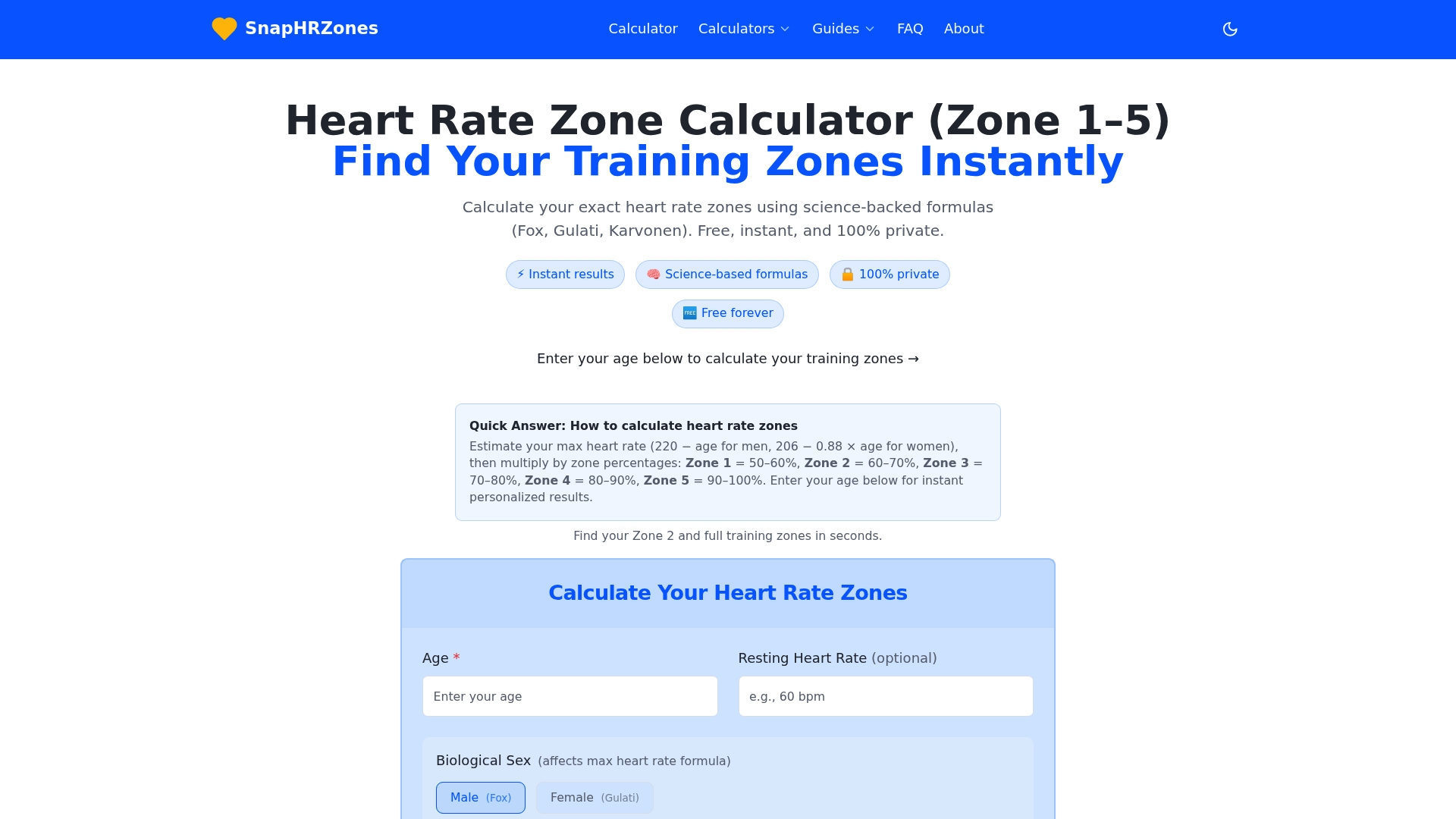
Calculate your heart rate zones in a few seconds, then use the Zone 2 ceiling as your guardrail on recovery days.
FAQ
How do I know if I’m overtrained or just tired?
Ordinary fatigue often settles with adequate recovery, but time alone does not identify the cause. Persistent performance decline, fatigue, poor sleep or mood changes deserve assessment. Reduce load when needed and seek help sooner for severe, unusual or worsening symptoms; do not wait a fixed number of weeks.
Can overtraining raise resting heart rate?
It can be one of several signs. Cleveland Clinic lists both a resting heart rate above 100 and below 60 among possible signs, and HSS lists an increased resting heart rate. Your own baseline and the overall pattern matter more than one reading.
How long does it take to recover from overtraining?
Recovery varies with the cause and clinical course. Consumer guidance about short periods of reduced activity is not a universal OTS timetable or a requirement to wait before seeking advice. A clinician should guide persistent unexplained symptoms.
Should I stop exercising completely?
Sometimes, but not always. Cleveland Clinic says treatment commonly involves stopping high-intensity work and cutting intensity and frequency, often by 50% to 70%, or resting fully. Your provider can tell you which fits your situation.
Stop exercise and seek urgent medical care for chest pain, fainting, severe unexplained breathlessness, or a racing or irregular heartbeat accompanied by these symptoms.
Sources
- Overtraining: What It Is, Symptoms, and Recovery (HSS)
- Overtraining Syndrome: Symptoms, Causes & Treatment Options (Cleveland Clinic)
- Mayo Clinic Q and A: Signs of overtraining
- Overtraining Syndrome: A Practical Guide (PMC)
- A multidisciplinary approach to overreaching detection in triathletes (Journal of Applied Physiology)
- ACSM: The Endurance Athlete webinar Q&A
- ACSM: The Athlete’s Kitchen, Optimizing Your Immune Response
- MedlinePlus: Are you getting too much exercise?
- ECSS/ACSM joint consensus: Prevention, diagnosis, and treatment of the overtraining syndrome
For the related questions, see our early-warning action guide, 12-symptom reference and clinical OTS explanation. Each addresses a different question; none replaces medical assessment.
Recommended
Find your personal heart rate zones
Enter your age to get all five training zones in seconds.
Open the heart rate zone calculator