Overtraining Syndrome: Causes, Diagnosis and Recovery
Quick answer: Overtraining syndrome is prolonged, unexplained underperformance associated with training and recovery imbalance. It differs from ordinary fatigue and functional overreaching, but cannot be confirmed by one symptom, heart rate reading, HRV result or blood test. Diagnosis requires clinical assessment and exclusion of other causes. Recovery is individualized and may be prolonged; no fixed number of rest days guarantees a full return.

Overtraining syndrome (OTS) is a long-lasting drop in performance that follows excessive training without enough recovery, and it does not clear up with a few easy days. A practical review describes it using a performance decrement lasting more than two months, alongside physiological maladaptation and exclusion of other causes. Duration alone does not establish a diagnosis. Short-term fatigue after a hard block can be ordinary training fatigue, but persistent or unexplained symptoms deserve attention. This guide shows where ordinary fatigue ends, which warning signs deserve attention, what recovery usually involves and when to call a doctor.
TL;DR
- OTS involves prolonged underperformance and clinical evaluation to exclude other causes; an exact duration alone does not establish the diagnosis.
- Functional overreaching improves after adequate recovery; nonfunctional overreaching and OTS involve more persistent problems. Their symptoms overlap, and they are not diagnosed from duration alone.
- Warning signs include unexplained underperformance, persistent fatigue, mood and sleep changes, and heavy, sore muscles. Many other conditions look the same, so a clinician has to rule them out.
- Recovery may involve rest or relative rest and a gradual return, rebuilding volume before intensity. The 5 to 10 minute starting sessions described in one review are an example, not a universal rehabilitation protocol.
- Seek medical advice for persistent unexplained fatigue, sustained performance decline, recurring illness, or significant sleep or mood disturbances; do not assume training is the cause.
Table of Contents
- What overtraining syndrome actually is
- Tired, overreaching or overtrained?
- Warning signs for runners and triathletes
- What causes it
- How OTS is evaluated
- When to see a doctor
- Recovery: what the evidence supports
- Preventing it: monitor, do not guess
- Keep easy days easy
- A practical checklist for your next training block
- FAQ
- Sources
What overtraining syndrome actually is
Training works by stress and recovery. Training provides a stimulus, and adaptation depends on adequate recovery, nutrition, sleep and appropriate overall load. Overtraining syndrome is what can happen when the stress side keeps winning for too long: load stays high, recovery stays short, and instead of adapting, your body stops responding.
A practical guide in the sports medicine literature describes OTS as a performance decrement lasting more than two months, with severe maladapted physiology and an additional stressor, and not explained by other disease. That last clause matters. OTS is a diagnosis reached after other explanations have been considered, not a label you can assign yourself from a bad run.
There is also a definition problem. Researchers use several overlapping terms, and the line between them is based on how long the decline lasts and how it responds to rest, not on a single test. That is one reason you will see conflicting numbers and advice online. Treat any page that promises a precise threshold, such as an exact number of weekly miles or a heart rate cutoff that proves you are overtrained, with caution. The research does not support that kind of precision.
The joint ECSS/ACSM consensus describes OTS as prolonged maladaptation. Nonfunctional overreaching and OTS can show the same clinical and hormonal findings; distinguishing them depends on clinical outcome and exclusion of other causes. It does not establish a single diagnostic biomarker or support diagnosis from a watch reading.

Tired, overreaching or overtrained?
The literature distinguishes ordinary fatigue, functional overreaching, nonfunctional overreaching and OTS. Recovery time helps describe these patterns, but symptoms, clinical outcome and exclusion of other causes also matter.
| Stage | What it looks like | What rest does |
|---|---|---|
| Normal training fatigue | Expected tiredness after training that settles with adequate recovery | Usually short-lived; response varies with the session and athlete |
| Functional overreaching | Short-term dip in performance after a deliberate hard block | Improves after rest, often followed by a gain |
| Nonfunctional overreaching | Persistent underperformance without the expected training benefit; symptoms overlap with OTS | Recovery takes longer |
| Overtraining syndrome | Prolonged maladaptation and underperformance after other explanations have been investigated | Recovery can be prolonged and varies substantially; no fixed timetable applies |
Functional overreaching can occur during intensified training, but deliberately inducing it is not necessary for every athlete to improve. Many training plans include it on purpose: a few heavy weeks, then a lighter week. The trouble starts when the dip does not recover, or when you keep adding load on top of it.
In practice you cannot tell nonfunctional overreaching from OTS on day one. The distinction often becomes clearer in hindsight through the clinical outcome and exclusion of other explanations, not elapsed time alone. That is why the safest habit is to respond early to a dip that does not go away, instead of waiting to see whether it becomes something official.
Warning signs for runners and triathletes
No single symptom confirms OTS. What stands out is a cluster that persists. The guide cited above lists unexplained underperformance, persistent fatigue, mood and sleep disturbances, and heavy, sore or stiff muscles as typical signs.
The same source describes two patterns of autonomic changes:
- Parasympathetic pattern, described as more common in aerobic sports: fatigue, depression, a slow resting heart rate (bradycardia) and loss of motivation.
- Sympathetic pattern: insomnia, irritability, agitation, a fast heart rate (tachycardia) and high blood pressure.
These autonomic patterns are historical descriptions, not validated self-diagnosis categories. A low resting rate may be normal in a trained athlete, and high or low readings can have unrelated explanations.
For a runner or triathlete, the more familiar versions might look like this:
- Your usual easy pace feels like work, or your usual workouts suddenly feel much harder than they should.
- You stop looking forward to sessions you used to enjoy.
- You sleep badly even though you are exhausted.
- Your legs feel heavy and sore for days, not hours.
- You are short-tempered or flat in ways that do not match what is going on in your life.
Sports medicine physicians also note that overtraining can affect mental health, with irritability, anxiety, depression and poor sleep quality among the reported symptoms.
Why you might feel irritable or anxious
Two of the most common questions are whether overtraining can cause anxiety and why exercise sometimes leaves people irritable. According to the Cleveland Clinic, OTS can include anxiety, and irritability is among the symptoms of the sympathetic form. That does not mean every irritable afternoon after a long run is a warning sign. Hunger, poor sleep and ordinary life stress do the same thing. It becomes worth noticing when mood changes arrive together with falling performance and do not lift with rest.
The overlap with mental health conditions is real. A 2025 review argues that balanced training and recovery are central to preventing OTS and protecting health and quality of life, and the American Medical Society for Sports Medicine stresses that a multidisciplinary team of physicians, trainers and mental health providers is vital for spotting psychological factors in athletes. If low mood or anxiety is a big part of what you feel, that is a reason to bring it up, not to push through.

What causes it
The common thread is excessive exercise without adequate rest. The practical guide says OTS may follow that pattern, and that personal stressors can also act as triggers. For runners and triathletes, the usual set-up looks like a blend of these:
- A sudden jump in weekly volume or in the share of hard sessions.
- Racing or hard efforts stacked back to back without a lighter period.
- Several sports at once, which is common in triathlon, where swim, bike and run loads quietly add up.
- Sleep debt, work pressure, travel, relationship stress or inadequate fueling layered on top of training.
- Training through illness or injury.
One idea you will see repeated is that monotony, doing the same load day after day, raises risk. The evidence is less settled than the claim. An International Olympic Committee review notes that evidence on training monotony as a risk factor for illness is mixed and needs more investigation. Varying your training is sensible, but it is not a proven shield.
The intensity trap
Repeatedly turning planned easy sessions into harder work can increase total recovery demand. Repeated moderate-hard sessions can add more fatigue than intended when they replace planned easy recovery work; moderate-intensity training itself can still be productive. A heart rate based approach gives easy days a ceiling. If you are unsure whether your easy days are truly easy, start with our guide to what to check when your heart rate runs high on slow runs, and read how Zone 3 fits into a plan so it does not take over every session.
To be clear about the limits: heart rate zones help you organize intensity, but there is no evidence here that using them prevents OTS. Treat them as one tool for keeping hard days hard and easy days easy.
How OTS is evaluated
There is no single blood test or watch metric that diagnoses OTS. The practical guide describes evaluation as clinical: a clinician looks at training history, mood and other possible causes, and may order tests to rule out organic diseases. Excluding other conditions is necessary but does not automatically establish OTS; the clinician also assesses training history, sustained underperformance, symptoms and clinical course.
That is why self-diagnosis is a poor idea in both directions. You could miss a medical problem by blaming training, or you could cut back sharply for something a doctor could treat directly. Bring a simple record to the appointment:
- Your weekly training for the past two to three months (hours, sessions, hard days, races).
- When performance began to drop and how it has changed.
- Sleep, mood, appetite and illness over the same period.
- Any major stressors, such as a new job, a move or family problems.
What else clinicians consider
Assessment may include recent illness, dietary intake and energy availability, iron deficiency with or without anemia, thyroid disease, sleep problems, mental health, medications and specific injuries. Relative Energy Deficiency in Sport can overlap with symptoms attributed to overtraining and may require coordinated medical and nutrition care.
History and examination guide testing. Depending on findings, a clinician may consider a blood count, iron studies, thyroid tests or other targeted investigations. No standard blood panel proves OTS; broad testing without context can mislead.
When to see a doctor
Short-term fatigue after a hard training block may improve with recovery, but even a brief episode can warrant medical attention if symptoms are severe or unusual. Persistent unexplained fatigue, sustained underperformance, recurring illness, or significant sleep or mood disturbances should not automatically be attributed to overtraining. You do not need to wait weeks to seek advice. The source describes OTS evaluation when decreased performance persists despite weeks to months of recovery, with mood disturbances and no sign or diagnosis of another cause.
In practical terms, consider seeing a primary care or sports medicine physician if:
- You have rested properly for a few weeks and performance has not come back.
- Fatigue is constant, not just after workouts.
- Your mood has changed noticeably, including persistent low mood or anxiety.
- Unexplained weight loss or recurrent palpitations at rest warrants medical evaluation. Stop exercising and call 911 for chest pain, fainting during exercise, severe shortness of breath, or a racing or irregular heartbeat accompanied by these symptoms. Do not wait to see whether reducing training helps. The American Heart Association describes heart-attack warning signs and recommends calling 911 even if you are unsure.
If you are struggling emotionally, a mental health professional is a legitimate part of the team, and many sports medicine practices work with one.
Recovery: what the evidence supports
The core treatment is simple and unglamorous. The practical guide describes rest or relative rest, followed by a gradual return. Recovery can be prolonged and varies with symptoms, training history, severity and other medical factors. There is no universally validated recovery timetable, so be wary of anyone promising a quick fix.
Step 1: Cut the load
Rest or relative rest means taking away the stress that caused the problem. For some athletes this is complete rest; for others it is light, easy activity chosen with a clinician’s input. How much you need depends on how far along the problem is, which is another reason to involve a professional instead of guessing.
Step 2: Rebuild volume before intensity
Kreher and Schwartz describe one gradual return-to-training approach that rebuilds volume before intensity, starting from 5 to 10 minutes daily until you can tolerate an hour. This is an example from a review, not a universally validated rehabilitation protocol or an instruction to exercise every day. Suspected OTS warrants assessment by a qualified healthcare professional; the choice between rest and activity, progression and eventual return to intensity should be individualized.
The guide does not give a week-by-week schedule, and we will not invent one. Your timeline should be set with your clinician or coach, based on how you feel and how you respond. If symptoms return as load goes up, that is information, and you step back.
Step 3: Protect sleep
Sleep sits near the foundation of recovery. The American College of Sports Medicine notes that sleep is foundational to resisting illness, lowering injury risk and elevating performance, and that inadequate sleep can lower endurance, speed and reaction time. A separate ACSM Q&A frames sleep as a trainable skill, recommending consistent sleep schedules and caffeine cutoffs to build consistency.
Step 4: Treat the return like a return from injury
Coming back from OTS has more in common with coming back from an injury than with a normal rest week: patience, small increments and honest check-ins matter more than the plan itself. The general principles of returning to play after an injury overlap with this, even though that advice is written around another sport.
The return-to-sport resource above is a general analogy, not an OTS rehabilitation protocol. Activity and progression should follow the athlete’s clinical assessment.
Preventing it: monitor, do not guess
The prevention advice in the literature comes down to paying attention. The practical guide recommends monitoring training load, performance and mood, including with RPE or mood questionnaires. It also says athletes should be taught to recognize early warning signs of overreaching, such as a higher rating of perceived exertion (RPE) for a given workload.
That last point is useful for anyone with a training log. If the same pace or the same heart rate feels harder than it did a few weeks ago, and that keeps happening, you have an early flag.
A simple monitoring routine:
- Log every session: duration, type and how hard it felt on a 1 to 10 scale.
- Write one line on mood and sleep each day. It takes less than a minute.
- Compare like with like: the same route or the same effort, over weeks, not a single day.
- Schedule lighter weeks after hard blocks and treat them as part of the plan.
- Act on trends: one difficult day can have several explanations; recurrent decline alongside symptoms warrants reassessment. Act sooner for significant or concerning symptoms.
Where heart rate data fits
Heart rate can be one input into that picture. Heart rate at a fixed easy effort, and heart rate variability if your device records it, can show trends over weeks. Resting heart rate and HRV may offer training context, but neither a single reading nor a trend can independently diagnose OTS or distinguish it from overreaching. Consider symptoms and other possible causes with a clinician. If you want to see how to build a personal baseline, HRV versus heart rate explains how to compare the two over a few weeks.
Also note that the autonomic changes described earlier can go in opposite directions, with a slow resting heart rate in one pattern and a fast one in another. That means there is no single heart rate number that signals overtraining.
Keep easy days easy
Most recreational runners and triathletes are better served by getting the basics of intensity right than by worrying about OTS. If you train by feel and every run ends up moderate-hard, using zones can help you separate the two.
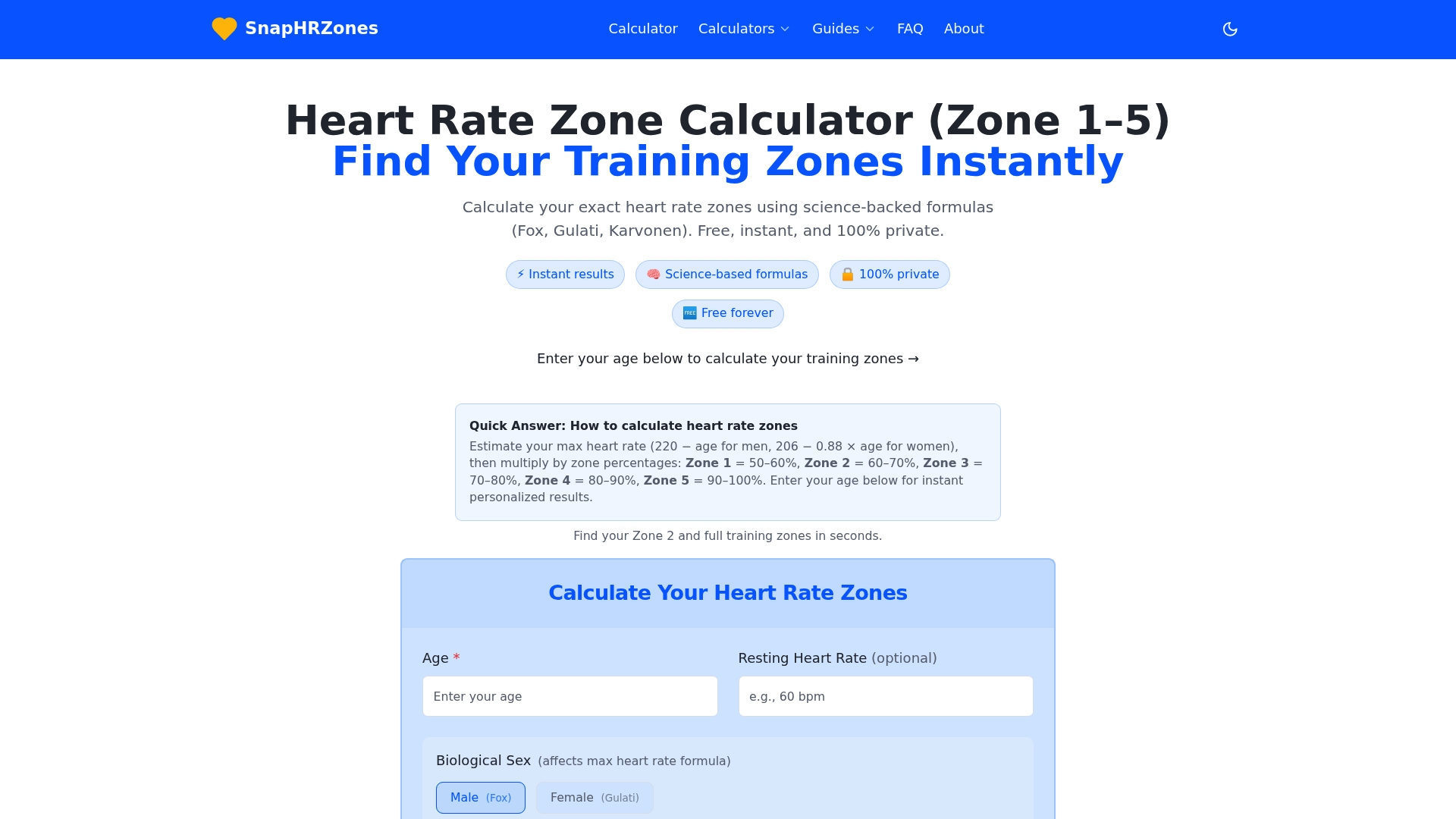
Our free Heart Rate Zone Calculator estimates your five zones from your age and, optionally, your resting heart rate, using gender-specific formulas. If you want a target for easy aerobic work, calculate your Zone 2 range. Estimates from formulas are starting points, not lab results, so adjust them with how you actually feel.
If you use a watch, our guides to Garmin heart rate zones and Fitbit heart rate zones show how to set zones on those devices. When you do plan hard sessions, interval training heart rate targets and Zone 5 training cover how to keep work and recovery in balance.
A practical checklist for your next training block
- Plan lighter weeks before you need them.
- Keep most sessions genuinely easy, and use heart rate or the talk test to hold yourself back.
- Limit how many hard efforts you stack in a week, especially if life stress is high.
- Track RPE, sleep and mood alongside pace.
- Do not add volume and intensity at the same time.
- If performance drops and stays down despite rest, talk to a doctor early.
FAQ
What is the difference between overreaching and overtraining?
Overreaching is a shorter-term dip in performance after heavy training. In its functional form it improves after rest. Nonfunctional overreaching and OTS can have overlapping symptoms and hormonal findings. Their distinction depends on clinical outcome and exclusion of other explanations, not symptom severity or a fixed recovery deadline.
Can overtraining cause anxiety?
It can. OTS can include anxiety, and irritability appears among the symptoms of the sympathetic form, according to the Cleveland Clinic. Anxiety has many causes, though, so if it persists or is severe, discuss it with a physician or mental health professional.
How long does recovery from overtraining syndrome take?
Recovery may take months or longer, with wide individual variation. Rest or relative rest and a gradual return are described in the literature, but there is no universally validated timetable. Because no two cases are the same, your timeline should be set with a clinician, not by a calendar.
How do I know if I am overtrained or just tired?
Duration and response to rest offer clues, but neither confirms OTS; symptoms, clinical outcome and exclusion of other causes matter. Ordinary fatigue fades within days of easier training, while a decline that persists for weeks, with mood changes and poor sleep, deserves medical attention. A doctor can check for other causes first.
Sources
- Overtraining Syndrome: A Practical Guide (PMC)
- Overtraining Syndrome: Symptoms, Causes & Treatment Options (Cleveland Clinic)
- AMSSM position statement on athlete mental health
- Beyond physical exhaustion: Understanding overtraining (PMC, 2025)
- How much is too much? (Part 2), International Olympic Committee (PMC)
- Multidisciplinary Care for Elite Athlete Performance (ACSM)
- The Hidden Cost of Sleep Loss, webinar Q&A (ACSM)
- ECSS/ACSM joint consensus: Prevention, diagnosis, and treatment of the overtraining syndrome
- 2023 IOC consensus on Relative Energy Deficiency in Sport
For the related questions, see our early-warning action guide, 12-symptom reference and clinical OTS explanation. Each addresses a different question; none replaces medical assessment.
Recommended
Find your personal heart rate zones
Enter your age to get all five training zones in seconds.
Open the heart rate zone calculator