How to Raise Your Heart Rate Safely During Exercise
Quick answer: To raise your heart rate safely during exercise, increase intensity gradually: warm up, then add pickups, hills or short intervals you are used to. Heart rate starts rising within seconds, though wrist monitors lag. If you feel faint, dizzy or short of breath with a slow pulse, stop and seek medical care rather than exercising harder.

This guide is about raising your heart rate on purpose during a workout by increasing exercise intensity: a warm-up that builds into steady running, short pickups, hills or intervals. Heart rate starts to rise within seconds of harder effort and keeps climbing for a few minutes as your body adjusts.
It helps to know which situation you are in:
- You feel well and want a harder session. Build intensity gradually using the methods below.
- You feel well, but your monitor reads lower than expected. Check the sensor and the common reasons first; see why your heart rate may not rise.
- You feel faint, dizzy, unusually weak, short of breath or have chest discomfort with a slow pulse. Do not try to raise your heart rate with exercise. Stop, sit or lie down, and get medical help; call 911 or your local emergency number for severe symptoms.
TL;DR
- Exercise raises heart rate by design. Start easy, build over several minutes, then add short harder efforts if you are used to them. A proper warm-up beats a sudden sprint.
- Use effort cues alongside the number: breathing, the talk test and how the session feels.
- A low reading is not always a problem. Many endurance athletes rest below 60 bpm, but fainting, lightheadedness or breathlessness with a slow pulse needs medical care, not a harder workout.
- If your heart rate will not rise, consider medications, heat, hydration, sensor fit and fatigue before blaming your fitness.
- Set targets with a heart rate zone calculator so “higher” means a specific range, not a guess.
Table of Contents
- What happens in your body when your heart rate climbs
- Fast, safe ways to raise your heart rate during a run or workout
- Use effort cues, not just the number
- Know your target before you chase a higher number
- Build up gradually, especially if you are returning to exercise
- Why your heart rate may not rise as expected
- If your monitor does not show an increase
- When a low heart rate is normal, and when it is not
- An example 20-minute session to raise your heart rate on purpose
- Get your numbers with SnapHRZones
- FAQ
- Sources
What happens in your body when your heart rate climbs
Understanding the mechanism makes the tactics make sense. At the start of exercise, the body first reduces the parasympathetic (“rest and digest”) braking influence on the heart, which lets the rate rise quickly. Sympathetic activity and hormones called catecholamines then push it higher as the effort continues, according to UC Davis Health’s sports medicine overview.
The underlying reason is simple. Working muscles need more oxygen, which forces the heart to pump harder and faster, as the British Heart Foundation explains.
Two practical takeaways follow:
- Heart rate rises quickly, but settles slowly. Your heart rate begins to climb within seconds of a harder effort, but it can take a few minutes to level off at a new steady pace. Wearables add their own measurement lag and smoothing, so a 10-second surge may barely register on a wrist monitor even though your heart responded.
- More muscle recruited means more demand. Running uphill, using your arms and engaging big muscle groups all raise the oxygen cost of the work.
Fast, safe ways to raise your heart rate during a run or workout
None of these requires equipment. All of them assume you feel well, are used to the intensity you choose, and have warmed up.
Warm up in stages
A warm-up is the safest “immediate” method because it lets the heart rate rise in a controlled way. A 2022 academic review on physical activity and cardiorespiratory fitness lists a warm-up among the basics for safe exercise, alongside using symptoms and perceived exertion to guide intensity.
A simple runner’s version:
- 3 to 5 minutes of brisk walking or very easy jogging
- A few dynamic moves: leg swings, walking lunges, high knees
- 2 to 4 pickups of about 20 seconds at a stronger effort, with easy jogging between
By the end, your pulse should be well above resting without you feeling out of breath.
Pick up the pace gradually
If you are already moving and want a higher number, increase speed in small steps and hold each for a minute or two. Watching the pace rise and the heart rate follow shows you how quickly your heart rate, and your device, respond. That is useful when you later set interval lengths.
Use hills and stairs
Hills raise the oxygen cost of each stride without needing a faster pace. A 60 to 90 second uphill effort at a hard but controlled pace usually lifts heart rate more than the same duration on flat ground. Stairs work the same way if you train indoors or on a travel day.

Run intervals instead of a continuous tempo
Alternating harder efforts with easy recovery lets you reach higher heart rates than you can sustain continuously. A simple structure is 1 minute strong, 2 minutes easy, repeated several times, once you are comfortable with steady running. If you want to know how hard “strong” should be, our guide to Zone 5 training and VO2max intervals lays out the top end of the scale, and Zone 3 training covers the middle ground many runners overuse.

Add short “exercise snacks”
If you are not running at all, such as at a desk, brief bursts of effort can raise your pulse: fast stair climbs, bodyweight squats, jumping jacks or a few minutes of brisk walking. They will not replace a real session, but they do move the number quickly.
Lift with intent
Heavy sets with short rests can push heart rate up, though it behaves differently than in running, with spikes during sets and dips between them. Our page on heart rate zones for strength training explains what to expect and how to read it.
Cross-train when running is limited
Heart rate depends on the sport. Many people see lower heart rates when swimming than when running at a similar perceived effort, and cycling often reads somewhat lower than running too, though the gap varies between individuals. If you cannot match your running numbers in the pool or on the bike, that is not necessarily a fitness problem. Compare effort by feel and, where possible, use sport-specific zones.
Use effort cues, not just the number
A target heart rate is a guide, not a command. The Harvard Health overview of heart rate points to the talk test as a way to monitor intensity. During vigorous effort, you can talk but cannot comfortably finish a sentence.
A quick cheat sheet:
| Effort | What the talk test feels like |
|---|---|
| Easy | You can chat in full sentences |
| Moderate | You can talk, but in shorter phrases |
| Vigorous | You can say a few words, not a sentence |
If your watch says you are “too low” but you feel strained, trust your body and look for the cause (see below). If you do not use a monitor at all, our guide to heart rate training without a monitor shows how to calibrate effort by feel.
Know your target before you chase a higher number
Raising heart rate is only useful if you know where you are aiming. A hard interval day needs a high zone. An aerobic base day needs a lower one, and pushing it up defeats the purpose. Many runners drift into the moderate-intensity rut, where every run is a little too hard to be easy and a little too easy to be hard.
Our free Heart Rate Zone Calculator estimates your zones from age, with gender-specific formulas and an optional resting heart rate for a more personal result. Treat any estimate as a starting point. Age-based maximum heart rate formulas are population estimates, and individual maximums can differ substantially. If you want a quick reference for your own age, pages like Zone 2 heart rate for a 28-year-old or max heart rate for a 42-year-old man show how the numbers play out.
Build up gradually, especially if you are returning to exercise
The academic literature is cautious about sudden jumps in intensity. The American Society for Preventive Cardiology review from 2022 recommends that previously sedentary people begin at light-to-moderate intensity and increase exertion gradually over 2 to 3 months. For people with signs or symptoms of myocardial ischemia, it recommends setting the target heart rate for endurance exercise at least 10 bpm below the threshold at which angina or ischemic ECG changes appear.
The same literature notes that exercise at extreme levels may have adverse effects in people with known or undiagnosed cardiovascular disease. In plain terms:
- If you have a heart condition, ask your cardiologist for personal intensity limits before you try to push higher.
- Whether you should talk to a clinician before adding vigorous work depends on your health, not age alone. Check first if you have known heart, lung, kidney or metabolic disease, take medication that affects heart rate, have had symptoms during exertion, or are moving from little activity to hard efforts.
- If you get chest pain, unusual breathlessness or dizziness during effort, stop. Do not try to “run it off.”
Why your heart rate may not rise as expected
If you feel well, are working hard and the number stays low, consider these causes. If you feel faint, weak or short of breath, stop instead of pushing harder.
Medication
The American Heart Association’s exercise standards statement notes that beta-blockers can attenuate the heart rate response to exercise. It also says the response depends on health, blood volume, sinus node function and environment. MedlinePlus adds that beta-blockers, calcium channel blockers and some antidepressants may cause a slow heart rate. If you take any of these, do not stop or adjust them yourself. Ask your prescriber how to set effort targets, since percentage-of-max zones may not apply to you. Perceived exertion and the talk test are often more useful.
Fitness adaptation
Regular cardiovascular training lowers resting heart rate by strengthening the heart so it pumps more per beat, according to UC Davis Health. Well-trained athletes may also have lower rates at a given pace. A lower number at the same effort is often a good sign, not a malfunction.
Fatigue, sleep and stress
It is common for a tired runner to feel awful and see a modest heart rate, or the opposite. Over several days, patterns matter more than any one session. Our comparison of HRV versus heart rate explains what each tells you about recovery.
Heat and hydration
On the other side of the equation, heart rate can rise without any increase in pace. During sustained exercise, cardiac drift is a subtle upward creep tied to rising body temperature and fluid loss, as Bicycling describes. An ACSM review says drift is more pronounced in hot or dehydrating conditions. If you are hunting for a higher number on a hot day, you probably do not need to. See our pages on why heart rate rises in the heat and heart rate drift for runners.
A chronotropic problem
Rarely, the heart does not speed up enough with exertion, a pattern called chronotropic incompetence. The Cleveland Clinic notes it may be addressed with physical activity or a pacemaker, and that a provider may discuss changing medications. It is diagnosed by a clinician, typically with exercise testing, not from a watch reading. If your rate consistently fails to climb despite hard effort, and your monitor has been checked, book an appointment. If you feel weak, lightheaded or short of breath, stop exercising rather than trying to push your heart rate up.
If your monitor does not show an increase
If you feel well, rule out the device before assuming something is wrong with your heart. These checks cost nothing:
- Fit. A wrist strap that is loose or sits over the wrist bone can lose the signal. Move it a finger-width above the bone and snug it up for the workout, then loosen it after.
- Skin and sensor. Sweat, lotion, tattoos and a dirty lens on the back of the watch can interfere. Wipe it clean.
- Cold hands and arms. Reduced blood flow at the wrist can degrade optical readings. Warm up first, or wear the watch under a sleeve.
- Lag. Many watches smooth data over several seconds. Check whether the number is rising slowly rather than not at all.
- Cross-check. Press two fingers on your wrist or neck for 15 seconds and multiply by four, then compare. If you do this often, a chest strap is a more reliable comparison than any wrist sensor.
- Settings. Confirm your zones are set up correctly. Our guides to Garmin heart rate zones and Fitbit heart rate zones walk through setup.
If the monitor and your manual count agree, and the number is still low at hard effort, the cause is physiological and worth discussing with a clinician.
When a low heart rate is normal, and when it is not
A resting rate of 60 to 100 bpm is considered normal for adults, and the American Heart Association says rates below 60 are common in athletes. The term for a rate under 60 is bradycardia. MedlinePlus states that physically active people and athletes may have a rate below 60 without a problem. UC Davis Health adds that resting rates under 60 occur more often in endurance-trained athletes, whose bodies use oxygen more efficiently.
So a resting pulse in the 40s or 50s, on its own, does not mean you need to raise it. What matters is how you feel and whether your usual rate has changed.
Symptoms that change the answer
Bradycardia can be dangerous when the heart cannot pump enough blood. MedlinePlus lists fainting, lightheadedness and trouble breathing among the symptoms. If you notice these with a slow pulse:
- Stop exercising and sit or lie down.
- Do not try to “get your heart rate up” by pushing harder.
- Call 911 if your rate is suddenly very low for you, particularly with chest pain, shortness of breath, dizziness or fainting, per the American Heart Association.
- For milder or recurring episodes, tell your doctor your rate is slower or faster than usual.
Sudden, unexplained rises or drops in heart rate without a change in effort are also treated as red flags during exercise, according to Bicycling. If your doctor wants to match symptoms to rhythm, they may use a 24- to 48-hour Holter monitor and ask you to keep a diary of activities and symptoms. Writing down what you were doing when it happened makes that visit far more useful.
A simple 20-minute session to raise your heart rate on purpose
This is an example for people who feel well and are already used to running at moderate-to-vigorous intensity. Adjust the intensity to your own zones and effort. Total time: 4 + 2 + 12 + 2 = 20 minutes.
- 4 minutes: gradual warm-up, from brisk walking into easy jogging
- 2 minutes: 3 pickups of 20 seconds at a stronger effort, each followed by 20 seconds easy
- 12 minutes: 4 rounds of 1 minute stronger effort (short phrases only) and 2 minutes easy
- 2 minutes: easy jogging or walking to cool down
Heart rate responses vary, so the session does not guarantee a particular number or graph shape. Many people see higher readings during the stronger minutes and lower readings during the easy minutes. Stop if you feel unwell. Do not repeat this daily; hard days work best when surrounded by easy ones. For how recovery heart rate changes, see heart rate recovery after exercise.
Get your numbers with SnapHRZones
Guessing at intensity is why many runners end up too hard on easy days and too easy on hard days. SnapHRZones offers a free calculator that turns your age, sex and optional resting heart rate into training zones, so you know what “push higher” and “keep it easy” each mean for you.
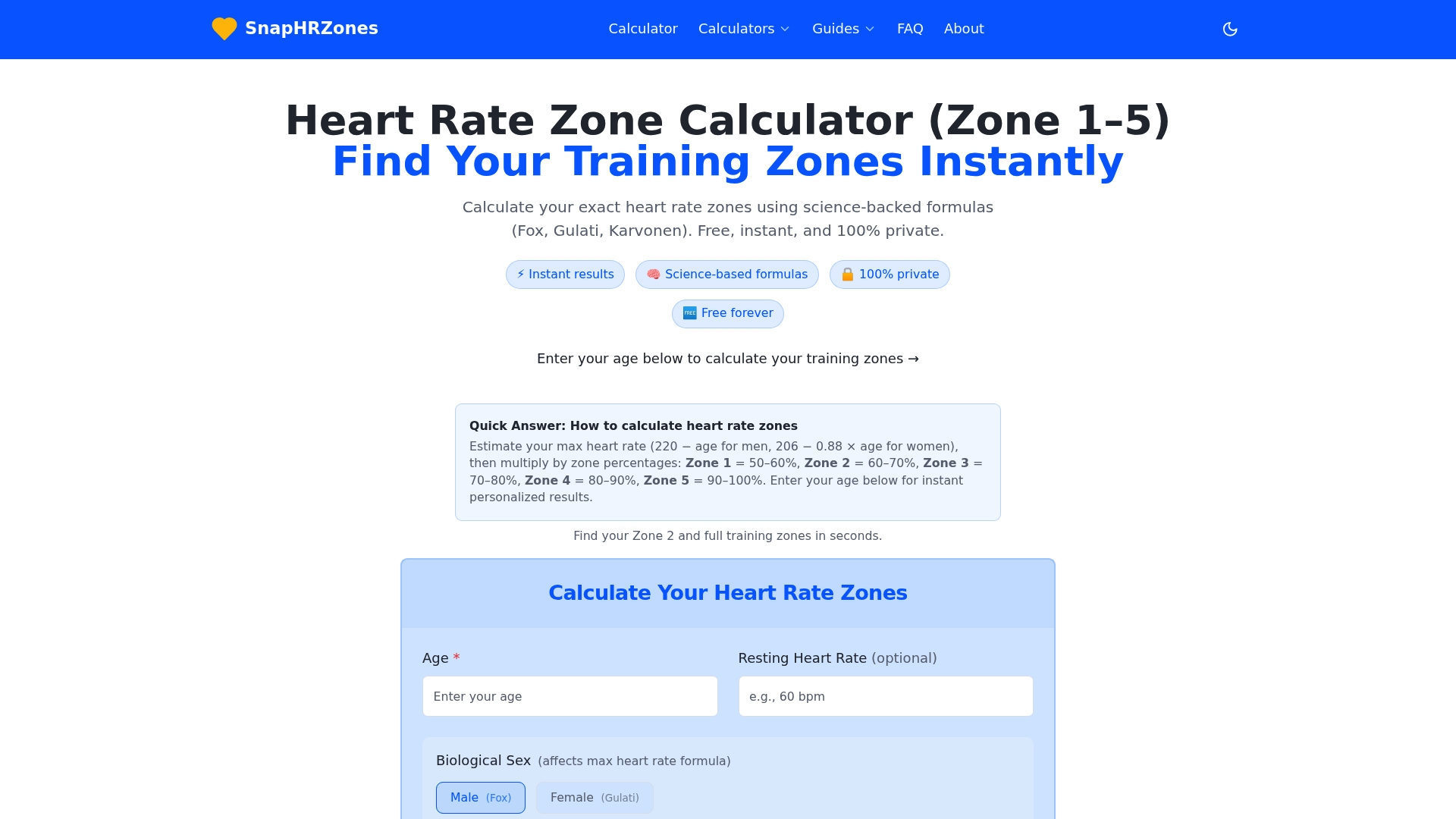
Enter your details in the Heart Rate Zone Calculator, then use the zones to set intervals, steady runs and recovery days. If you want a deeper dive into the base-building end, start with what your Zone 2 heart rate is.
FAQ
How can I raise my heart rate quickly without running?
Brisk walking, stair climbing, bodyweight squats, jumping jacks or lifting with short rests all raise heart rate. Warm up first and build gradually. If you have a heart condition, take medication that affects heart rate, or have had symptoms during exertion, check with your doctor before trying high-intensity bursts.
Why is my heart rate low even when I train hard?
Common reasons include a poorly fitting monitor, fitness adaptation, medications such as beta-blockers, and fatigue. Endurance training also tends to lower resting heart rate. If a low reading comes with dizziness, fainting or breathlessness, stop exercising and seek medical care.
Is a resting heart rate below 60 bad for a runner?
Not necessarily. The American Heart Association says rates below 60 are common in athletes. It becomes a concern when it comes with symptoms like lightheadedness or fainting, or when your usual rate changes noticeably.
How long does it take for heart rate to go up when I start exercising?
Heart rate begins to rise within seconds of starting or increasing effort, then takes a few minutes to level off at a steady intensity. Wrist monitors add measurement lag and smoothing, so very short surges may not show up fully. Efforts of one to three minutes give a clearer reading.
Sources
- UC Davis Health: Heart Rate
- British Heart Foundation: What should my heart rate be when I exercise?
- Physical activity, cardiorespiratory fitness, and health (2022)
- American Society for Preventive Cardiology review (2022)
- Harvard Health: All about your heart rate
- Exercise Standards for Testing and Training, Circulation
- MedlinePlus: Slow heart rate (bradycardia)
- Bicycling: Normal Heart Rate Measurements
- ACSM: Cardiovascular Drift During Heat Stress
- Cleveland Clinic: Chronotropic Incompetence
- American Heart Association: All About Heart Rate
- MedlinePlus: Holter monitor (24h)
Recommended
Find your personal heart rate zones
Enter your age to get all five training zones in seconds.
Open the heart rate zone calculator