Recommended Steps per Day by Age to Lose Weight

There is no research-backed step number for each age that guarantees weight loss. Two different bodies of research are often blended together. In weight-loss programs that combined diet changes with more walking, participants averaged about 8,500 steps a day. Separately, large health studies found that the lower mortality risk linked to more steps levels off around 6,000 to 8,000 steps a day for adults 60 and older and 8,000 to 10,000 for younger adults. Those age bands describe health associations, not weight-loss prescriptions. For runners and triathletes, the useful move is to treat steps as a measure of everyday movement outside training, then use heart rate zones to keep the training itself at the right intensity.
TL;DR
- Weight-loss trials that raised daily steps averaged about 8,454 steps a day, in programs that also changed eating habits, and the authors suggested roughly 8,500 as a possible program target, not a prescription.
- Age matters mainly for health benefit: a 2022 meta-analysis of 15 cohorts found the mortality benefit of more steps leveled off around 6,000 to 8,000 steps for adults 60 and older and 8,000 to 10,000 for younger adults. That is not a weight-loss target.
- Walking alone tends to produce modest weight change. Pairing it with a smaller calorie intake tends to help more.
- If you already run or race, count the steps you take outside workouts, and keep easy days easy by checking your heart rate zones.
Table of Contents
- Why there is no clean step target for each age
- What the weight-loss trials actually found
- How the target shifts by age
- Steps and minutes: the same goal in two units
- How runners and triathletes should use step counts
- Using heart rate to make your steps count
- Food still does a lot of the work
- Put your zones to work
- What a realistic month looks like
- FAQ
- Sources
Why there is no clean step target for each age
Search results for this topic often show tidy tables: 20s need this many steps, 50s need that many. The research does not work that way. Most step studies follow large groups of people and measure health outcomes such as mortality, not weight loss, across age bands. Weight-loss trials, in turn, mostly report one average for everyone in the program.
That is why the honest answer is a range plus an explanation. A 2011 peer-reviewed review called 10,000 steps a day a reasonable benchmark for adults. The same review also translated the guideline amount of moderate-to-vigorous activity into roughly 7,100 to 11,000 total daily steps, depending on the assumptions used. So even the famous 10,000 figure is a point in a wide band, not a threshold.
If you are a runner or triathlete, this should be reassuring. You are not hunting for one magic number. You are choosing a daily movement level you can sustain, then adjusting it with your training load.
What the weight-loss trials actually found
The most useful recent evidence for this keyword is a 2026 systematic review and meta-analysis of 18 randomized trials. In groups doing nutritional lifestyle modification, average steps rose from 7,486 to 8,454 a day during the weight-loss phase. Those groups lost an average of 4.39% of their starting weight over a mean of 7.88 months.
For scale, 4.39% of a 180-pound starting weight is about 7.9 pounds. That is a group average, and it came from lifestyle programs that changed eating habits as well as daily steps, so the weight change cannot be credited to walking alone. The review pooled 18 randomized trials (14 in the meta-analysis) of adults in weight-management programs, compared against usual care.
The same review followed people into maintenance. After a mean of 10.27 months, the groups were averaging about 8,241 steps a day and had kept off 3.28% of their starting weight. The authors described roughly 8,500 steps a day as a possible program target, and they did not present it as a definitive prescription. That framing is worth keeping: it is a reference point, not a rule. Because the review compares group averages across trials, it shows an association between higher steps and better outcomes, not a dose that causes a set amount of weight loss.
Source: 2026 systematic review and meta-analysis (PMC13116791). Scale 0–10,000 steps. Programs included diet changes; these are pooled group averages, not a dose–response relationship.
What walking alone does
Walking by itself has a smaller effect than many headlines imply. A meta-analysis of pedometer-based walking programs that did not prescribe diet changes found an average loss of 1.27 kg (about 2.8 pounds) across programs with a median length of 16 weeks. The nine studies were small, with 307 participants in total (73% women), and lasted from 4 weeks to a year. Longer programs were associated with larger changes, which is one reason a single weekly rate is not a useful expectation. The authors also note that the pre/post design and possible self-started diet changes limit how much can be said about cause and effect.
Mayo Clinic’s guidance on walking for weight loss (updated June 2024) says results depend on duration, intensity and diet, and that combining activity with a lower calorie intake tends to work better than exercise alone. It estimates that 30 minutes of brisk walking a day could burn about 150 extra calories. Treat that as an illustration: the real figure depends on body mass, pace, duration and terrain.
That last point matters for athletes. If you already burn a lot in training, extra steps add less to your total than they would for someone who is otherwise sedentary, and they compete with recovery. The next sections cover how to fit them in.
How the target shifts by age
Age changes the picture in two ways. First, the step count at which health benefits appear to level off is lower for older adults. Second, the body-composition response to brisk walking differs by age and sex.
NPR’s August 2025 report summarizes this research. The primary source is a 2022 Lancet Public Health meta-analysis of 15 international cohorts covering 47,471 adults followed for a median of 7.1 years: the decline in mortality risk with more steps leveled off around 6,000 to 8,000 steps a day for adults 60 and older, and around 8,000 to 10,000 for younger adults. That association is about health outcomes, not weight loss. It also notes that U.S. federal guidelines still focus on minutes of activity rather than steps.
For body composition, a meta-analysis of brisk walking found clinically meaningful reductions in body weight, BMI, waist circumference and fat mass among adults with obesity under age 50. Women over 50 had modest losses, and the evidence for men over 50 was not sufficient to draw a conclusion. Across the review, mean changes were -2.83 cm in waist circumference and -2.59 kg in fat mass.
| Evidence | Population and duration | Outcome | Key numbers |
|---|---|---|---|
| Mortality cohorts (Paluch et al., 2022) | 47,471 adults, 15 cohorts, median 7.1 years of follow-up | All-cause mortality | Benefit levels off at 6,000–8,000 steps (60+) and 8,000–10,000 (under 60) |
| Lifestyle weight-loss trials (2026 review) | 18 randomized trials of adults in weight-management programs, mean 7.88 months | Body weight, with diet changes | 8,454 steps/day; 4.39% average loss |
| Pedometer-only programs (2008 review) | 9 small studies, 307 participants, median 16 weeks, no diet prescribed | Body weight | 1.27 kg average loss |
| U.S. Physical Activity Guidelines | All adults | Recommended activity | 150–300 min moderate or 75–150 min vigorous per week, plus strength work on 2 days |
Here is how those findings line up by age. Read the middle column as health associations, not weight-loss prescriptions.
| Age group | What the research points to | What it measures |
|---|---|---|
| Under 60 | Mortality benefit levels off around 8,000–10,000 steps a day; brisk walking showed meaningful body-composition changes in adults with obesity under 50 | Mortality association (cohorts); body composition (walking trials) |
| 60 and older | Mortality benefit levels off around 6,000–8,000 steps a day | Mortality association (cohorts) |
| Over 50, brisk-walking trials | Women showed modest losses; data for men were insufficient | Body composition |
| Weight-loss programs, all ages | About 8,454 steps a day during loss and 8,241 in maintenance, alongside diet changes | Program averages |
None of these numbers is a promise of weight loss at a given age. If you are older, have a heart or joint condition, or take medication that affects heart rate, talk with your doctor before raising your activity level. The U.S. Physical Activity Guidelines for Americans say older adults should match effort to their fitness and be active within their abilities and conditions.
Steps and minutes: the same goal in two units
Steps are easy to count, but the official guidance is written in minutes. The U.S. guidelines call for 150 to 300 minutes a week of moderate aerobic activity, or 75 to 150 minutes of vigorous activity, or an equivalent mix. They also recommend muscle-strengthening work on at least two days a week.
The 2011 review gives a bridge between the two. It described a cadence of 100 steps a minute as a reasonable rule of thumb for moderate-intensity walking, so 3,000 steps at that pace is a rough stand-in for 30 minutes of activity, on top of what you normally do.
For a runner, this has a practical consequence. A 40-minute easy run covers a meaningful share of the weekly guideline, but the guidelines are written per week: 150 minutes of moderate activity, or 75 minutes of vigorous activity, so one run does not meet them on its own. Your step counter will log it, but the useful question is what the rest of your day looks like. Someone who runs for 40 minutes and then sits for ten hours has a very different day from someone who runs and also walks the dog, takes calls on foot and uses the stairs.
How runners and triathletes should use step counts
The research above comes from general populations, so it does not tell trained athletes exactly how to use steps. What follows is a reasonable way to apply it, not a researched protocol.
Count the day around your workouts
Use your step total as a read on non-training movement. Check your typical total on a rest day and on a training day for a couple of weeks. If rest days sit far below the 8,000-ish range the trials point to, a short daily walk is an easy way to move toward it without adding training stress.
Keep walks easy
Extra steps should not turn into extra fatigue. Walking at a conversational pace is a low-stress way to add volume, and it fits the same idea as aerobic base work. Our guide to Zone 2 walking covers pace, incline and the talk test, and the Zone 2 treadmill workout page shows how a 3 to 6% incline can raise effort without raising pace.
Watch for signs you are doing too much
If you pile steps on top of hard training and your sleep, mood or resting heart rate start to slip, the extra volume may be costing you more than it gives. Our overtraining symptoms checklist lists what to look for. If symptoms persist, see your doctor.
Do not forget strength work
Steps do not replace the strengthening the guidelines recommend. Our fat-burning strength workouts guide shows how to build it into a week that already includes running or riding.
Using heart rate to make your steps count
Step totals tell you how much you moved. They do not tell you how hard it felt for your body. A brisk walk can be Zone 2 for one person and Zone 3 for another, and that difference changes how much recovery you need.
Heart rate zones fill the gap. Your zones depend on your age, and on resting heart rate if you use a method such as Karvonen, so the same walking pace lands in a different zone as you get older or fitter. To see where your own easy range sits, you can look at the age pages for a 33-year-old, a 35-year-old or a 55-year-old, or go straight to the calculator.
For example, the Zone 2 range for a 45-year-old is listed at 106 to 124 bpm, and for a 51-year-old at 103 to 120 bpm. Those pages use 60 to 70% of an estimated maximum from the Tanaka formula (208 − 0.7 × age). For women, the SnapHRZones calculator uses the Gulati formula (206 − 0.88 × age), so the ranges come out slightly lower, about 100 to 116 bpm at 45. Any formula is a population estimate, so treat the range as a starting point you adjust with how you feel. Easy-zone walking is a sustainable way to add movement; it does not by itself produce more weight loss than other suitable intensities.
A simple weekly pattern
- Pick a baseline: your average daily steps over a normal week.
- Add a modest amount, for example a 15 to 30 minute easy walk on rest days.
- Check that the walk stays in your easy heart rate range.
- Hold the new level for several weeks before changing it, since the trials showed that results build with consistency over months.
This is a way to apply the evidence, not a plan the studies tested.
Food still does a lot of the work
Because walking alone moved weight by only a small average amount in the pedometer review, and Mayo Clinic notes that pairing activity with fewer calories tends to work better, nutrition is part of any weight-loss plan. Endurance athletes in particular should be careful not to cut intake so far that training, recovery or health suffers; adding steps on top of a heavy training load while eating less raises the risk of under-fueling. A registered dietitian can set a target that fits your training load. If cooking is the sticking point, a simple beginner meal plan is a practical place to start building a weekly routine.
Put your zones to work
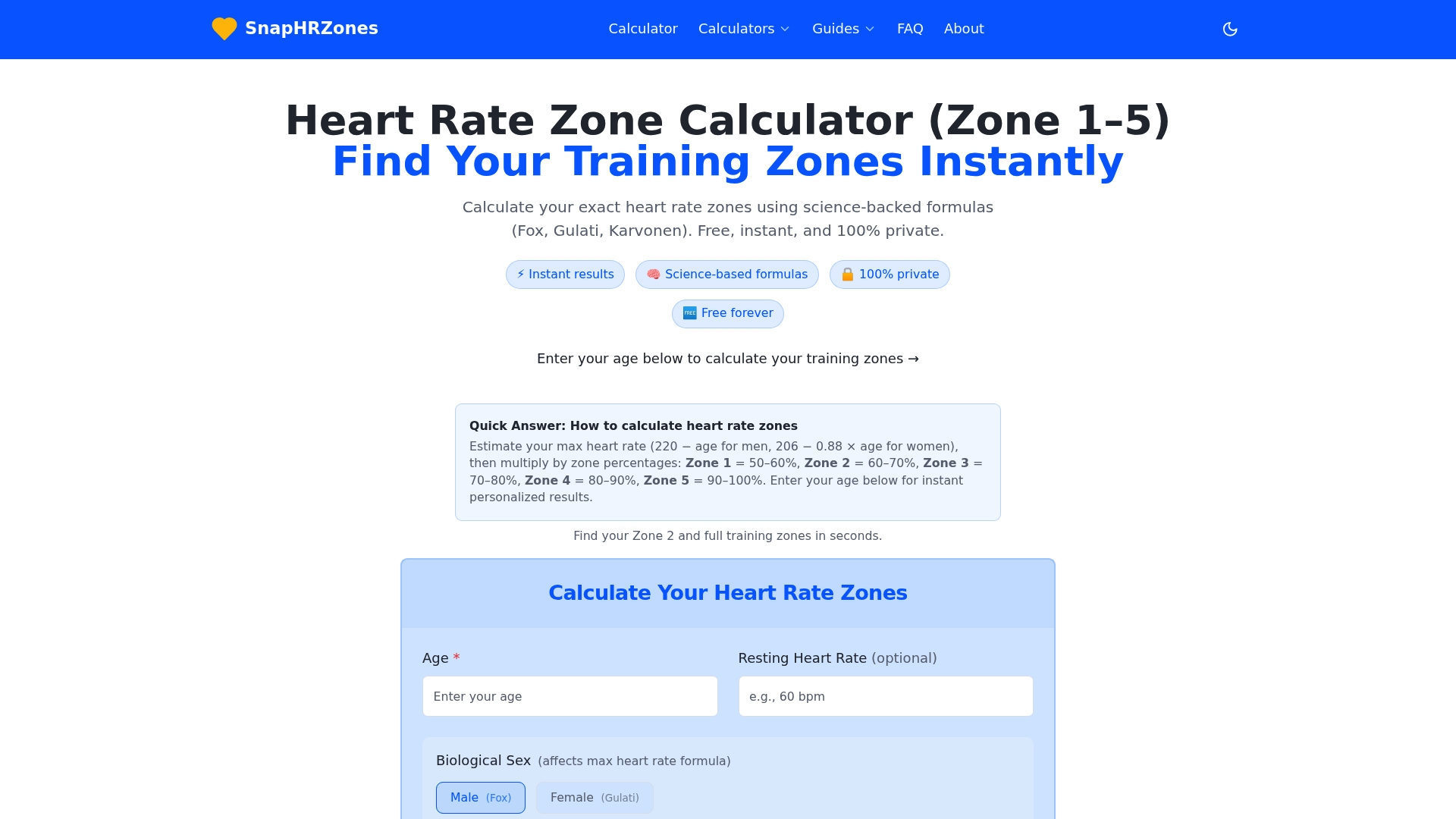
The SnapHRZones heart rate zone calculator is free. It uses gender-specific formulas and lets you add your resting heart rate for a more personal result. Enter your numbers, note your Zone 2 range, and use it to keep walks and easy runs where they belong. If you only want the easy range, the Zone 2 heart rate page gets you there directly.
If you are weighing a longer daily walk, our page on walking an hour a day for a month walks through what to expect over that period.
What a realistic month looks like
It is tempting to ask whether you can lose 5 kg in a month by walking. The evidence does not point that way. The pedometer review averaged about 1.27 kg over a median of 16 weeks without prescribed diet changes, and the 2026 review reported an average 4.39% loss over nearly eight months in programs that also changed eating habits. Individual results vary, and rapid weight loss goals are best discussed with your doctor.
What the evidence supports is steady progress: a daily movement level you can hold, a food plan you can live with, and training that leaves you recovered enough to keep going.
FAQ
How many steps a day should I take to lose weight?
Trials of lifestyle programs that included weight loss averaged about 8,454 steps a day, and the authors suggested roughly 8,500 as a possible target. Individual needs vary with starting weight, diet and training. Treat it as a reference point and adjust with your doctor’s input if you have health conditions.
Do older adults need fewer steps?
For health benefits such as lower mortality risk, a 2022 meta-analysis of 15 cohorts (summarized by NPR) suggests the plateau comes earlier for adults 60 and older, around 6,000 to 8,000 steps, versus 8,000 to 10,000 for younger adults. That is not a weight-loss target by age. Older adults should be active within their abilities and conditions.
Do the steps from my runs count?
Yes, your tracker logs them, and 3,000 steps at a moderate cadence is a rough stand-in for 30 minutes of activity. The more useful number for most runners is the total on days when they are not training, since that shows how much they move the rest of the day.
Is walking enough to lose weight without changing my diet?
Walking helps, but alone the average effect in one meta-analysis was small: about 1.27 kg over a median of 16 weeks. Mayo Clinic says that combining activity with calorie reduction tends to work better than exercise alone.
Sources
- Daily steps and all-cause mortality: a meta-analysis of 15 international cohorts (Lancet Public Health, 2022)
- How many steps/day are enough? for adults (PMC, 2011)
- Daily Steps During Nutritional Lifestyle Modification (PMC, 2026)
- A Meta-Analysis of Pedometer-Based Walking Interventions (PMC, 2008)
- The Influence of Age, Sex and Body Mass Index on the Effectiveness of Brisk Walking (PubMed, 2017)
- Walking: Is it enough for weight loss? (Mayo Clinic)
- How many steps lead to better health? (NPR, 2025)
- Physical Activity Guidelines for Americans, 2nd edition (CDC)
Recommended
Find your personal heart rate zones
Enter your age to get all five training zones in seconds.
Open the heart rate zone calculator