How to Increase Stamina for Running and Triathlon

To increase stamina, train consistently with mostly manageable aerobic sessions, increase your workload gradually, add harder efforts once your routine feels sustainable, include some strength work, and recover well enough to absorb the training. This guide turns that into practical decisions for runners and triathletes: what to do first, when to progress, what a sample week can look like, and how to tell whether it is working.
If you want the physiology behind these changes, such as VO2max, thresholds and stroke volume, our guide to cardiovascular endurance covers it. This page focuses on what to do in training.
How to increase stamina: the short answer
- Make most of your sessions easy enough to repeat, so you can train consistently week after week.
- Extend the duration of selected sessions gradually. Heart and lungs adapt faster than tendons and bones.
- Add tempo runs or intervals when your current training feels well tolerated, and keep them a minority of the week.
- Include strength work, typically one or two sessions a week, and fuel and sleep according to your needs.
- Compare similar sessions over time to see whether stamina is improving.
Table of Contents
- How to increase stamina: the short answer
- What stamina means for runners and triathletes
- Start with manageable aerobic training
- Increase training volume gradually
- Introduce harder sessions when ready
- Add strength training
- Fuel, hydrate and recover
- Example training week
- How to tell if your stamina is improving
- Common mistakes
- FAQ
- Sources
What stamina means for runners and triathletes
“Stamina” and “endurance” are everyday fitness words, not precisely defined physiological measures, and they overlap a great deal. Cleveland Clinic uses stamina for the mental and physical ability to sustain high-intensity effort over a shorter period, and endurance for sustaining low-to-moderate activity over a long period. Other sources use the terms interchangeably.
In practice, runners use stamina to mean being able to keep going and still have something left: holding race effort in the last miles, or handling the hills on a long run. Exercise physiologist DeAnne Davis Brooks of the University of North Carolina Greensboro told Runner’s World that stamina is also needed inside long efforts, such as climbing each hill on a long, hilly run or surging to hold off competitors. The same training foundation supports both.
Start with manageable aerobic training
The foundation is regular aerobic training at an effort you can repeat. World Athletics notes that low-intensity running where heart rate stays at or below roughly 70% of maximum improves aerobic fitness, and that easy running may make up as much as 80% of an endurance runner’s weekly distance. That is a practical guideline for easy running, not a hard line below which adaptation happens and above which it stops.
USA Triathlon gives similar advice for the general phase of triathlon training: focus on building volume and spending time below the aerobic threshold, which is levels one and two in the typical five-zone model, and only then introduce short VO2 intervals.
Planned moderate work vs. intensity drift
Moderate intensity is not bad. A deliberately planned tempo session or steady ride can be a useful part of training. The problem is unplanned drift, where easy days gradually speed up until almost every session is moderately hard. That pattern can leave you too tired for quality sessions and not fresh enough to build volume. Our Zone 3 training article explains when the in-between zone is worth using on purpose.
Running coach Mireille Siné, who is USATF- and 80/20 Endurance-certified, makes the same point in Runner’s World: taking it easy on easy days lets you go harder on hard days. She suggests half and full marathoners stay near an 80/20 split, while 5K and 10K runners might lean toward 70/30.

How to set your easy effort
- Get an estimated range from the Heart Rate Zone Calculator. Formulas give an estimate, not a measurement, so treat it as a starting point.
- Check it against effort. On easy sessions you should be able to speak in full sentences. If you cannot, slow down.
- Expect day-to-day variation. Heat, hills, caffeine, sleep and stress all move heart rate, so pair the number with breathing and feel.
Our Zone 2 guide for runners and the running heart rate zones page explain the zones in detail. For quick age-based examples, see Zone 2 for a 32-year-old or Zone 2 for a 51-year-old. Your own result with your own inputs is the better guide.
Increase training volume gradually
Stamina responds to accumulated time training. Different body systems adapt at different speeds: cardiovascular fitness can improve within weeks, while tendons, ligaments and bones take longer, so feeling fit does not mean your body is ready for a big jump in load. The 10% rule for weekly mileage is a common rule of thumb, not a law, and many runners do better with plateaus: hold a load for a few weeks, then step up.
Instead of following a fixed calendar, progress through stages based on how you are responding:
- Stage 1 — Establish consistency. Build a routine of easy sessions you can complete most weeks. Move on when you have trained consistently for several weeks and sessions leave you feeling you could have done a little more.
- Stage 2 — Extend aerobic duration. Gradually lengthen one or two sessions a week, such as a long run or ride. Move on when the longer session feels controlled and you recover from it within a day or two.
- Stage 3 — Introduce controlled intensity. Add one harder session when your existing training is well tolerated: no lingering soreness, normal sleep and easy days that still feel easy.
- Stage 4 — Monitor and adapt. Keep adjusting based on performance, recovery and how you feel. Hold or reduce load when fatigue builds, niggles appear or life stress rises, and include easier weeks when you need them.
Move more slowly if you are returning from a layoff, illness or injury.
Introduce harder sessions when ready
Once you can train easily for a good amount of time without being wiped out, harder work starts to pay off. Two session types do most of the job.
Tempo runs are sustained efforts that feel comfortably hard. Warm up easily, hold the tempo effort for a block of minutes, then cool down. Our tempo run heart rate guide covers pacing.
Intervals are repeated harder efforts with recovery between them. Our interval training heart rate guide covers targets for the work and recovery portions, and the Zone 5 guide explains VO2max-style efforts and how to use them sparingly.
Heart rate rises slowly at the start of a short interval, so judge short repeats by effort and pace, and use heart rate to confirm recovery between them. Hard sessions should be a small share of the week. If you feel you must do them every other day, your easy days are probably too fast.
Add strength training
Strength work helps you hold form when tired and can make you more robust to training load. A 2025 umbrella review found that strength training programs showed moderate to large effects on running economy across the included studies, supporting their use alongside endurance training for middle- and long-distance athletes. A 2019 review of triathlon preparation notes that most elite triathletes combine endurance sessions with strength work, and that strength training can help avoid overuse injuries. The same review describes periodized heavy programs of 2 to 3 sets of 4 to 10 repetition maximum, twice weekly for 12 to 24 weeks, with no detrimental effect on maximal oxygen uptake. The strength of evidence varies by outcome and population: it is stronger for running economy in trained athletes than for injury prevention in recreational runners.
Two sessions a week is a practical option, not a compulsory minimum; one session is still worthwhile. Build them on squats or lunges, hinges, single-leg work, calf raises and core. Our full-body strength workouts for runners and triathletes lays out a routine. If you want more movement ideas and sample plans, there are collected exercises for endurance that include a difference between peak effort and steady pace.

Schedule heavier sessions away from your hardest run days when you can, and keep them out of the day before a long run or race. Start with light loads and learn the movements first.
Fuel, hydrate and recover
Fueling and hydration
A training plan only works if you can fuel it. USA Triathlon’s guidance for athletes emphasizes eating a balanced diet with fruits, vegetables, lean proteins and healthy fats, taking in some carbohydrate during longer workouts and refueling with carbohydrate and protein after training. Its recovery article gives more detailed examples for athletes.
Fueling and hydration needs depend on session duration and intensity, weather, sweat losses, body size and individual tolerance, so there is no single target that suits everyone. For short easy sessions, normal meals and drinking to thirst are often enough. For longer sessions, practice your race-day fuel in training so your stomach is used to it, and do not try anything new on race day. A registered dietitian who works with endurance athletes can tailor a plan, especially if you have a medical condition.
Recovery
Adaptation happens between sessions, so recovery is part of training. USA Triathlon’s recovery guidance for competitive athletes includes generous sleep, regular days without running and planned lower-volume weeks. Those specific figures are aimed at high-level athletes. For most recreational runners, the principles are what matter:
- Sleep enough for your own needs, and protect it when training increases.
- Manage training load so harder days are followed by easier ones.
- Plan easier periods when appropriate, such as a lighter week after several building weeks.
- Adjust when signs of inadequate recovery appear.
The same article lists warning signs of too little recovery: feeling run-down, frequent colds or simply being grumpy, along with fatigue, mood changes and lost motivation. If that sounds familiar, review your sleep, life stress and training load before adding anything. If fatigue is unusual, persistent or comes with chest pain, dizziness or breathlessness at easy effort, see a physician before continuing to train.
Easy movement can be part of recovery. Our active recovery workout guide shows how easy that session should be by heart rate. If you are weighing products, the muscle recovery supplement guide covers what runners commonly consider.
Example training week
This example is an illustration for an already active recreational runner who runs regularly and has tolerated that routine well for some time. It is not a universal prescription. Triathletes can swap some run days for swim or bike sessions to spread the impact load.
| Day | Session | Effort |
|---|---|---|
| Mon | Rest day | None |
| Tue | Easy run | Conversational |
| Wed | Strength training | Moderate |
| Thu | Tempo or interval session | Hard but controlled |
| Fri | Recovery day: rest or easy cross-training | Very easy |
| Sat | Long easy run, extended gradually | Conversational |
| Sun | Easy run, swim or bike | Easy |
If you are just starting or returning
Begin with three or four short, easy sessions a week, such as walking, walk-run intervals or easy cycling, with rest days between them, and one short strength session if you like. Leave out hard intervals until easy sessions feel routine and you have progressed through the first stages above. If you have a health condition or have been inactive, talk with your doctor before starting.
How to Tell If Your Stamina Is Improving
The most useful evidence comes from comparing similar sessions over time, such as the same easy route or the same treadmill workout every few weeks. Look at:
- Pace at comparable effort: the same perceived effort produces a faster pace.
- Heart rate at comparable pace: the same pace comes at a lower heart rate.
- Perceived exertion: familiar sessions feel easier.
- Duration: you can sustain a longer session comfortably, with form intact at the end.
- Recovery: you bounce back faster between demanding sessions.
Heat, humidity, sleep, terrain, wind and accumulated fatigue can all distort a comparison, so look at the trend across several sessions rather than any single day. Signs to pull back include easy runs that feel unusually hard, sleep that worsens, a resting heart rate that stays elevated for days, or niggles that linger. A simple log of pace, heart rate and how you felt makes the pattern visible. If you only want your easy range today, calculate your Zone 2 heart rate and use it as a starting point for your next easy session.
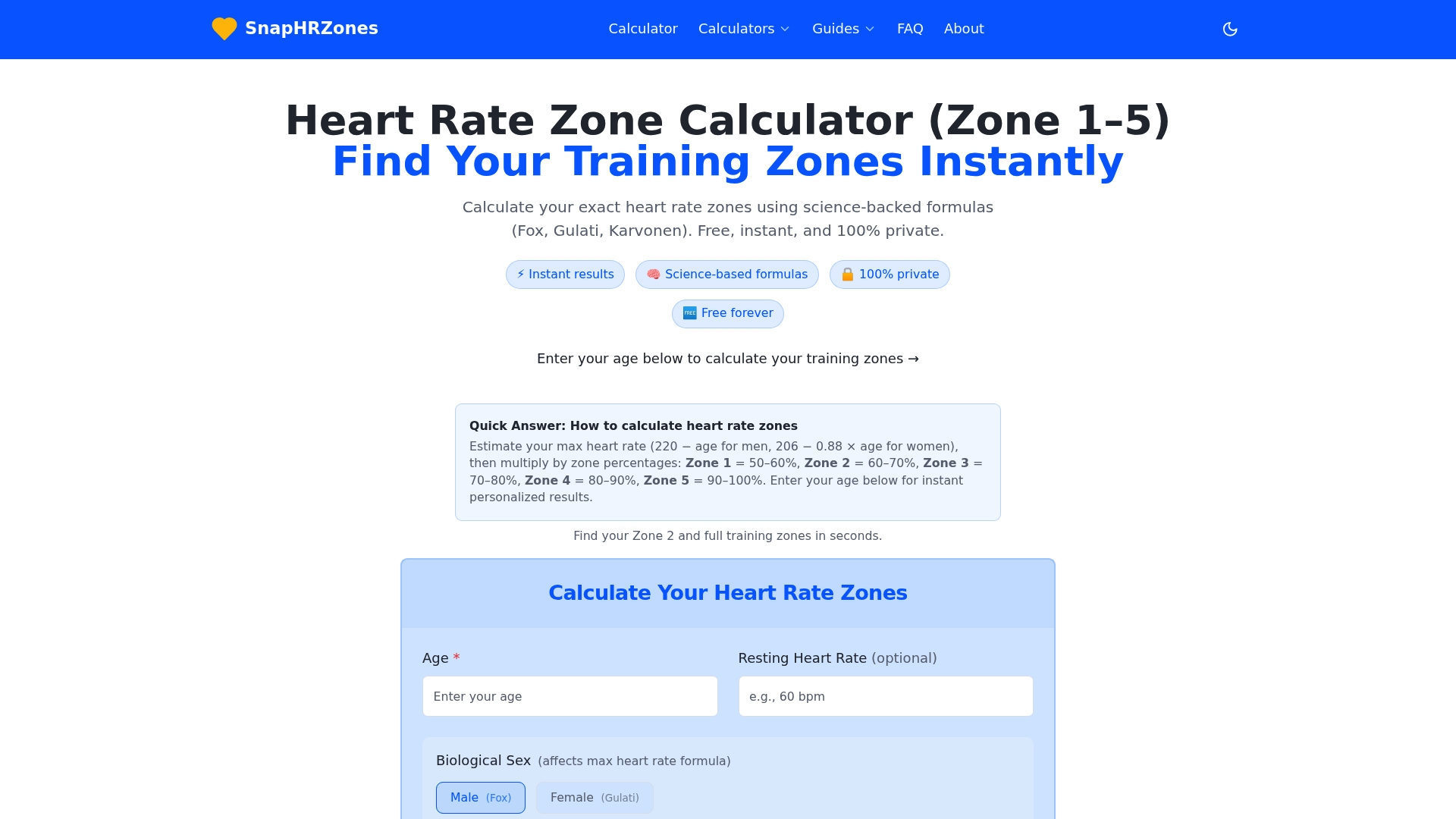
If you want to cross-check an estimated maximum, the calculator also has pages for specific ages, such as the max heart rate for a 44-year-old man. Remember these are formula estimates.
Common mistakes
- Letting every session drift to moderately hard. Plan which days are easy and which are hard.
- Jumping volume too quickly. Feeling fit does not mean tendons and bones are ready for more.
- Adding hard sessions too early. Wait until your current routine is well tolerated.
- Treating a calculated zone as exact. Use it with effort and breathing, not instead of them.
- Copying elite recovery or fueling rules. Match sleep, fuel and easier weeks to your own training and response.
- Judging progress on one day. Compare similar sessions over weeks.
FAQ
Is stamina the same as endurance?
They overlap. In everyday fitness language neither term is precisely defined. Some sources use stamina for sustaining harder efforts and endurance for longer, easier activity, but the same aerobic foundation supports both.
How often should I train hard to build stamina?
Keep hard sessions a minority of your week. Coach Mireille Siné suggests an 80/20 split for half and full marathoners and possibly closer to 70/30 for 5K and 10K runners. A beginner may do well with one hard session a week or none at first, added once easy training is well tolerated.
Does strength training help stamina?
Research supports it for endurance athletes, particularly for running economy. A 2025 umbrella review found moderate to large effects on running economy, and a 2019 triathlon review describes twice-weekly strength programs as compatible with endurance training. Start with light loads and learn the movements first.
How much should I eat and drink during a run?
It depends on how long and how hard you run, the weather, your sweat losses and what your stomach tolerates. Short easy runs usually need little or nothing. For longer sessions, rehearse your plan in training, and consult a sports dietitian for a personalized approach.
Can I improve stamina without running?
Yes, to a degree. Easy cycling, swimming and incline walking build aerobic fitness with less impact, and many triathletes already do this. Specific running stamina still comes from running, so keep some runs in the plan.
Sources
- Stamina vs. Endurance: What’s the Difference? (Cleveland Clinic)
- How to Build Stamina (Runner’s World)
- How to build aerobic fitness (World Athletics)
- The General Phase of Training (USA Triathlon)
- How Much Zone 2 Training Should Runners Do Each Week? (Runner’s World)
- The Effect of Strength Training on Endurance Performance (PubMed)
- Training and Competition Readiness in Triathlon (PMC)
- How Do I Get Started in Triathlon? (USA Triathlon)
- Recover Like a Pro (USA Triathlon)
- Exercises for Endurance (RIRLift)
Recommended
Find your personal heart rate zones
Enter your age to get all five training zones in seconds.
Open the heart rate zone calculator